grape juice
Vitis vinifera
IN ARABIC عصير العنب
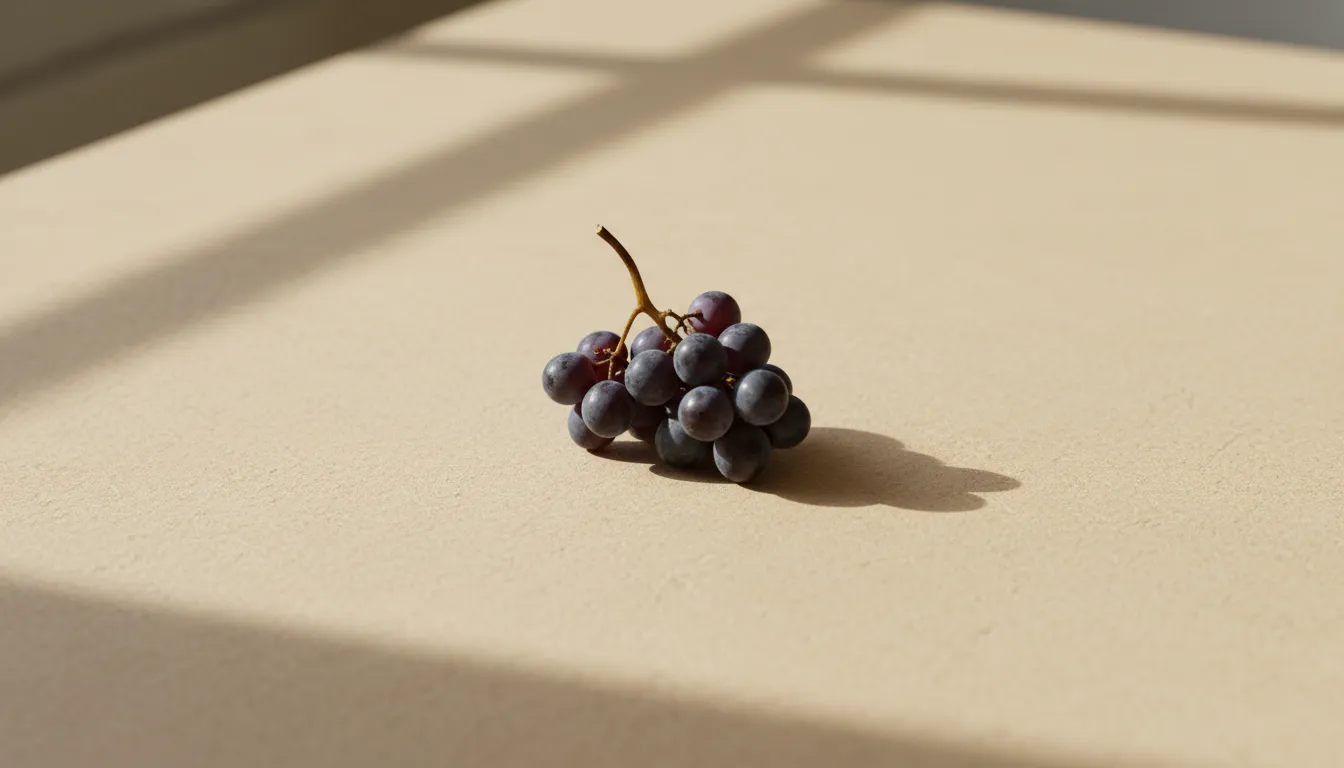
Deep, sweet-tart concord-grape juice, the body of the pour.
ABOUT
Vitis vinifera, used here as juice: 200 ml of unsweetened concord grape juice, the body of the wine-style grape and mint drink. The recipe builds it to do a red wine's work beside a cheesy plate, with mint steeped cold in 300 ml of water for 3 to 6 hours, black tea cold-brewed in 150 ml for 2 to 4 hours, and a squeeze of lemon, all chilled and poured into wine glasses a third to half full, alongside the carbonara. It traces three compounds to the grape. Tartaric acid gives the pour a vinous backbone instead of a soft, juicy one. Anthocyanins, the purple pigments of concord grapes, lend the wine-red colour. Catechin, shared with the tea, is the astringent tannin that dries the finish.
The Journal's note on food acids says each fruit leads with one acid, and tartaric leads in grapes: the crust in an old wine bottle is its potassium salt. Of the four acids the note compares, tartaric is the hardest and cleanest, an edge without much fruit behind it. Wine vinegar, it adds, is the one made from the juice of grapes.
CHEMISTRY
3The characteristic compounds documented in this ingredient, plus any the library traces to it in a recipe. Not an exhaustive phytochemistry.
grippy tannin
the wine acid
USED IN
1Wine-Style Grape & Mint
200 ml · concord, unsweetened
STEP 3 Mix: Combine the grape juice, mint infusion, cold-brew tea, and the lemon juice.
STEP 4 Taste and adjust: too sweet, add more mint infusion; too sharp, a little more grape juice.