
№05Chemistry
Mint does not cool anything
Menthol lowers no temperature at all. It picks the lock on the receptor your nerves use to report cold, which is a far stranger thing to do.
31 July 2026·6 min read·7 SOURCES
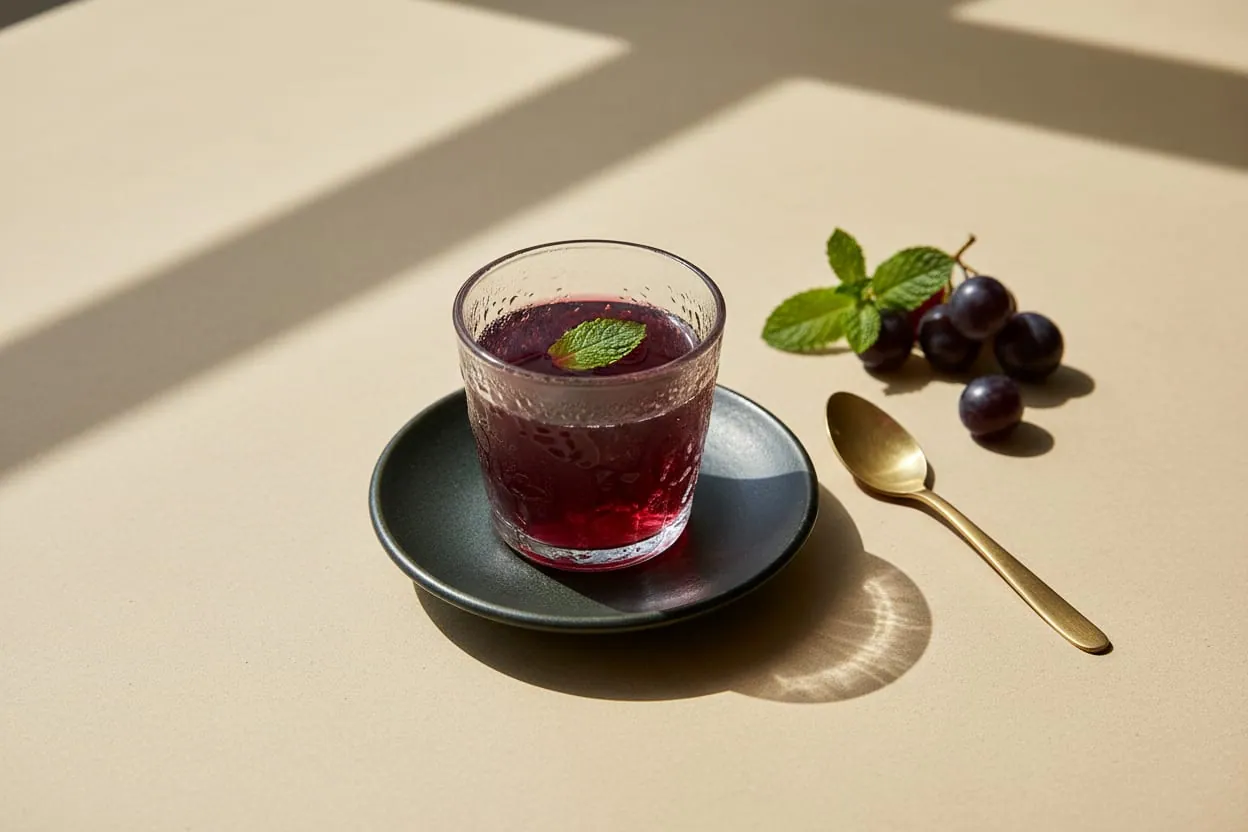
A drink built to do a red wine's work beside a rich, cheesy plate: fruity, cold, faintly tannic and tart. Concord grape juice gives the body and the deep colour, a long cold mint infusion the lift, a cold-brew black tea the grippy tannin that keeps it from tasting like plain juice, and a squeeze of lemon the edge. All chilled and poured, wine glass and all. It is how you keep the ritual of pairing a good glass with dinner while leaving the alcohol out.
Check off each step as you go. Your progress is saved. Amounts below already match your batch size.
5 compounds carry this recipe. Here is what each one does and, where we have it, what it actually looks like.
Grapes' (and wine's) signature acid; it gives the pour a genuinely vinous backbone instead of a soft, juicy one.
The deep purple pigments of concord grapes lend the true wine-red colour and a dark, berry-like fruitiness.
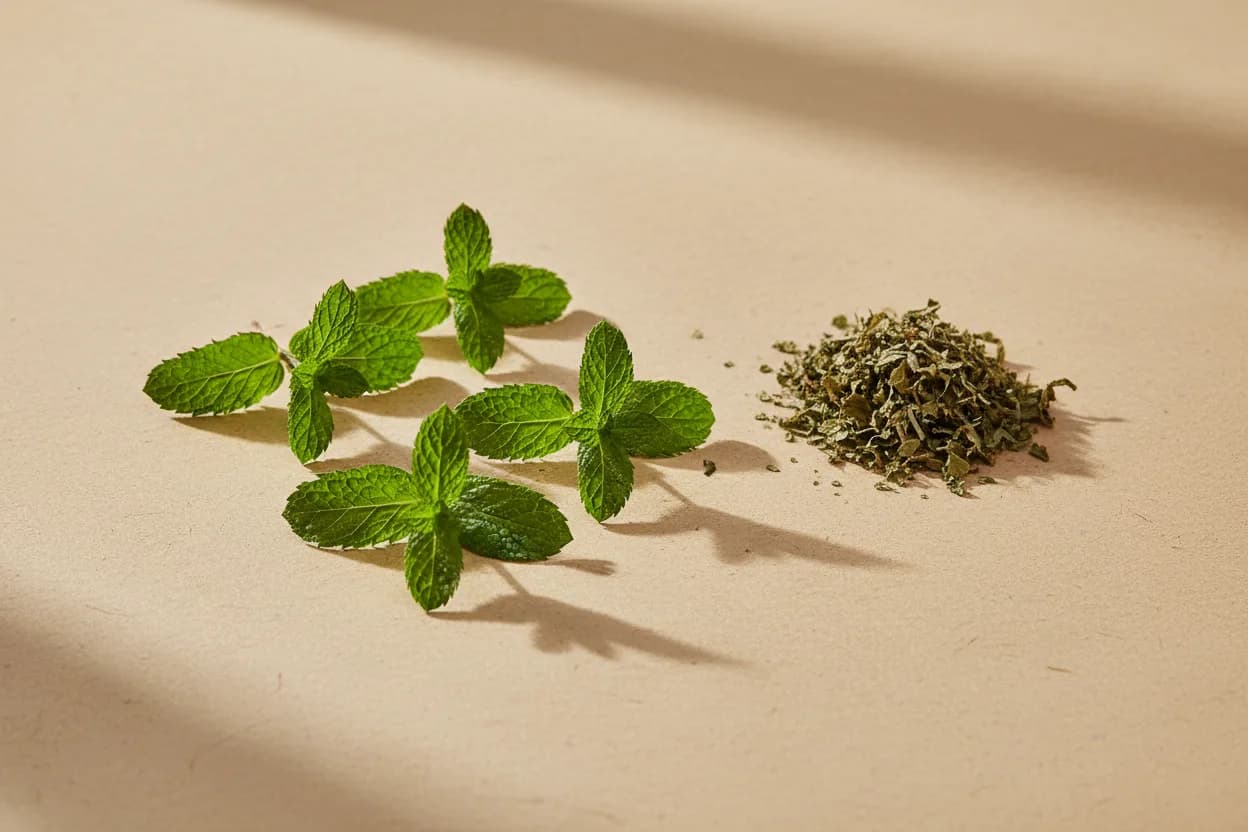
Drawn out slowly by the cold mint infusion; it trips the tongue's cold receptors and gives the drink its refreshing, almost sparkling lift.
A flavan-3-ol from cold-brewed black tea and grape skins, the astringent tannin that dries the finish and makes this read as wine, not juice.
A squeeze of lemon sharpens the whole thing, keeping the fruit fresh against the tannin.
This glass stands in for red wine beside a cheesy plate. Twelve lightly bruised mint leaves infuse in 300 ml of cold water in the fridge for 3 to 6 hours; about half a teaspoon of black tea steeps in 150 ml of cold water for 2 to 4 hours, because cold-brewing keeps it smooth rather than bitter. Strain both and mix with 200 ml of unsweetened Concord grape juice and the juice of about three quarters of a lemon. Serve thoroughly chilled, a third to half full, with carbonara.
The Journal's note on food acids says tartaric acid leads in grapes and is the hardest and cleanest of the four kitchen acids, an edge without much fruit behind it. The grip is catechin from the cold-brewed tea and the grape skins. The note on astringency shows that grip is not a taste: people with an anaesthetised taste nerve still felt the pucker, and it vanished only when the trigeminal nerve was blocked too. Tannins precipitate the proline-rich proteins that make up about seventy per cent of saliva protein. That nerve also handles menthol, which the Journal's note on mint says binds the TRPM8 receptor and shifts its activation toward warmer temperatures, so the mouth reports cold while nothing is cooler.
The astringency note says tannin and fat cancel on a single scale of how your mouth slides, the logic of a tannic red beside fatty food. The Journal's note on thermal taste adds that cooling the tongue and the solution together from 36 to 20 degrees lowered the sweetness of sucrose and the bitterness of caffeine. One caution: black tea carries caffeine. The Journal's note on caffeine gives the European Food Safety Authority's limits of 400 milligrams a day for non-pregnant adults and 200 in pregnancy, and USDA's figure of 47 milligrams for a cup of brewed black tea. The Journal's note on boiling and steeping puts tea brewed near 10 degrees at about half the caffeine of a hot brew; none measures this recipe.
This recipe is part of a set: follow the thread through the blends it uses and what it's served with.
Menthol lowers no temperature at all. It picks the lock on the receptor your nerves use to report cold, which is a far stranger thing to do.