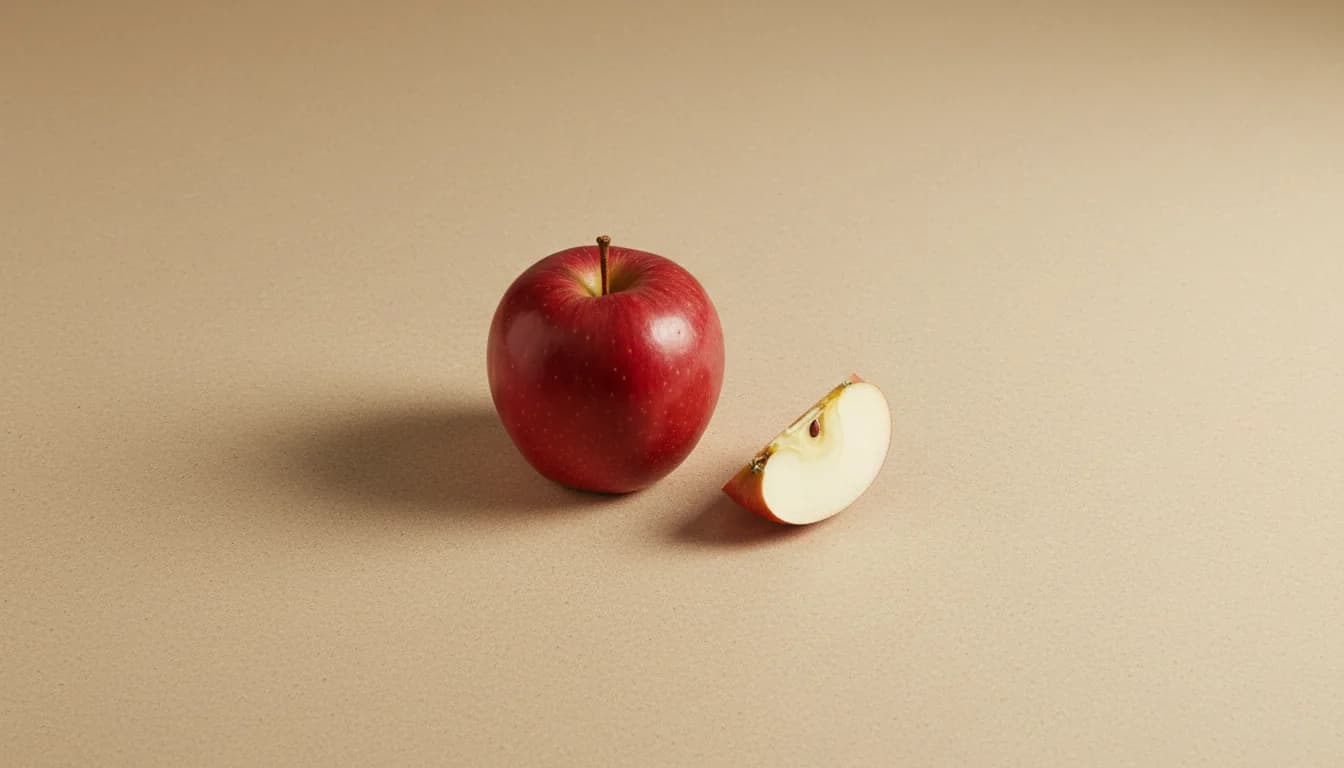
apple
Malus domestica
IN ARABIC تفّاح
Grated raw into a pot, it dissolves into sweetness and body.
ABOUT
One recipe in this library uses Malus domestica: the Japanese curry. A single apple goes in grated, skin and all, with the stock, carrots and salt. The pot comes to a boil, gets skimmed, and drops to a bare simmer with the lid ajar for 75 minutes. The recipe says the apple cooks out of sight and, together with the teaspoon of honey added later, leaves its fructose behind, a low sweetness meant to be felt rather than identified.
The Journal's note on food acids says each fruit leads with one acid in particular, and the apple's is malic, named for malum, the Latin for apple. Malic is slower and rounder, and it lingers, the quality that makes a green apple taste sour for longer than the sourness lasts. Apples make only the L form, so AOAC method 993.05 exists to measure the ratio of L-malic to total malic acid in apple juice: if the D form shows up, something was added. The same note tells of United States v. 95 Barrels, More or Less, Alleged Apple Cider Vinegar, a 1924 Supreme Court case over vinegar made from dried apples, where the Court held that calling it apple cider vinegar did not represent the article to be what it really was.
The Journal's note on how fruits got their names files the apple under the pome, the type where tissues outside the ovary do the swelling, so the true fruit is only the papery core you throw away. Pomum meant orchard fruit of any kind long before French narrowed it to the apple.
CHEMISTRY
1The characteristic compounds documented in this ingredient, plus any the library traces to it in a recipe. Not an exhaustive phytochemistry.
USED IN
1Japanese Curry
1 · grated, skin and all
STEP 4 Simmer: add the stock, grated apple, carrots, and salt. Bring it to a boil, skim, then drop to a bare simmer with the lid ajar. Chicken thigh needs only 25 minutes here.