A Watermelon Is a Berry, a Strawberry Is Not: How Fruits Got Their Names
Botany files every fruit on earth by its construction: eight Latin words in 1751, a French brawl in 1813, ninety-five types today. Half of them are hiding in your spice drawer.
Contents
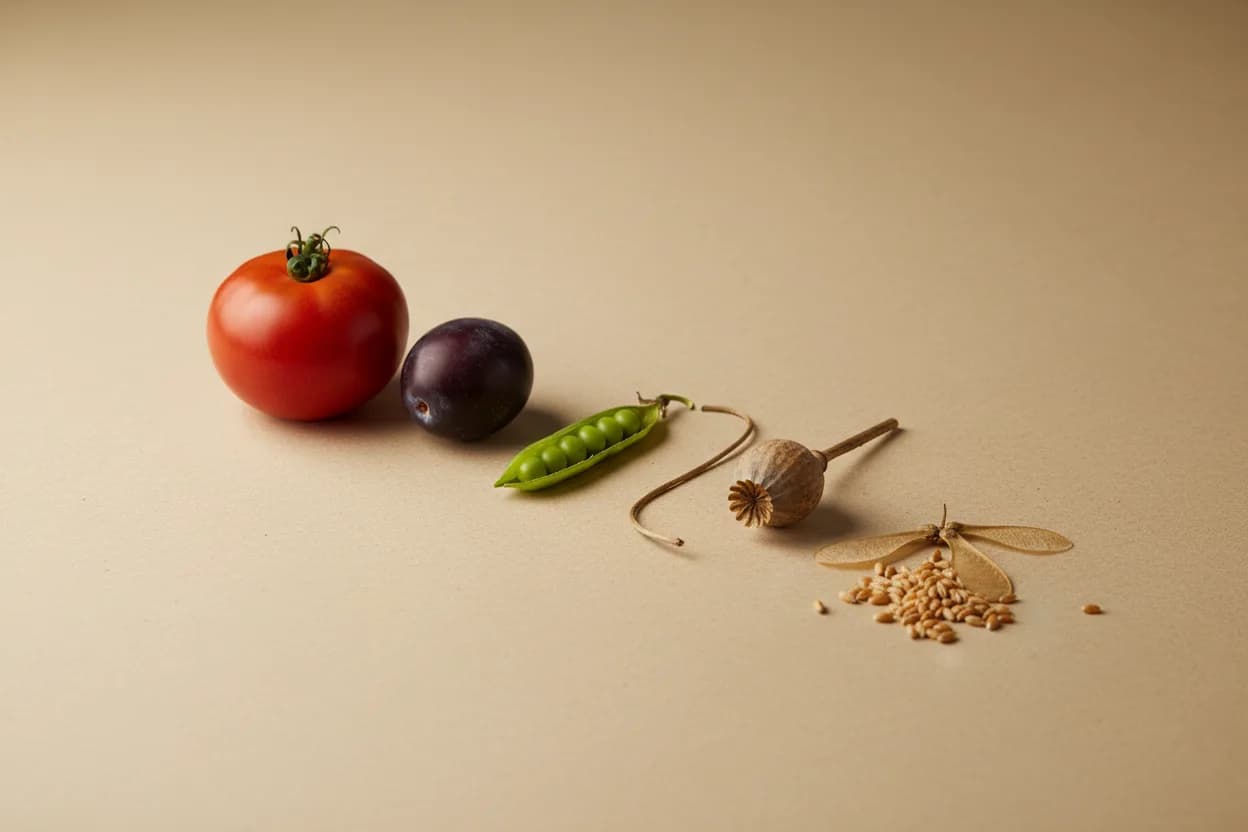
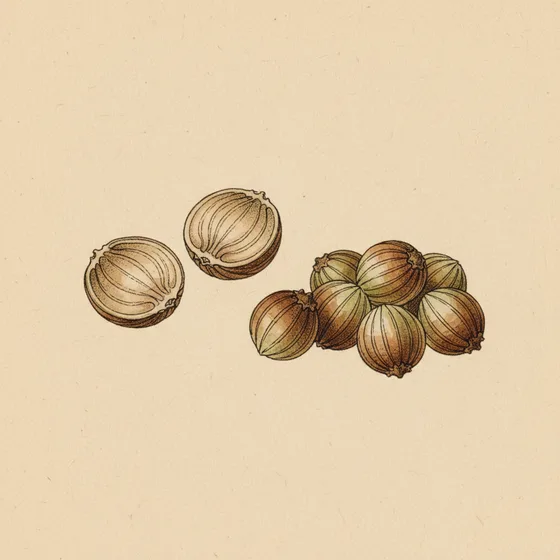
Crush a coriander seed and it parts into two neat hollow hemispheres. That is not the seed breaking. What the kitchen calls coriander seed is a whole dry fruit, built to split into two one-seeded halves along a seam that was always there. 15 The drawer where you keep your spices holds more kinds of fruit than the fruit bowl does.
The kitchen sorts fruit by sweetness and habit: things for the bowl, things for jam, things that are secretly vegetables. Botany ignores all of that and sorts by construction. What matters is the pericarp, the fruit wall the flower's ovary becomes: how many layers it keeps, whether it stays fleshy or dries out, and whether it opens to release its seeds or seals them in. Give each combination a name and every fruit on earth files itself into place. The names were begun by one Swede in 1751 with eight Latin words, fought over by the French for a generation, and are still being minted; the modern key runs to ninety-five kinds. 10
The botanist's berry
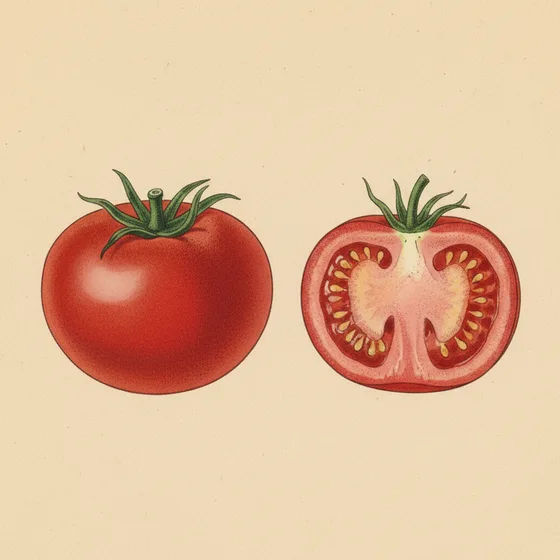
Start with the word the kitchen most abuses. A botanical berry is a fruit whose wall stays fleshy the whole way through, seeds sitting in the flesh: tomatoes, grapes, blueberries, bananas, and chilies all qualify. The strawberry does not. Its red body is swollen stem tissue, an accessory fruit, and its true fruits are the little dry pips riveted to the outside. The raspberry fails differently, being a cluster of tiny stone fruits, each with its own pit. 11 The English word is no help in any of this; berry is old Germanic, from the Old English berie, and never meant anything precise. 13 The technical term rides instead on the Latin bacca, a small round fruit, a word the Romans used mostly for olives. 12
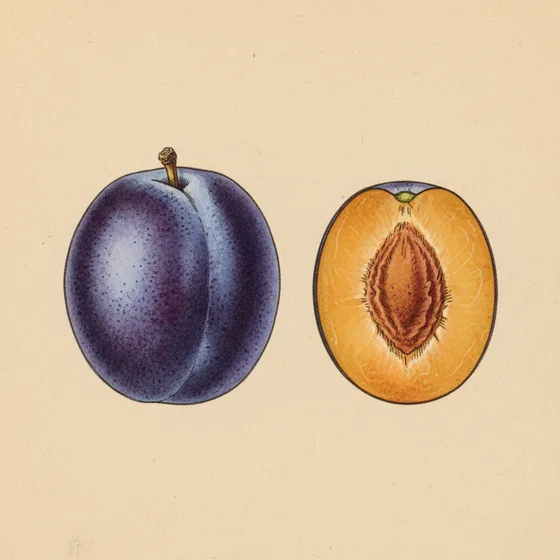
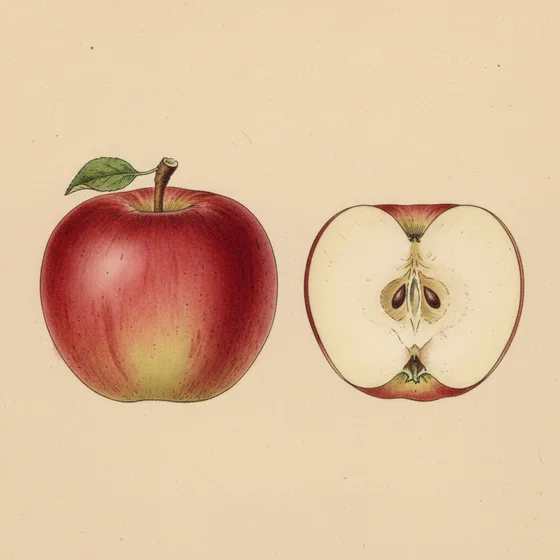
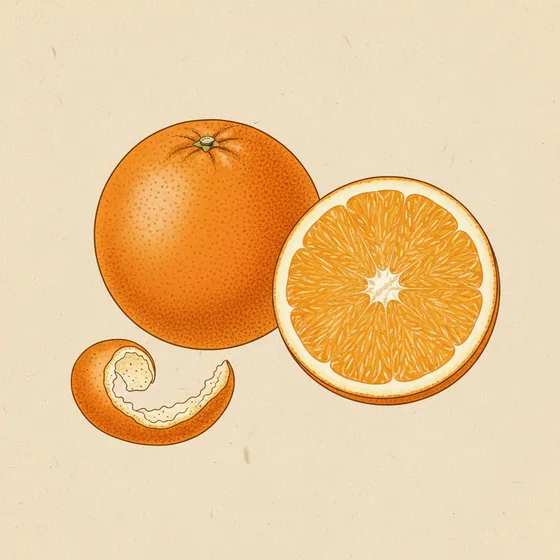
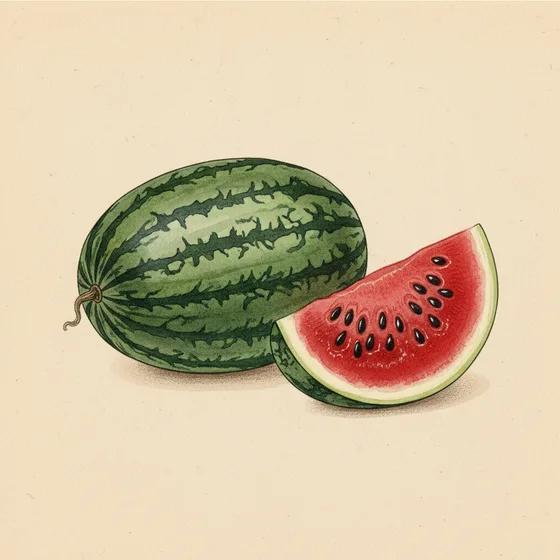
The berry has specialist cousins, told apart by their rinds and their stones. Give a berry a leathery, oil-glanded peel and it is a hesperidium, the private fruit type of citrus and the subject of this Journal's parentage map. Give it a hard rind instead and it is a pepo, the badge of the gourd family: watermelon, cucumber, pumpkin. Let tissues outside the ovary do the swelling and you get the pome, apple and quince, where the true fruit is only the papery core you throw away. 11 Harden the innermost wall layer around a single seed and you get the drupe: plum, olive, almond, black pepper dried whole, and, awkwardly for a trade that calls it a cherry, coffee. 16 22 The names are older than the definitions. Drupa was Rome's word for an overripe, wrinkled olive; pepo was Greek for a gourd ripened in the sun, and survives as the second half of melon; pomum meant orchard fruit of any kind, long before French narrowed it to the apple. 12 13
Dry, and built to open
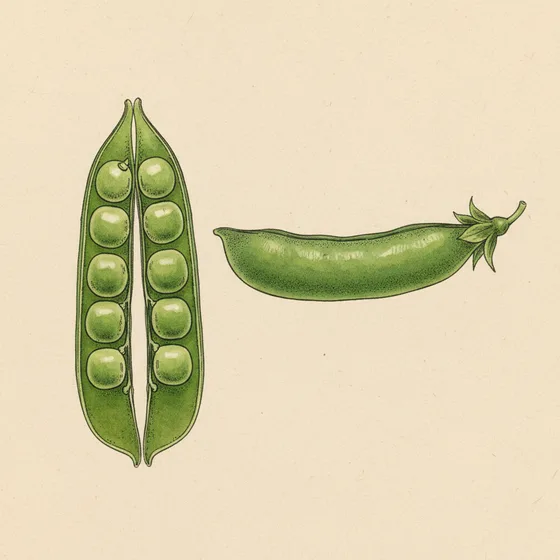
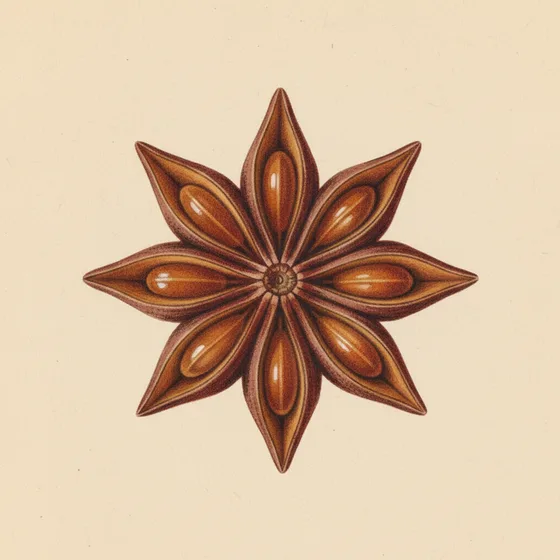
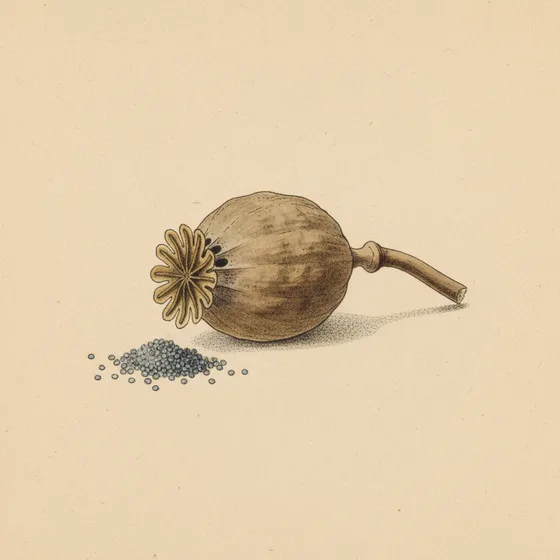
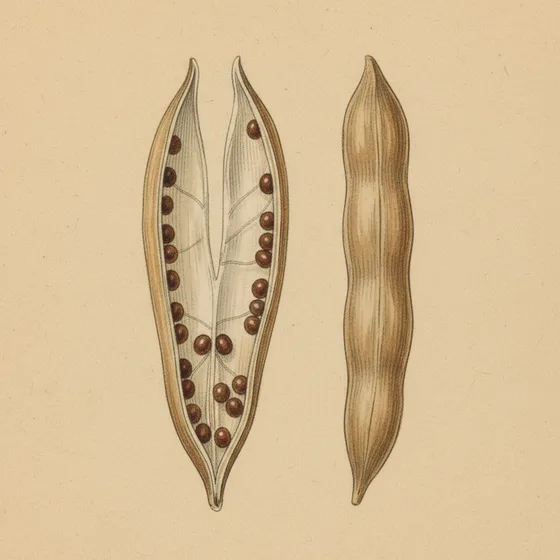
Dry fruits divide on a single question: does it open? The ones that do are named for their seams. A legume opens along two, which is the pea pod's whole career, though the family tolerates rebels; tamarind is a legume that never opens at all, a brittle shell around sour pulp. 18 A follicle opens along one. Star anise is a ring of about eight of them, each point of the star a little boat split along its upper seam with a glossy seed aboard. 17 A capsule opens by more elaborate machinery, pores and lids and splitting valves: the poppy head is a pepper-shaker of a capsule, cardamom is a capsule you crack with your thumbnail, and the vanilla bean is a capsule wearing a nickname. 11 20 21 The silique of the mustard family goes one better; its two valves fall away and leave the seeds hanging on a translucent standing partition. Siliqua was just Latin for pod, though Rome also used the word for one of its smallest units of weight. 12
Dry, and sealed shut
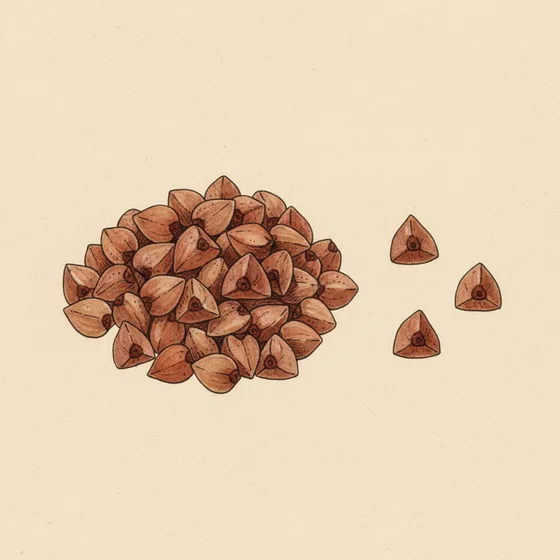
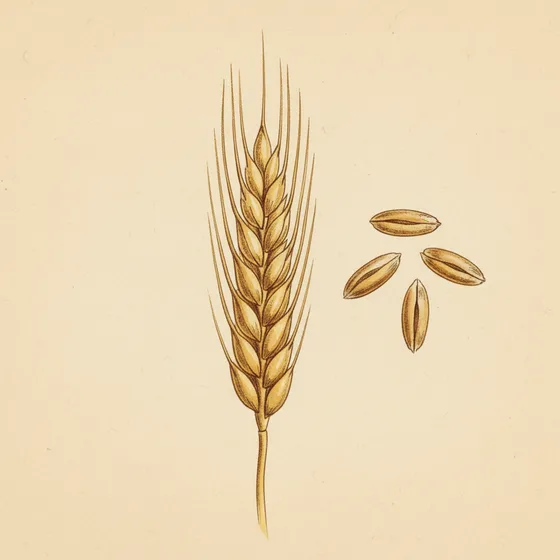
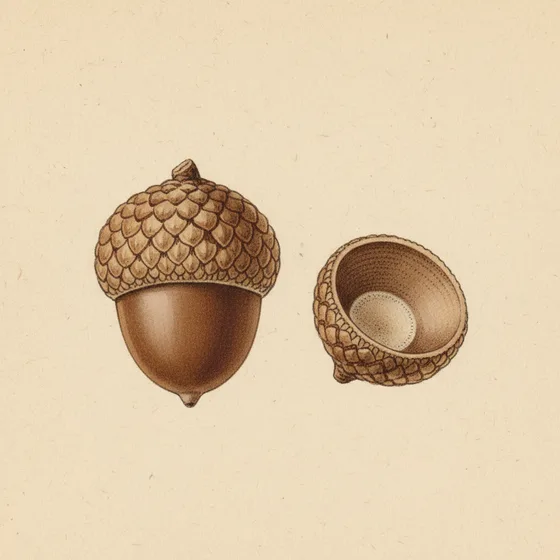
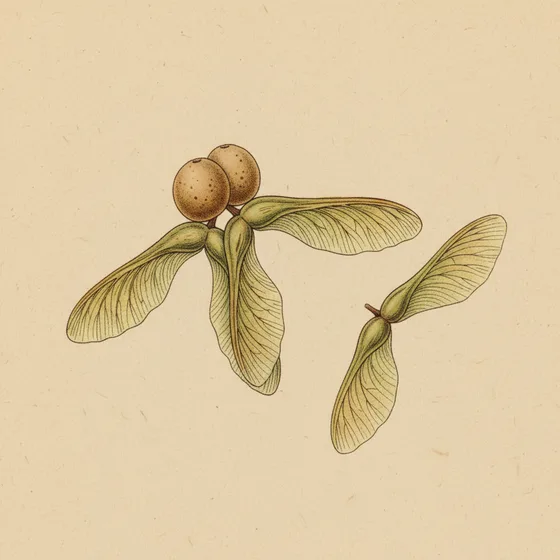
The kinds that never open hold one seed each, and most of them spend their lives being mistaken for seeds. The achene is the plainest: a thin dry wall around one loose seed, named in 1790 from the Greek for not gaping. 14 10 Buckwheat is an achene, and so is every pip on the strawberry's skin. 19 The caryopsis goes further and fuses the wall to the seed coat, so fruit and seed become one body: wheat, rice, and maize, which makes flour milled fruit. 11 Louis-Claude Richard defined it in 1811, in a footnote. 6 The nut proper is a hard shell around a loose seed, hazel and acorn. The samara is a nut or achene that grew a papery wing, and its name is Rome's own word for the elm's seed, on record in Columella and Pliny. 12
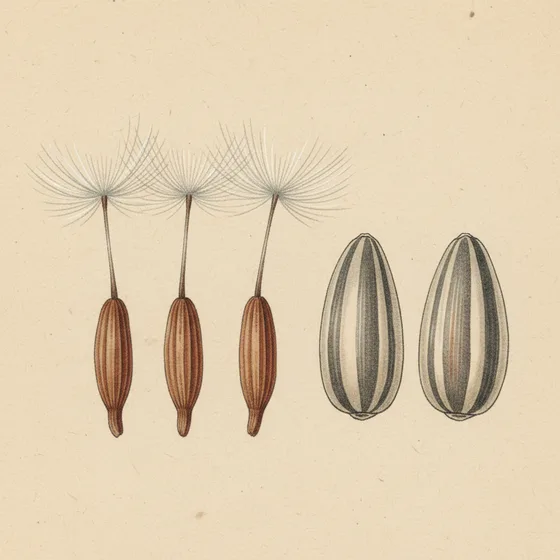
Two more, and they are the reason this note exists. The sunflower seed is a cypsela, the daisy family's fruit, built from an ovary that sits below the flower rather than above it. Mirbel coined the term in 1813 and Lindley adopted it in 1832 to avoid confusion, a hope that has not aged well, since half the textbooks still say achene. 8 23 And the schizocarp is the split fruit of the opening paragraph: cumin, coriander, fennel, anise, and caraway are whole dry fruits of the parsley family, each breaking into two one-seeded halves striped with the oil canals that make them worth grinding. 15 Nobody knows who coined schizocarp. By 1879 Asa Gray could only call it an appropriate recent name. 9
Eight words, then a brawl
The vocabulary has a birthday. In the Philosophia Botanica of 1751, Linnaeus defined the pericarp as an organ pregnant with seeds, which it releases when ripe, and gave it exactly eight kinds: capsula, siliqua, legumen, conceptaculum, drupa, pomum, bacca, strobilus. 1 2 His drupe took six Latin words: a stuffed, valveless pericarp containing a nut. The list is routinely misquoted; even the history section of the field's own standard monograph swaps the forgotten conceptaculum for the more familiar follicle. 10 And what we call an achene was, for Linnaeus, not a fruit at all but a naked seed with a bony skin. 8
The man who turned eight words into a discipline was Joseph Gaertner, who gave up a professorship in St Petersburg, went home to Calw, and spent two decades describing the fruits and seeds of more than a thousand species. Joseph Banks, back from circumnavigating with Cook, and Carl Peter Thunberg, back from Japan, both handed him their collections, and the microscope work brought him near to blindness. 3 His De Fructibus et Seminibus Plantarum carries 1788 on the title page but missed its own year, reaching booksellers in the spring of 1789, delayed, probably, by the copper engravings. 4 It made samara, nux, and pepo formal fruit types, among seven he added to the Linnaean eight. 5 10
So much discordance, indeed, exists in the application of terms expressive of the modifications of fruit, that it is quite indispensable to give the definitions of some of the most eminent writers upon the subject in their own words.
He was complaining about 1813, the year fruit naming became a competitive sport. De Candolle, Mirbel, and Desvaux published three rival classifications within twelve months, sixty-one newly minted terms among them, for twenty-eight, twenty-nine, and forty-five kinds of fruit respectively. 10 One coinage from that scramble sits in every modern textbook. De Candolle had named the citrus type, plainly, Orange; Desvaux objected that a botanist would then have to call a lemon an orange, and offered Hesperidium instead, after the garden where the Hesperides grew their golden apples. 7 The argument has never really closed. The current standard, Spjut's 1994 monograph, keys out ninety-five fruit types and mints thirty-seven new names in the process. 10
| Type | The name, literally | Fixed as a type by | Meet it in |
|---|---|---|---|
| Berry | Latin bacca, small round fruit | Linnaeus, 1751 | tomato · banana · allspice |
| Drupe | Greek dryppa, overripe olive | Linnaeus, 1751 | plum · pepper · coffee |
| Pome | Latin pomum, any orchard fruit | Linnaeus, 1751 | apple · quince |
| Hesperidium | the Hesperides' golden apples | Desvaux, 1813 | every citrus |
| Pepo | Greek pepon, sun-ripened | Gaertner, 1788 | watermelon · cucumber |
| Legume | Latin legumen, pulse | Linnaeus, 1751 | pea · tamarind |
| Follicle | Latin folliculus, a little bag | standard by 1813 | star anise |
| Capsule | Latin capsula, a little box | Linnaeus, 1751 | cardamom · poppy · vanilla |
| Silique | Latin siliqua, a pod | Linnaeus, 1751 | mustard |
| Achene | Greek, does not gape | Necker, 1790 | buckwheat · strawberry pips |
| Caryopsis | Greek, nut-like in appearance | Richard, 1811 | wheat · rice · maize |
| Nut | Latin nux | Gaertner, 1788 | hazelnut · acorn |
| Samara | Latin, the elm's seed | Gaertner, 1788 | maple keys · elm |
| Schizocarp | Greek, split fruit | unknown; recent in 1879 | cumin · coriander · fennel |
| Cypsela | Greek kypsele, hollow vessel | Mirbel, 1813 | sunflower seeds |
The next time a pea pod cracks along its two seams, or a point of a star anise surrenders its one glossy seed, that is the pericarp doing exactly what Linnaeus said it does: an organ pregnant with seeds, releasing them when ripe. 1 Gaertner went nearly blind at his microscope cataloguing a thousand of them. The least the rest of us can do is call the cumin a fruit.
Sources
Every numbered claim above points here. Links go to the paper, record, or authority itself.
- 1.
Linnaeus, C. 1751. Philosophia Botanica, aphorism 86, p. 53. Stockholm: Godofr. Kiesewetter. Scan: Internet Archive (NCSU Libraries copy).
https://archive.org/details/philosophiabota00linn - 2.
Podani, J. & Szilágyi, A. 2016. Bad math in Linnaeus' Philosophia Botanica. History and Philosophy of the Life Sciences 38(3).
https://doi.org/10.1007/s40656-016-0110-5 - 3.
Sachs, J. von. 1890. History of Botany (1530-1860), trans. H. E. F. Garnsey, rev. I. B. Balfour, pp. 122-123, 413-414. Oxford: Clarendon Press. Scan: Internet Archive.
https://archive.org/details/historyofbotany00sach - 4.
Brizicky, G. K. 1960. Dates of publication of Gärtner's De Fructibus et Seminibus Plantarum. Rhodora 62: 81-84. Scan: Internet Archive (BioStor).
https://archive.org/details/biostor-180579 - 5.
Gaertner, J. 1788-1791. De Fructibus et Seminibus Plantarum, vol. 2, Praefatio. Stuttgart and Tübingen. Scan: Internet Archive.
https://archive.org/details/defructibusetse00grgoog - 6.
Richard, L.-C. 1811. Analyse botanique des embryons endorhizes, et particulièrement de celui des Graminées. Annales du Muséum d'Histoire Naturelle 17: 223-251, 442-487. Scan: Internet Archive.
https://archive.org/details/annalesdumusum17mus - 7.
Desvaux, N. A. 1813. Journal de Botanique, appliquée à l'agriculture, à la pharmacie, à la médecine et aux arts, vol. 2, pp. 175-179. Paris. Scan: Internet Archive.
https://archive.org/details/journaldebotaniq2181desv - 8.
Lindley, J. 1832. An Introduction to Botany, pp. 170-180 (Achenium, Caryopsis, Cypsela). London: Longman, Rees, Orme, Brown, Green and Longman. Scan: Internet Archive.
https://archive.org/details/introductiontobo00lind - 9.
Gray, A. 1879. Structural Botany (Gray's Botanical Text-Book, 6th ed.), section 571. New York: Ivison, Blakeman and Co. Scan: Internet Archive.
https://archive.org/details/structuralbotan02graygoog - 10.
Spjut, R. W. 1994. A Systematic Treatment of Fruit Types. Memoirs of The New York Botanical Garden 70: 1-182. Author's web edition, World Botanical Associates.
http://www.worldbotanical.com/fruit_types.htm - 11.
Digital Atlas of Ancient Life (Paleontological Research Institution, Ithaca NY). Fruits. In: Digital Encyclopedia of Ancient Life.
https://www.digitalatlasofancientlife.org/learn/embryophytes/angiosperms/fruits/ - 12.
Lewis, C. T. & Short, C. 1879. A Latin Dictionary, s.vv. baca, druppa, pomum, legumen, capsula, folliculus, siliqua, samera. Oxford: Clarendon Press, via the Perseus Digital Library.
http://www.perseus.tufts.edu/hopper/text?doc=Perseus%3Atext%3A1999.04.0059%3Aentry%3Dsiliqua - 13.
Harper, D. Online Etymology Dictionary, s.vv. berry, drupe, pome, legume, capsule, follicle, pumpkin, melon, schizo-, karyo-.
https://www.etymonline.com/word/berry - 14.
Dictionary.com Unabridged (Random House), s.vv. achene, caryopsis, cypsela, pepo.
https://www.dictionary.com/browse/achene - 15.
Flora of China, vol. 14: Apiaceae (family description: fruit a schizocarp of two mericarps, with vittae). Missouri Botanical Garden and Harvard University Herbaria, eFloras.org.
http://www.efloras.org/florataxon.aspx?flora_id=2&taxon_id=10052 - 16.
Flora of China, vol. 4: Piper nigrum L. (drupe red when ripe). eFloras.org.
http://www.efloras.org/florataxon.aspx?flora_id=2&taxon_id=200005581 - 17.
Flora of China, vol. 7: Illicium verum Hook. f. (fruit with ca. 8 follicles). eFloras.org.
http://www.efloras.org/florataxon.aspx?flora_id=2&taxon_id=200008460 - 18.
Flora of China, vol. 10: Tamarindus L. (legume indehiscent, mesocarp thick and pulpy). eFloras.org.
http://www.efloras.org/florataxon.aspx?flora_id=2&taxon_id=132253 - 19.
Flora of North America, vol. 5: Fagopyrum esculentum Moench (achenes sharply 3-gonous). eFloras.org.
http://www.efloras.org/florataxon.aspx?flora_id=1&taxon_id=200006709 - 20.
NC State Extension Gardener Plant Toolbox: Elettaria cardamomum (fruit type: capsule).
https://plants.ces.ncsu.edu/plants/elettaria-cardamomum/ - 21.
Gastelbondo, M., et al. 2025. Comparative transcriptome profiling of vanilla (Vanilla planifolia) capsule development. BMC Plant Biology.
https://pmc.ncbi.nlm.nih.gov/articles/PMC11916913/ - 22.
Unigarro, C. A., Cayón Salinas, D. G., León-Burgos, A. F. & Flórez-Ramos, C. P. 2025. Flowering and fruiting of Coffea arabica L.: a comprehensive perspective from phenology. Plants 14(21): 3396.
https://doi.org/10.3390/plants14213396 - 23.
Marzinek, J., De-Paula, O. C. & Oliveira, D. M. T. 2008. Cypsela or achene? Refining terminology by considering anatomical and historical factors. Revista Brasileira de Botânica 31(3).
https://www.scielo.br/j/rbb/a/PbxtxhKmnbTCPGNc8DWgYsL/abstract/?lang=en - 24.
Purdue University, NewCROP: Allspice, Pimenta dioica (the dried, unripe berries of a large evergreen tree).
https://www.hort.purdue.edu/newcrop/Crops/Allspice.html