bay leaves
Laurus nobilis
IN ARABIC ورق الغار
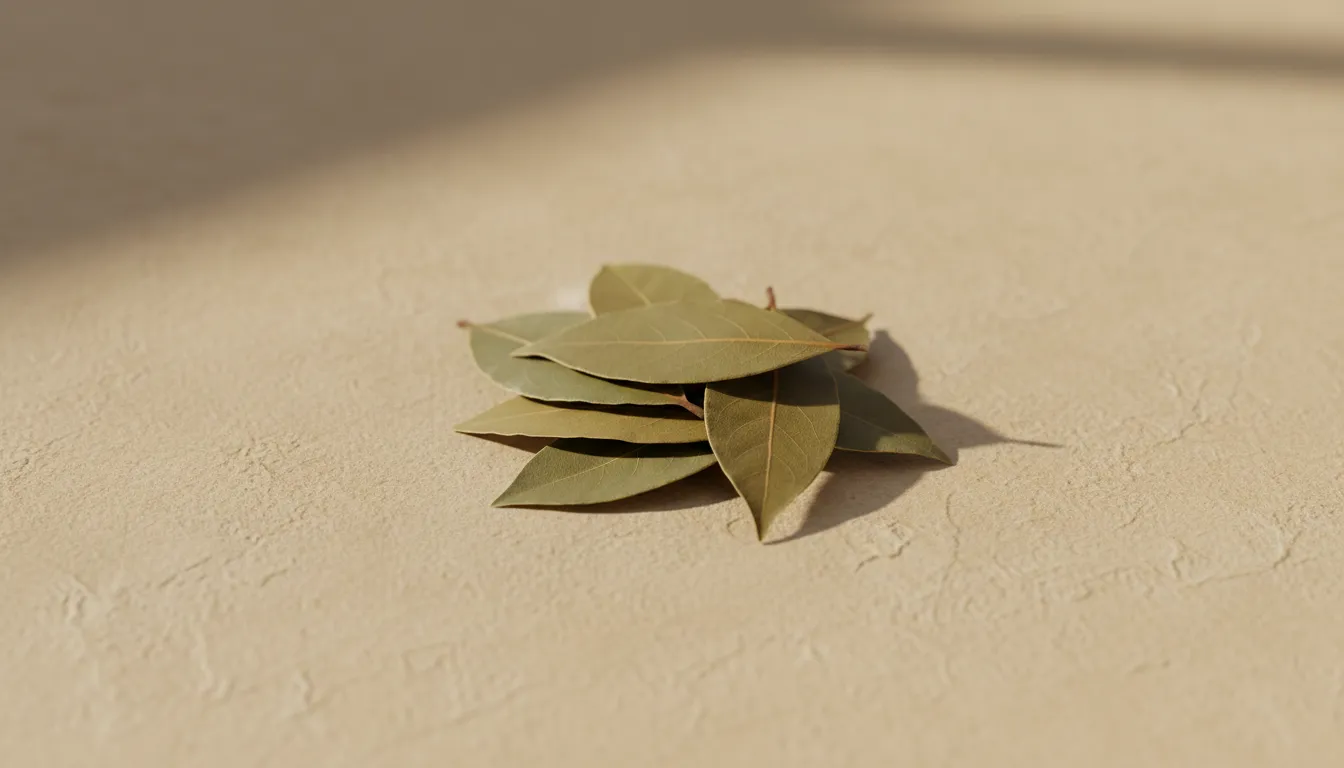
Dried bay, resinous and faintly eucalyptus-cool.
ABOUT
The dried leaf of Laurus nobilis, used three ways in this library. The Palestinian maqluba puts 2 bay leaves in the pressure-cooker stock with the lamb, cardamom and a cinnamon stick. The jameed-free mansaf puts 8 in its broth, with the shanks, a quartered onion, cardamom and cinnamon. The Japanese curry powder is the odd one: 2 leaves go into a dry skillet over medium-low heat with the coriander, cumin, fenugreek and the rest, for 4 minutes, until fragrant and a shade darker. The recipes trace the leaf to cineole, shared with cardamom, and the maqluba page calls it a cool, camphoraceous lift that keeps a long-simmered broth aromatic rather than heavy.
The Journal's note on why the bay leaf comes out of the pot starts with the myth. The leaf is not poisonous: Laurus nobilis is named among the spices the United States food code lists as generally recognised as safe. It comes out because a dried leaf does not soften in a stew, and the medical literature holds case reports of whole leaves lodging in the throat and oesophagus, blocking the duodenum and, in one case, perforating a pouch of the small intestine. The poisoning people half-remember belongs to cherry laurel, Prunus laurocerasus, whose leaves carry 1 to 2.5 per cent of a cyanogenic glycoside and smell of bitter almond where bay smells of camphor.
A Montenegrin study found 2.12 per cent oil by weight in summer leaves and 1.26 per cent in winter, and cineole makes up 46 to 72 per cent of the oil in Turkish leaves. In 2026 physicians in Romania reported toxic hepatitis in a 55-year-old woman whose only identified exposure was a habit of drinking bay-leaf infusions. A single case, and a different exposure from a leaf lifted out of a stock pot. Nobody has studied a daily cupful.
CHEMISTRY
2The characteristic compounds documented in this ingredient, plus any the library traces to it in a recipe. Not an exhaustive phytochemistry.
The dominant compound of the leaf oil in every season, reaching 52.4% in summer.
The second most abundant component of the leaf oil, 14.1% in an autumn harvest.
USED IN
3Jameed-Free Mansaf
8 · for the broth
STEP 1 Lamb: Working in batches that fit your cooker, add the shanks with quartered onion, cardamom, bay, a piece of cinnamon, and salt, and water to cover.
Japanese Curry Powder
2 leaves
STEP 1 Toast the whole spices: set a dry skillet over medium-low heat and toast the coriander, cumin, fenugreek, fennel, peppercorns, cardamom, cloves, cinnamon, bay, and chilies until they are fragrant and a shade darker, shaking the pan so nothing scorches.
Palestinian Maqluba
2 · for the stock
STEP 1 Stock: Place the lamb in a pressure cooker with the cardamom, bay leaves, cinnamon stick, and salt, and add water to cover.