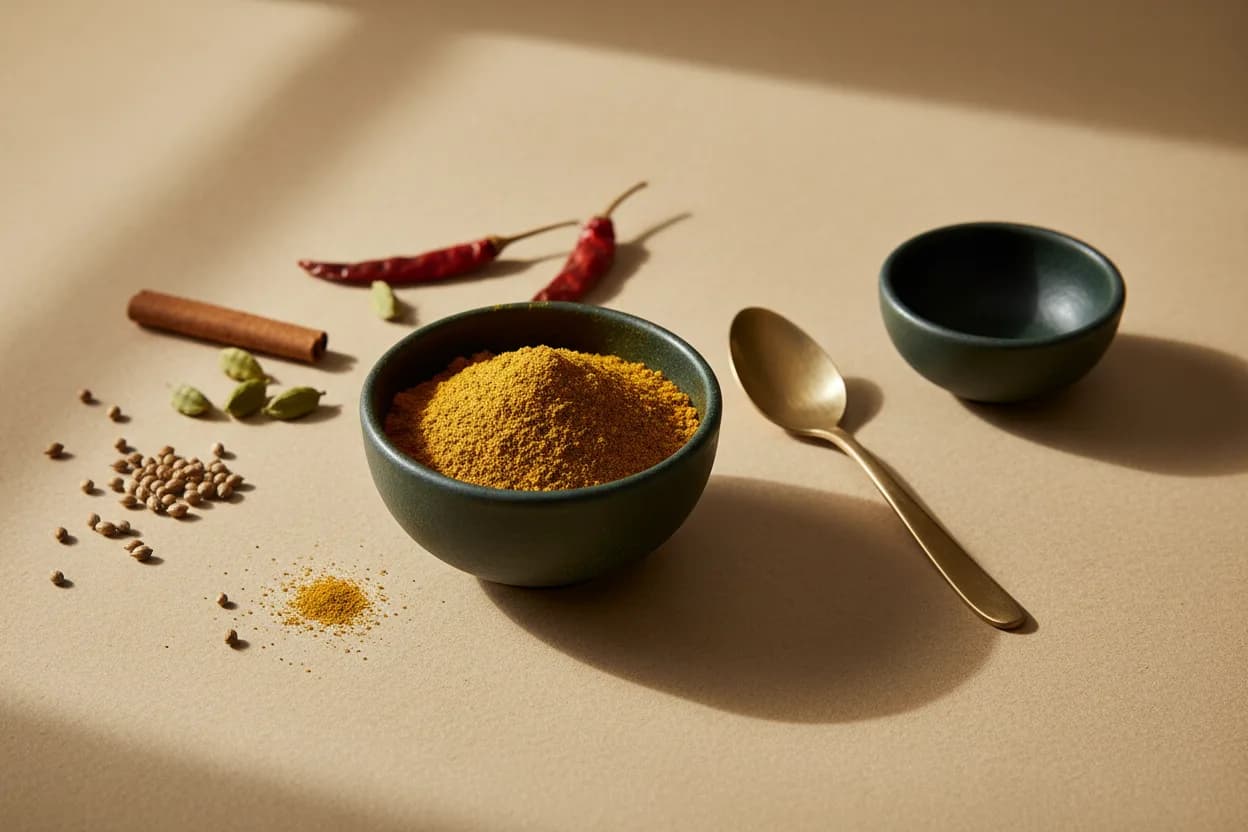
Japanese Curry Powder Easy · 15 min · Forgiving · 1 jar the blend behind kare raisu, ground from whole seed  Curry reached Japan through the British navy in the Meiji era, which is why it arrives as a powder rather than a masala ground fresh for each dish. This is that powder built from scratch. Coriander and cumin carry the bulk, and fenugreek supplies the sweet, maple-scented note that most people are actually naming when they say a thing smells like curry. Two ingredients set it apart from an Indian blend: the anise seed, which threads a thin line of licorice through the middle, and the dried pomelo peel, which does the job chinpi does in a Japanese blend and no masala asks for. Toast the whole spices, cool them completely, then grind and stir in the three powders last. The powders never see the pan. INGREDIENTS - 10 g coriander seeds (whole seeds; 2 tbsp)
- 6 g cumin seeds (whole seeds; 1 tbsp)
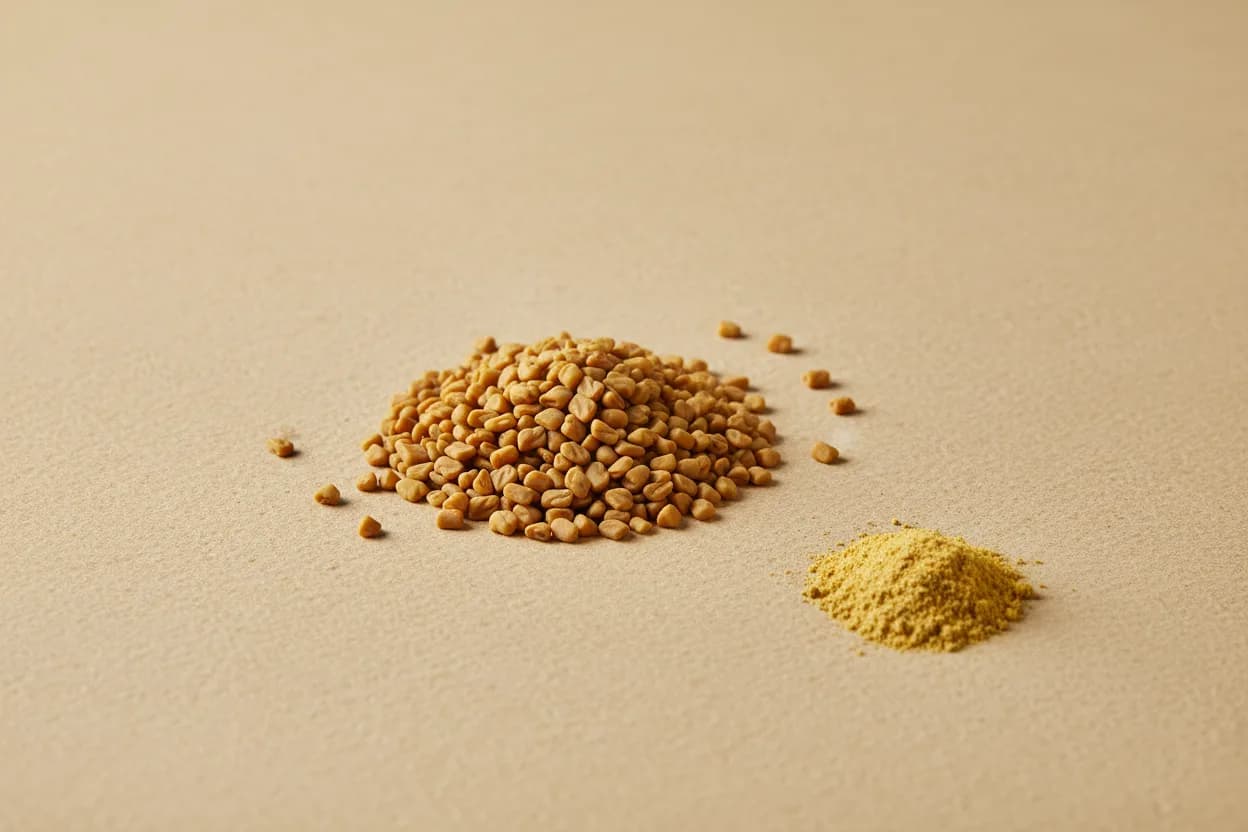
- 4 g fenugreek seeds (whole seeds; 1 tsp)
- 2 g fennel seeds (whole seeds; 1 tsp)
- 3 g black peppercorns (whole peppercorns; 1 tsp)
- 6 pods green cardamom (green, lightly cracked)
- 4 whole cloves
- 1 stick cinnamon stick (5 cm, broken up)
- 2 leaves bay leaves
- 2 whole dried red chilies (dried; stemmed)
- 1 g anise seeds (whole seeds; ½ tsp)
- 8 g turmeric (ground; 1 tbsp)
- 2 g ground dried ginger (ground; 1 tsp)
- 1.5 g dried pomelo peel (dried, ground; ¾ tsp)
Method - Toast the whole spices: set a dry skillet over medium-low heat and toast the coriander, cumin, fenugreek, fennel, peppercorns, cardamom, cloves, cinnamon, bay, and chilies until they are fragrant and a shade darker, shaking the pan so nothing scorches. (4 min)
- Add the anise seed for the last 30 seconds only. It is small and oily and will burn on the timeline the larger seeds need. (30 sec)
- Tip everything onto a cold plate and let it cool completely. Warm spices go gummy in the grinder and the blend will cake in the jar.
- Grind fine, then stir in the turmeric, ground ginger, and pomelo peel. The three powders never go in the pan: they scorch in seconds, and a scorched blend cannot be rescued. Sift out the husks.
- Jar it airtight. Three tablespoons of this is one pot of curry.
The chemistry - sotolon (C₆H₈O₃) · maple, curry-sweet
- linalool (C₁₀H₁₈O) · soft floral-citrus
- cuminaldehyde (C₁₀H₁₂O) · earthy, toasted
- anethole (C₁₀H₁₂O) · sweet, licorice
- curcumin (C₂₁H₂₀O₆) · golden, faintly bitter
- shogaol (C₁₇H₂₄O₃) · dry, penetrating heat
- naringin (C₂₇H₃₂O₁₄) · clean citrus bitterness
- cinnamaldehyde (C₉H₈O) · warm, sweet-woody
- eugenol (C₁₀H₁₂O₂) · clove-warm, numbing
- cineole (C₁₀H₁₈O) · cool, camphoraceous
- piperine (C₁₇H₁₉NO₃) · pungent lift
- capsaicin (C₁₈H₂₇NO₃) · direct heat
Storage - Sealed in a jar away from light and heat, the blend keeps about 2 months before it starts to flatten.
- It is the same work for twice the quantity, so double it.
|