kale
Brassica oleracea
IN ARABIC كرنب أجعد
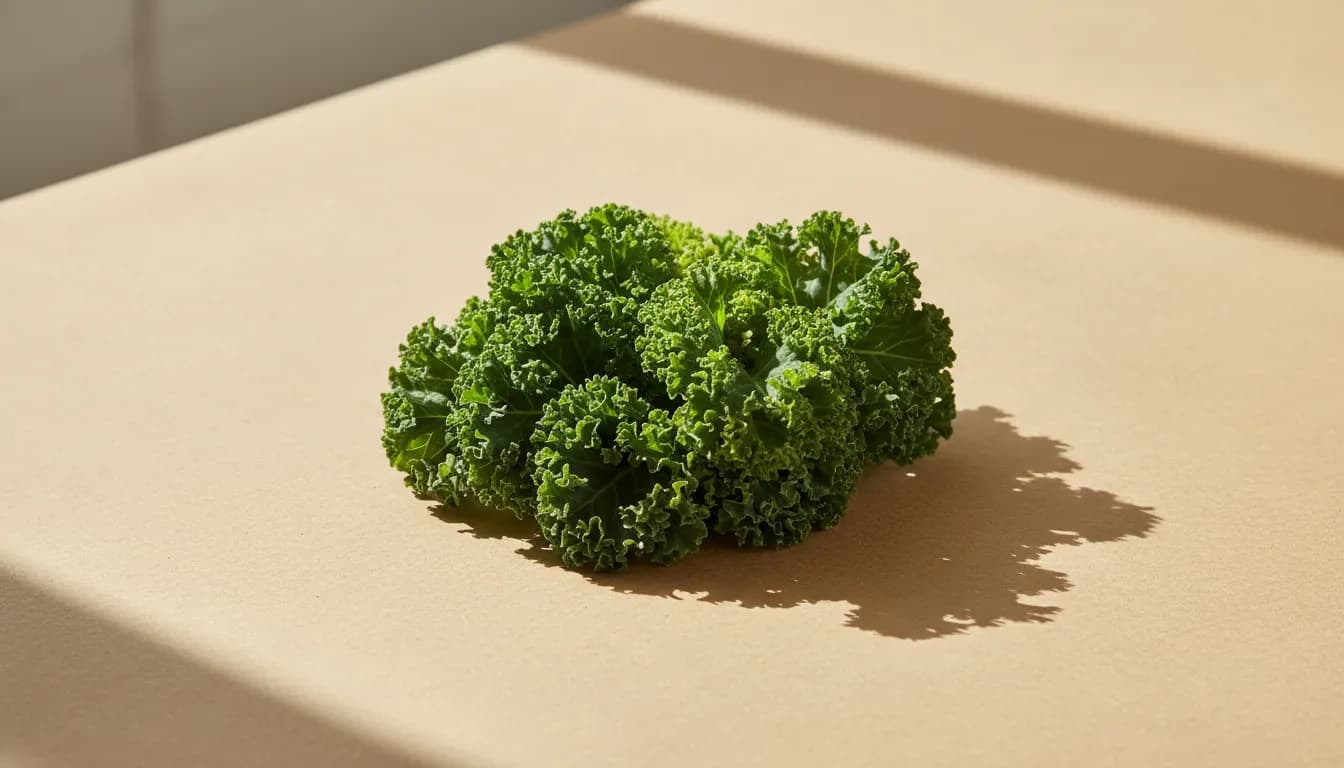
A dark, bitter brassica leaf, the smoothie's vitamin and antioxidant load.
ABOUT
Brassica oleracea, the leaf, goes into one recipe here, the green protein smoothie: 60 grams of whole leaf against 250 ml of full-fat milk, 120 grams of banana, 80 grams of mango, whey, collagen, and pumpkin seeds, chia and flax. It is never cooked. The seeds are ground dry first, then the kale and milk are blended until completely smooth, with no green flecks left, because the kale should disappear into the base; the fruit and the rest come after. The recipe credits it with vitamins and cruciferous defence compounds, and the library lists two: beta-carotene, a provitamin A pigment, and sulforaphane, the crucifer's defence.
No Journal note is about kale itself, but the note on papaya seeds lists it among its ingredients, and it covers the order kale sits in. Brassicales also holds mustard, cabbage, horseradish and watercress, and the glucosinolates, sulphur compounds that give each its sharpness, hold the order together. They are not pungent alone: they need myrosinase, stored separately and brought into contact when tissue is crushed. The note's heat figure, the enzyme inactivating across roughly 30 to 60 degrees, was measured in broccoli, not kale. The human feeding trials it cites found hydrolysis and isothiocyanate absorption greater from raw vegetables with the enzyme intact than from cooked ones. No step here heats the leaf.
CHEMISTRY
2The characteristic compounds documented in this ingredient, plus any the library traces to it in a recipe. Not an exhaustive phytochemistry.
the crucifer's defence
provitamin A pigment
USED IN
1Green Protein Smoothie
60 g · whole leaf
STEP 2 Greens: Add the milk and the kale and blend until completely smooth, with no green flecks left; the kale should disappear into the base.