dried lumi
Citrus aurantiifolia
IN ARABIC لومي مجفّف
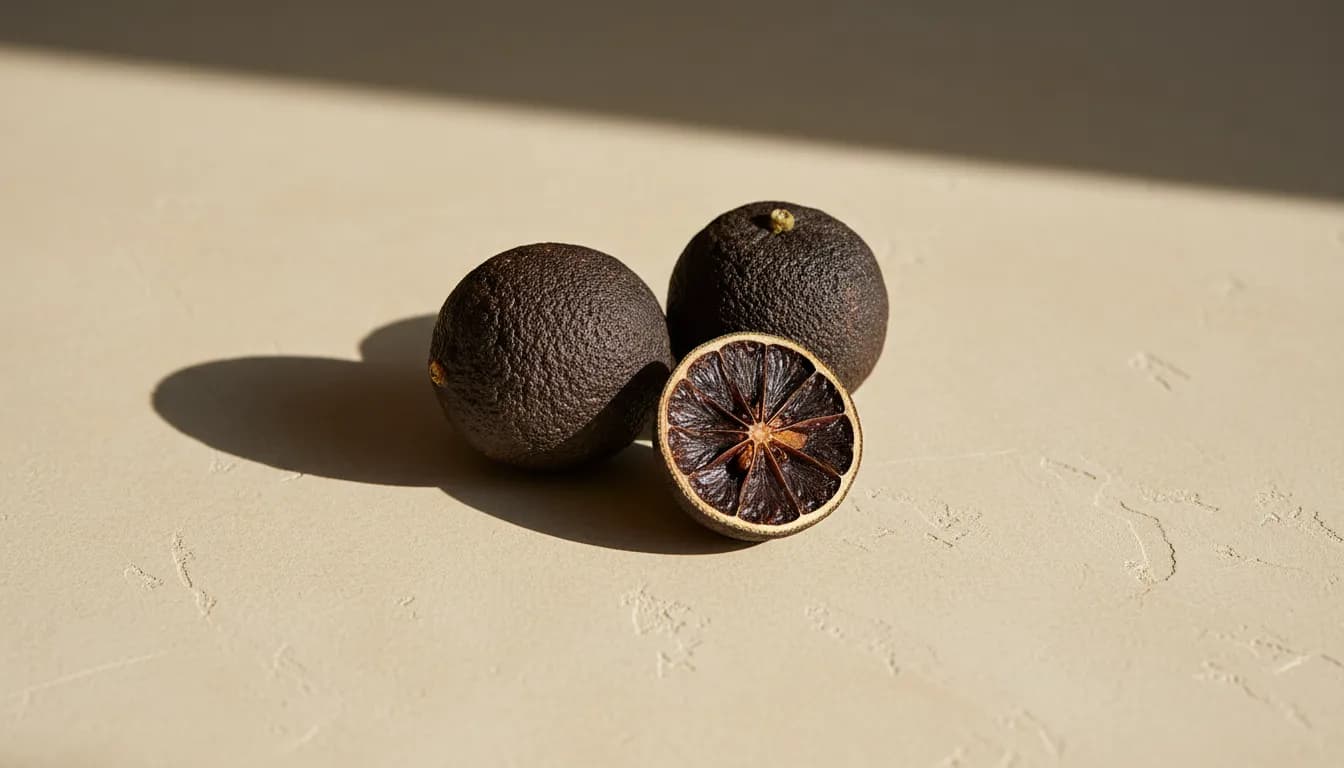
Pierced dried lime, all fermented-citrus tang.
ABOUT
Dried whole, Citrus aurantiifolia appears once in this library, in Gazan sayadiya. One dried lime (lumi), pierced, goes into the pot with 380 ml of water and the salt once the onions have gone deep brown, the garlic and tomato paste have cooked 2 to 3 minutes, and 260 ml of soaked, drained rice has been stir-fried 2 minutes with the rice spice mix. The pot comes to a boil, the fried mullet is laid on top, and it cooks covered on low for 15 to 18 minutes, then rests 10. The recipe has the pierced lime steep in the rice liquid and traces limonene to it, crediting a clean, fermented-citrus brightness that cuts the fried richness so each bite does not turn heavy.
The Journal's note on citrus ancestry puts limonene in context. It is present in almost every citrus peel and smells generically of citrus; grapefruit peel oil runs 86 to 98 per cent limonene, and what makes grapefruit smell of grapefruit is nootkatone, under one per cent of the oil. The same note traces lemons and limes to one father, the citron, Citrus medica, which contributed to every lime and lemon and was the direct male parent of the main subgroups. English words track the genetics poorly: the Rangpur lime and the rough lemon share the same two parents and are filed under different fruits.
CHEMISTRY
1The characteristic compounds documented in this ingredient, plus any the library traces to it in a recipe. Not an exhaustive phytochemistry.
bright, citrus
USED IN
1Gazan Sayadiya
1 whole · dried lime, pierced
STEP 9 Add the water and pierced lumi, season with salt, and bring to a boil.