Gazan Sayadiya
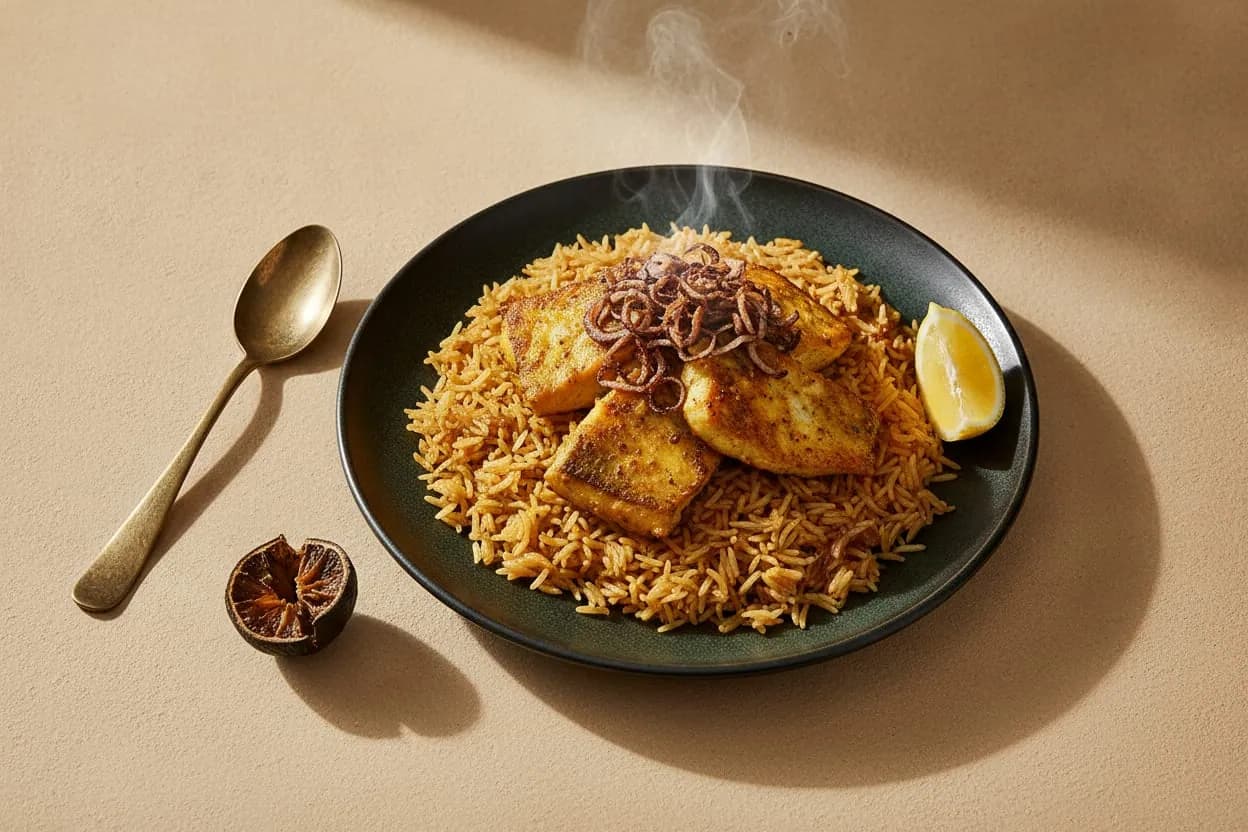
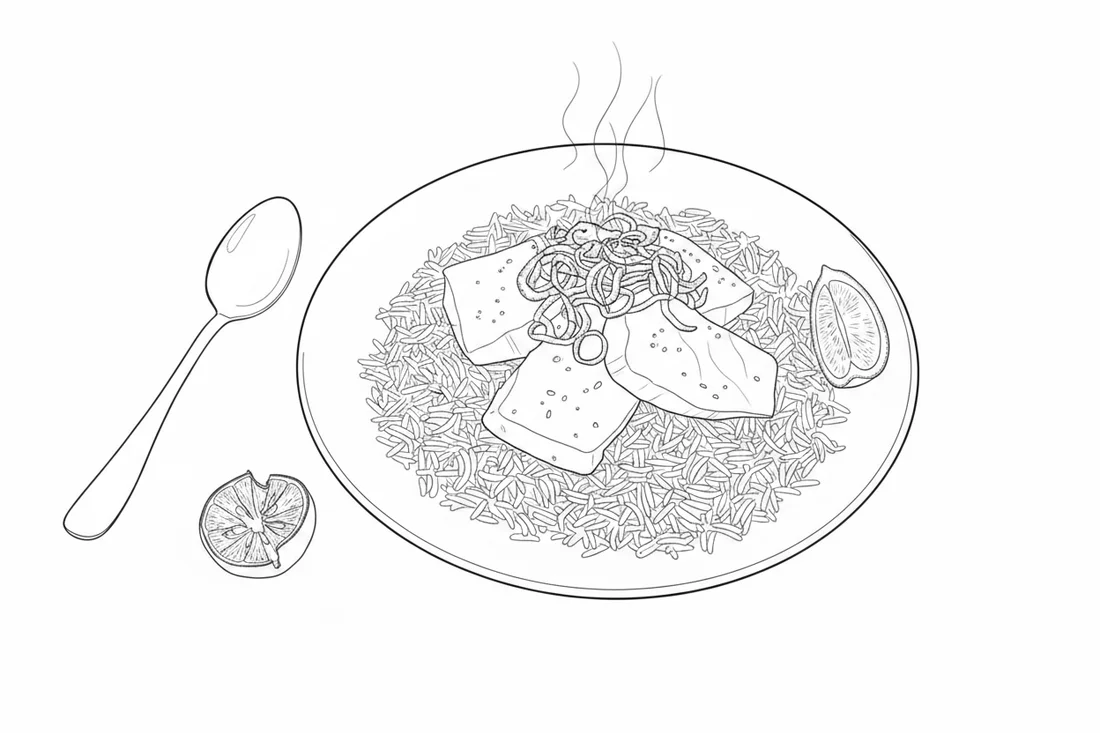
A coastal Gazan classic where crisp-fried mullet rests over rice stained amber by slow-caramelized onions, dried lime, and a warm spice ledger. It reads as savoury and grounding, a plate built on Maillard depth and a bright citrus edge that keeps the richness in balance.

Method
Check off each step as you go. Your progress is saved. Amounts below already match your batch size.
The chemistry
SKELETAL STRUCTURES4 compounds carry this recipe. Here is what each one does and, where we have it, what it actually looks like.
Carried in from the fish and rice spice mixes, cuminaldehyde lays down the dusky, sweat-and-soil base note that anchors the whole plate. It reads as spice-warmth on the palate long before the citrus arrives.
Turmeric's pigment travels in with the fish rub, tinting the crust and rice a warm amber and adding a faint earthy bitterness beneath the fry. It is as much color as flavor, threading gold through the dish.
A Maillard mixture born in the crackling fried fish and the deep-caramelized onions, pyrazines supply the toasted, almost meaty savour that defines sayadiya. They are the roasted spine that makes the plate taste cooked-down and complete.
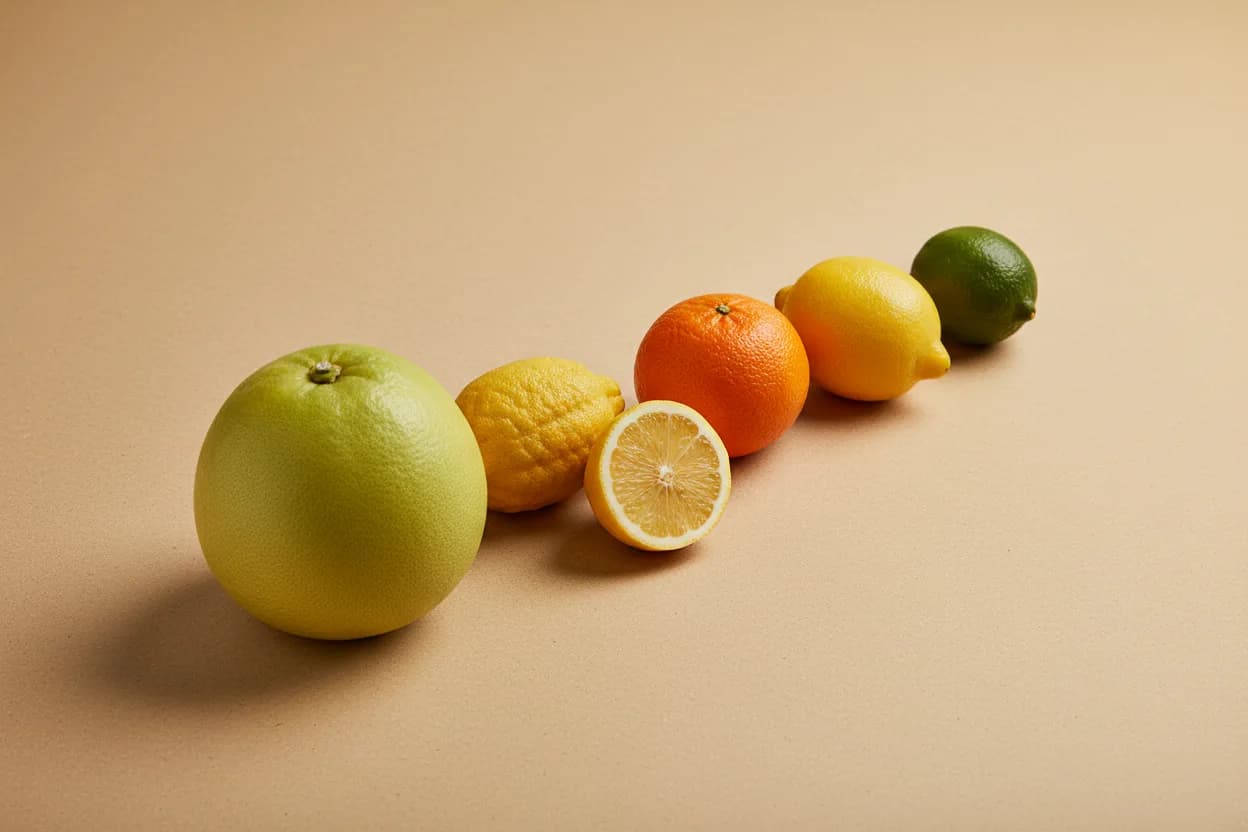
From the pierced dried lime (lumi) steeping in the rice liquid, limonene lifts the whole dish with a clean, fermented-citrus brightness. It cuts the fried richness and keeps each bite from turning heavy.
Nutrition
ESTIMATED · WHOLE RECIPEA rough estimate for everything this recipe makes: the whole batch, not one serving. It moves with the batch size you set above.
An estimate, summed from USDA reference values (11 of 11 ingredients counted). Oil for frying and water for boiling are left out; everything else is counted as listed. Real numbers shift with brand, ripeness, and how it's cooked. Treat it as a ballpark, not dietary or medical advice.
On the table together
THE INDEX, LINKEDThis recipe is part of a set: follow the thread through the blends it uses and what it's served with.