lemon valerian
Valeriana officinalis
IN ARABIC ناردين الليمون
Sedative root that deepens rest.
ABOUT
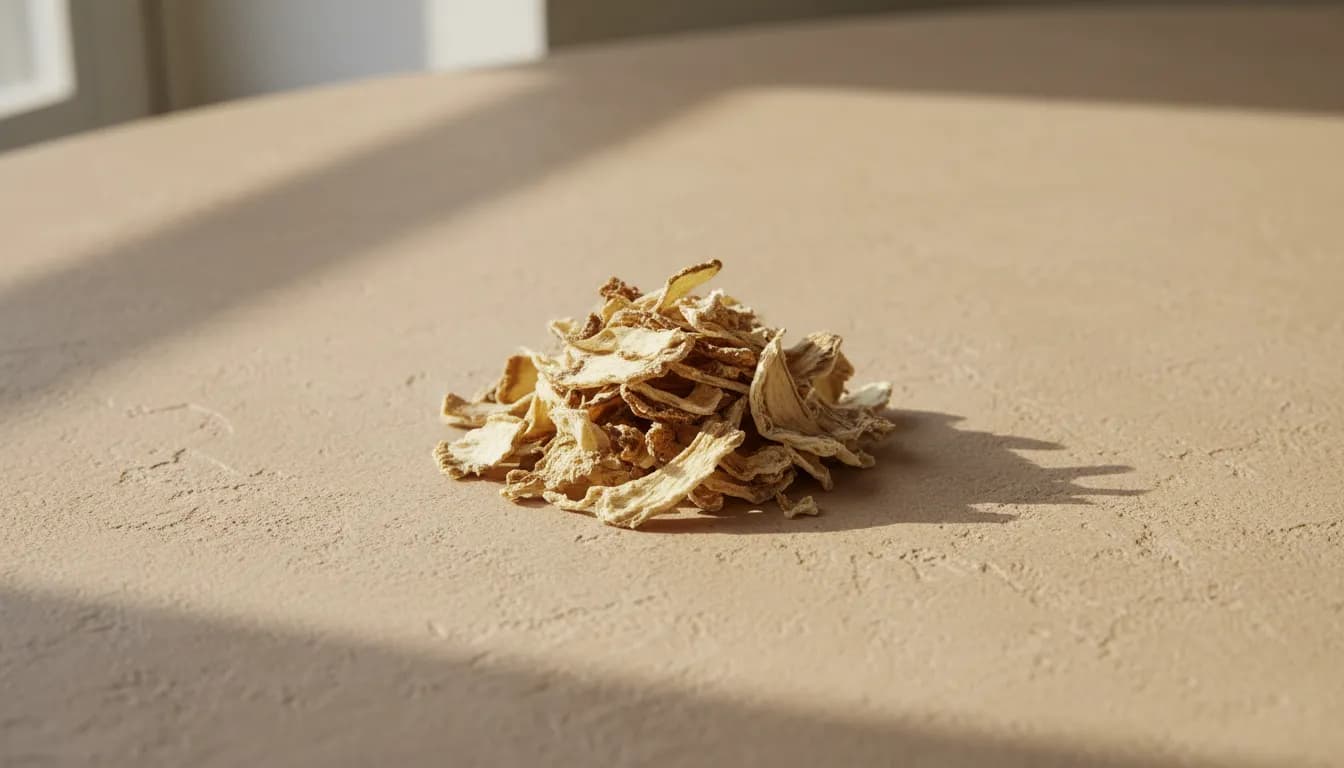
The root of Valeriana officinalis, listed in this library as lemon valerian and used in one recipe, Deep Sleep Tea. The cup takes 0.2 grams of it in 300 ml of water, beside 1 gram of chamomile and 0.09 of lavender. The fennel simmers for 3 minutes first; then the heat goes off, the chamomile, lavender, valerian and mint go in, and the pot steeps covered for 6 to 7 minutes before it is strained and drunk just before bed. The recipe's own text says to keep valerian to that small amount, and credits valerenic acid with slowing GABA breakdown.
The Journal has no note on valerian trials. The nearest is its note on spikenard, a Himalayan root of the same plant family, which calls it a relative of valerian and finds one honest chemical overlap: jatamansone, better known as valeranone, C₁₅H₂₆O, reported in both spikenard and valerian root oil. Valerian's own markers, valerenic acid and the valepotriates, are a different matter, and the note warns that reports of them in material sold as jatamansi must be read against the substitution problem. On sedation the note's verdict on spikenard is blunt: no good human evidence for the thing it is famous for. The note makes no such claim about valerian itself, so the GABA line above stays the recipe's own statement.
CHEMISTRY
1The characteristic compounds documented in this ingredient, plus any the library traces to it in a recipe. Not an exhaustive phytochemistry.
deeply sedating
USED IN
1Deep Sleep Tea
0.2 g
STEP 2 Turn off the heat and add the chamomile, lavender, valerian, and mint.