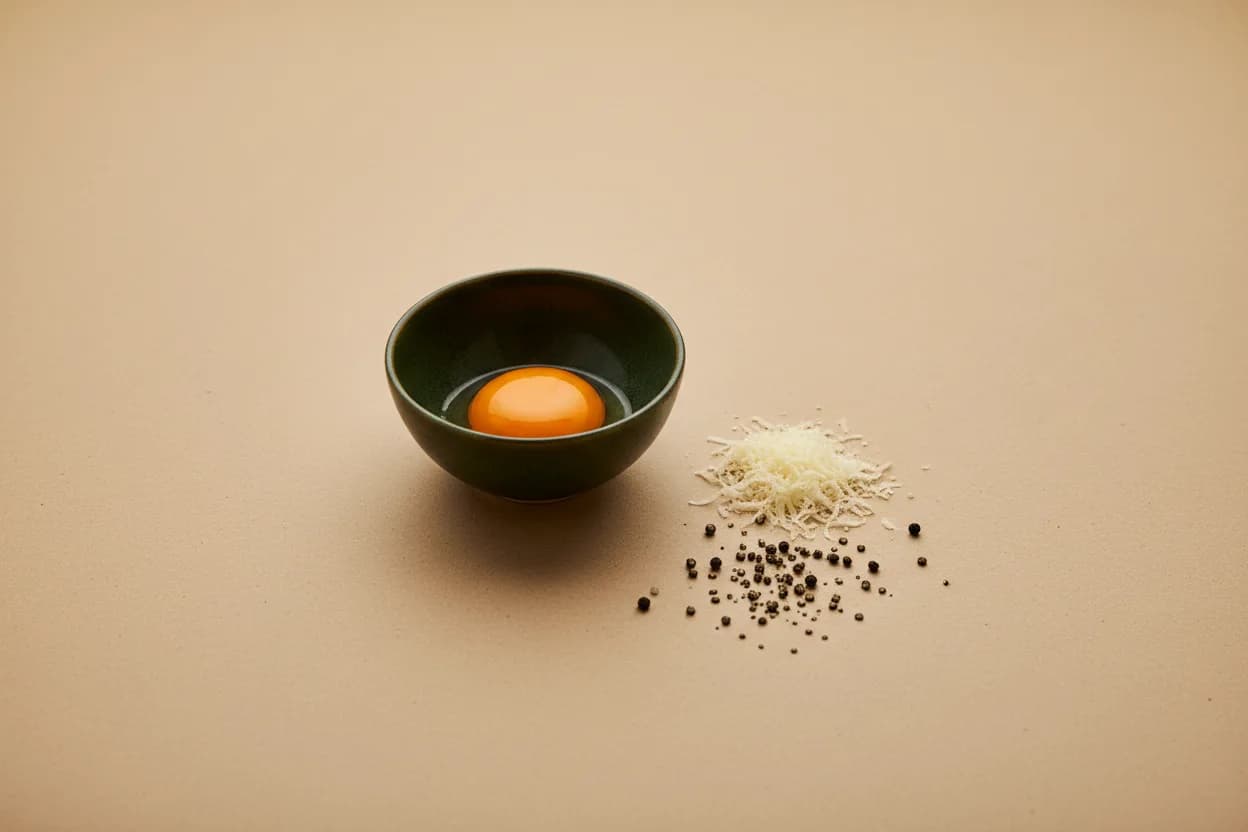
540 g of fatty, boneless lamb brisket, 11 g of salt (about 2 per cent of the meat) and 2.5 g of freshly ground pepper: that is the entire cure. Pat the brisket dry and rub the mixed salt and pepper over every surface. Wrap it tightly, or seal it in a bag, and refrigerate it for four to five days, flipping it once or twice a day. Then unwrap, rinse briefly under cold water, pat it completely dry, and set it on a rack, uncovered, in the fridge for 12 to 48 hours, until it has firmed up to the bite you want. The yield is about 400 g, the pork-free answer to guanciale in a carbonara.
The Journal's note on water activity names the first job of the salt. Salt or sugar lowers the vapour pressure of the water in a food, and water activity is the number that governs whether it keeps; the note counts a five-day salt cure on lamb among its examples of stacked barriers, where the salt does the water activity and the cold does the rest. It does not measure this cure, so there is no figure for this lamb. The second job is flavor: the recipe says salt and time concentrate the lamb's free glutamate, and the same note calls free glutamate savouriness itself. The funk is methyloctanoic acid, a branched-chain fatty acid all but unique to sheep, the molecule the nose reads as lamb, and the cure focuses it.
Use it within a few days, or portion it into carbonara-sized pieces, wrap tight and freeze. The same note carries the caution about the freezer: volatiles from lipid oxidation climbed steadily in meat held at minus 18 degrees across eighteen weeks, so a freezer slows the change without halting it. Every stage of the cure sits in the fridge. Carbonara for Two calls for the lamb, and the Journal's carbonara note argues that the sauce is not cooked at a temperature, but down a slope.