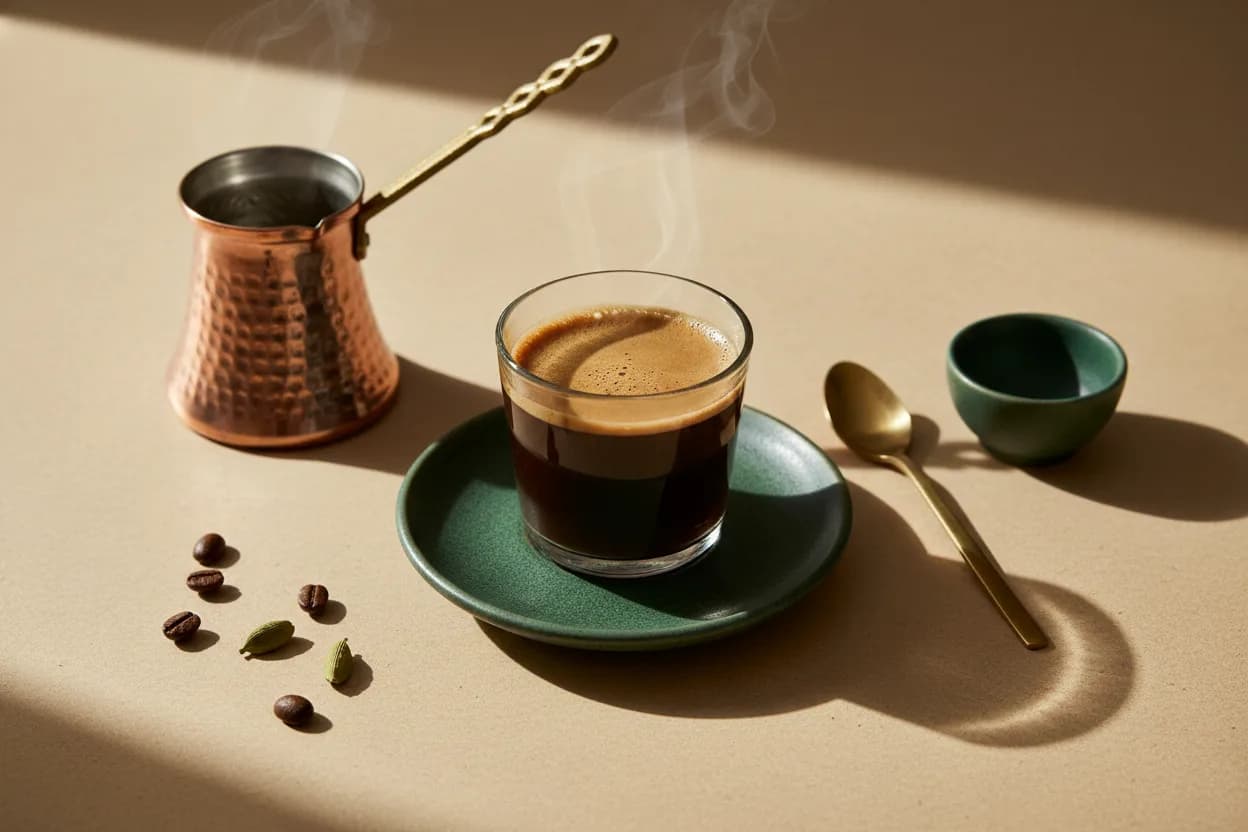
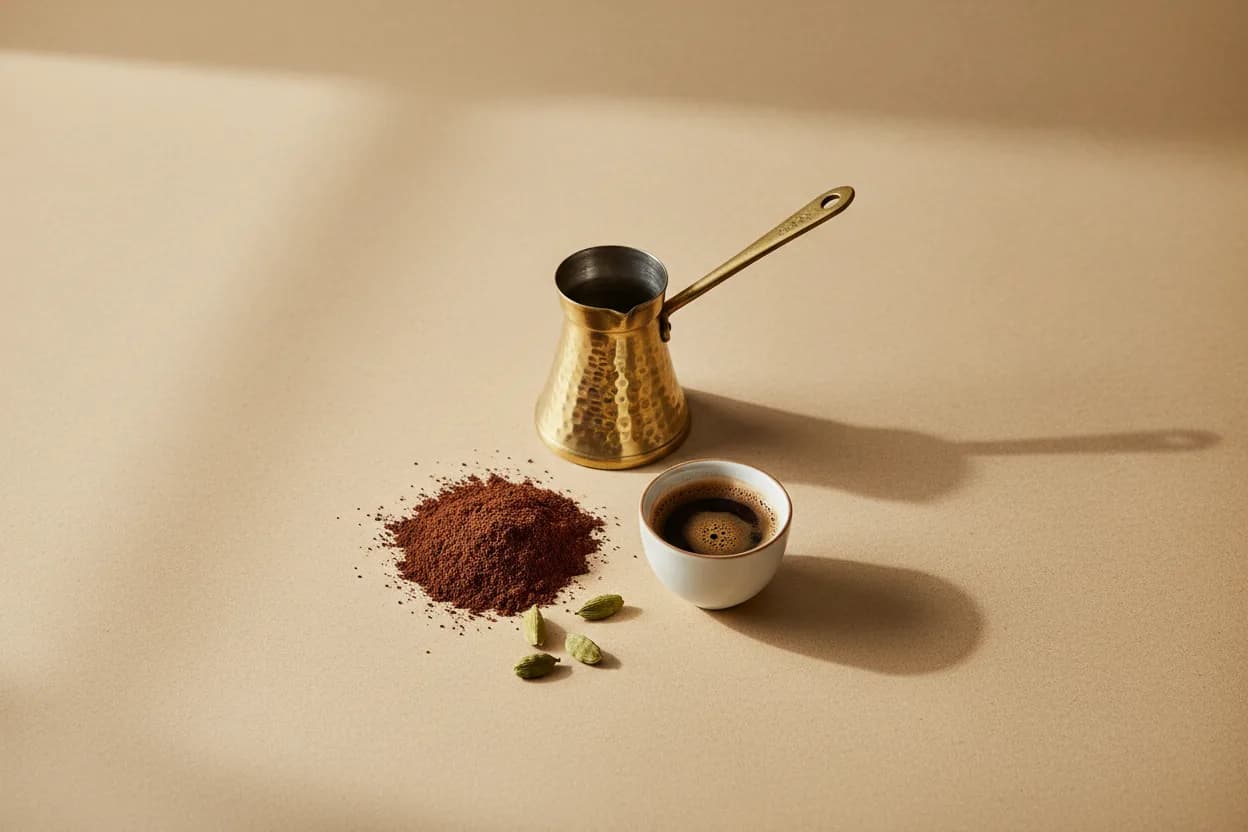
Turkish Coffee Easy · 8 min · Moderate · 1 cup the unfiltered cup: fine powder, cold water, one slow rise 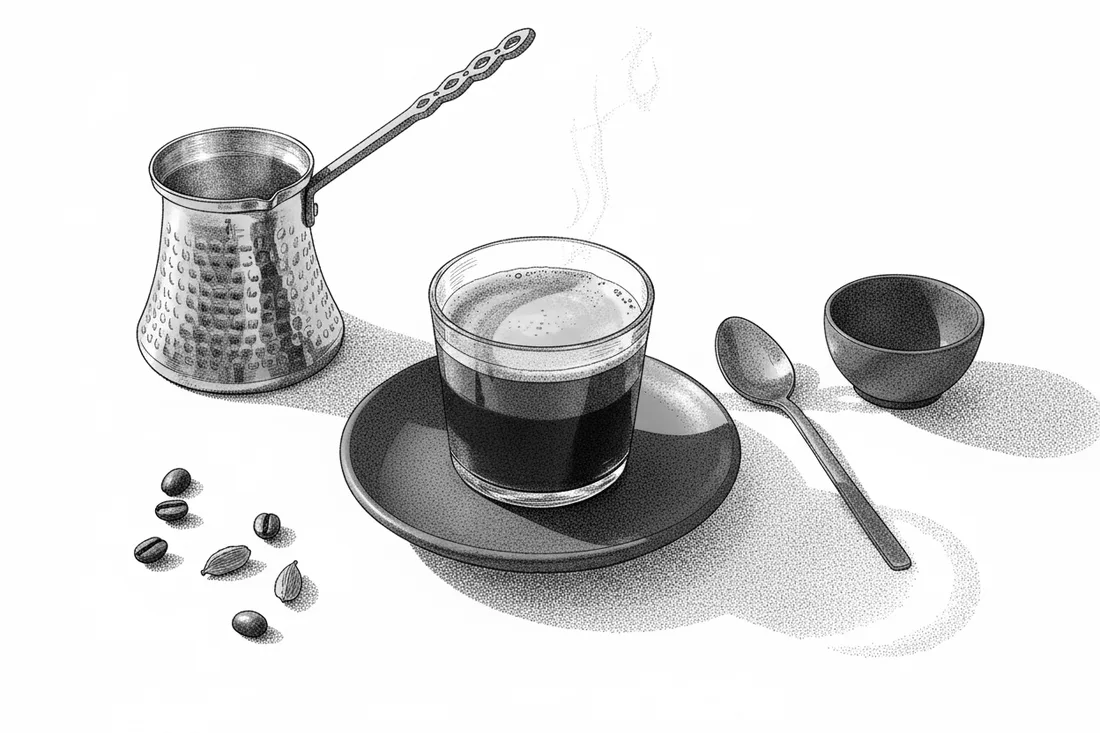 The cup the Ottoman treasury once taxed by the pounding: coffee ground to flour, stirred into cold water with the sugar decided in advance, and brought up slowly until the foam climbs the pot. Nothing is strained. The powder goes into the cup with the drink and settles into a bed you leave behind, and the roast under it is lighter than the colour suggests. One rule matters: a slow rise, never a rolling boil, or the foam breaks and the cup goes flat. Sugar is named when you order, sade, az, orta, şekerli, from none to a full spoon, and cardamom is the Levantine habit rather than the Istanbul one. INGREDIENTS - 7 g coffee (Arabica, ground flour-fine; a heaped teaspoon)
- 70 ml filtered water (cold; measured in the cup you will drink from)
- 4 g raw sugar (orta, one level teaspoon; omit for sade)
- 1 green cardamom (optional; one pod, crushed)
Method - Measure the water in the cup you will drink from and pour it, cold, into the cezve.
- Add the coffee and the sugar (and the cardamom, if it is going in) and stir until no dry powder floats. From here the spoon stays out.
- Set over the lowest flame and watch. The foam thickens, then climbs; lift the pot off the moment it reaches the rim, before it boils. (3–4 min)
- Spoon a little of the foam into the cup, return the pot to the heat for one more short rise, then pour slowly down the side of the cup.
- Rest so the grounds settle. Drink to the last finger and leave the bed. (1 min)
The chemistry - caffeine (C₈H₁₀N₄O₂) · the lift
- cafestol (C₂₀H₂₈O₃) · the unfiltered diterpene
- kahweol (C₂₀H₂₆O₃) · cafestol's twin
- chlorogenic acid (C₁₆H₁₈O₉) · bitter, astringent
- cineole (C₁₀H₁₈O) · the optional cool lift
Possible side effects - Unfiltered coffee carries cafestol and kahweol, the diterpenes a paper filter would remove, and daily heavy drinking of boiled or cezve coffee raises LDL cholesterol in trials. A cup or two is the tradition; a pot all day is not.
- A 70 ml cup carries roughly 90 mg of caffeine. Skip it late in the day, and keep to the usual pregnancy limits.
These notes are educational, not medical advice. |