cloves
Syzygium aromaticum
IN ARABIC قرنفل
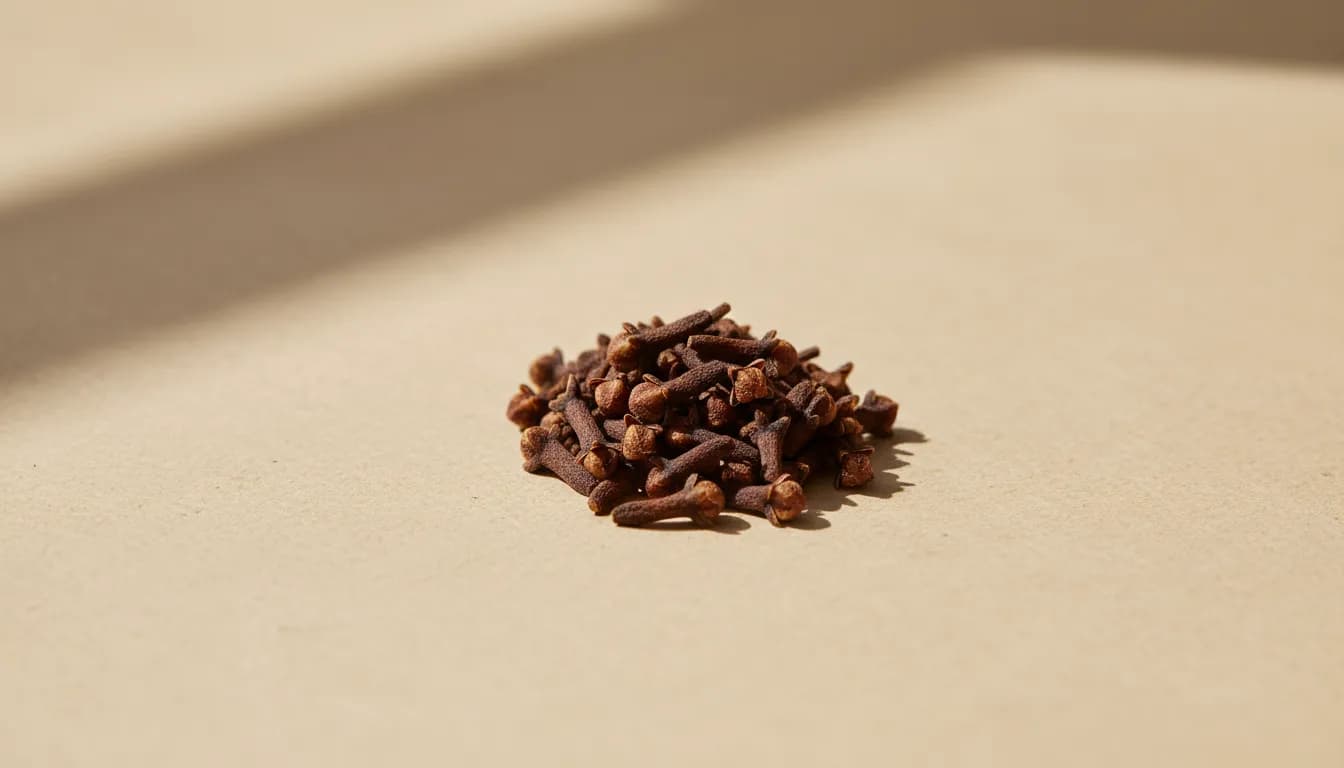
Dried flower buds, intensely warm and almost numbing; a little goes far.
ABOUT
Syzygium aromaticum's flower bud appears only twice in this library, in the curry powder (four whole buds) and the seven-spice mix (four grams, about one part of the total), and both recipes treat that as a hard ceiling rather than a starting point: the curry powder's own notes call four cloves "a deliberate ceiling," and the seven-spice mix keeps it to a single part specifically because any more of it takes over the whole blend. Both toast the whole bud in a dry pan before grinding it in with everything else.
Eugenol is almost the entire reason clove is so easy to overdose a dish with: it runs to 87.3 percent of the oil in one measured bud sample, and by weight in the whole bud itself, not just its oil, fresh clove carries 9,381 to 14,650 milligrams of it per 100 grams, close enough to a tenth that both figures land in roughly the same place by two different routes of measurement. Beta-caryophyllene, the same peppery-woody note found in pepper and cardamom, fills out what little is left. Eugenol activates TRPV1, the capsaicin receptor, and TRPA1, the one that reports mustard and cinnamon, at a half-maximal concentration of about 260 micromolar, which is the burn a whole clove delivers first.
What follows the burn is measured too. Painted onto one side of a tongue in a 2013 trial, eugenol produced burning and stinging that faded within minutes, leaving numbness that most subjects still reported ten minutes later, alongside a stranger effect: the same patch of tongue read a mildly warm stimulus as hotter for more than ten minutes afterward. The mechanism is not only the capsaicin receptor: eugenol also blocks sodium channels directly, at a potency in isolated neurons similar to lidocaine's, roughly 2.2 millimolar against 1.4, though the concentration a dentist actually injects, about 85 millimolar, dwarfs both. The human trial evidence for using it against actual tooth pain is a single 2006 study of 73 volunteers, and even that measured a needle stick through healthy gum, not an aching tooth; the United States FDA reviewed the evidence in 1991 and reclassified eugenol as a toothache remedy from established to unproven, a rule it never finished writing, so eugenol drops are still sold today under a regulation nobody completed. None of that is a reason to fear the cloves capped hard in these two recipes. It is a reason for that cap: an infant who swallowed under eight milliliters of clove oil went into acute liver failure and needed treatment before recovering completely.
CHEMISTRY
2The characteristic compounds documented in this ingredient, plus any the library traces to it in a recipe. Not an exhaustive phytochemistry.
peppery, warm-woody
USED IN
2Levantine 7-Spice Mix
4 g · whole; 1 part
STEP 2 Add the broken cinnamon and the whole cloves for the last stretch, just long enough to wake their oils, not brown them.
Japanese Curry Powder
4 whole
STEP 1 Toast the whole spices: set a dry skillet over medium-low heat and toast the coriander, cumin, fenugreek, fennel, peppercorns, cardamom, cloves, cinnamon, bay, and chilies until they are fragrant and a shade darker, shaking the pan so nothing scorches.