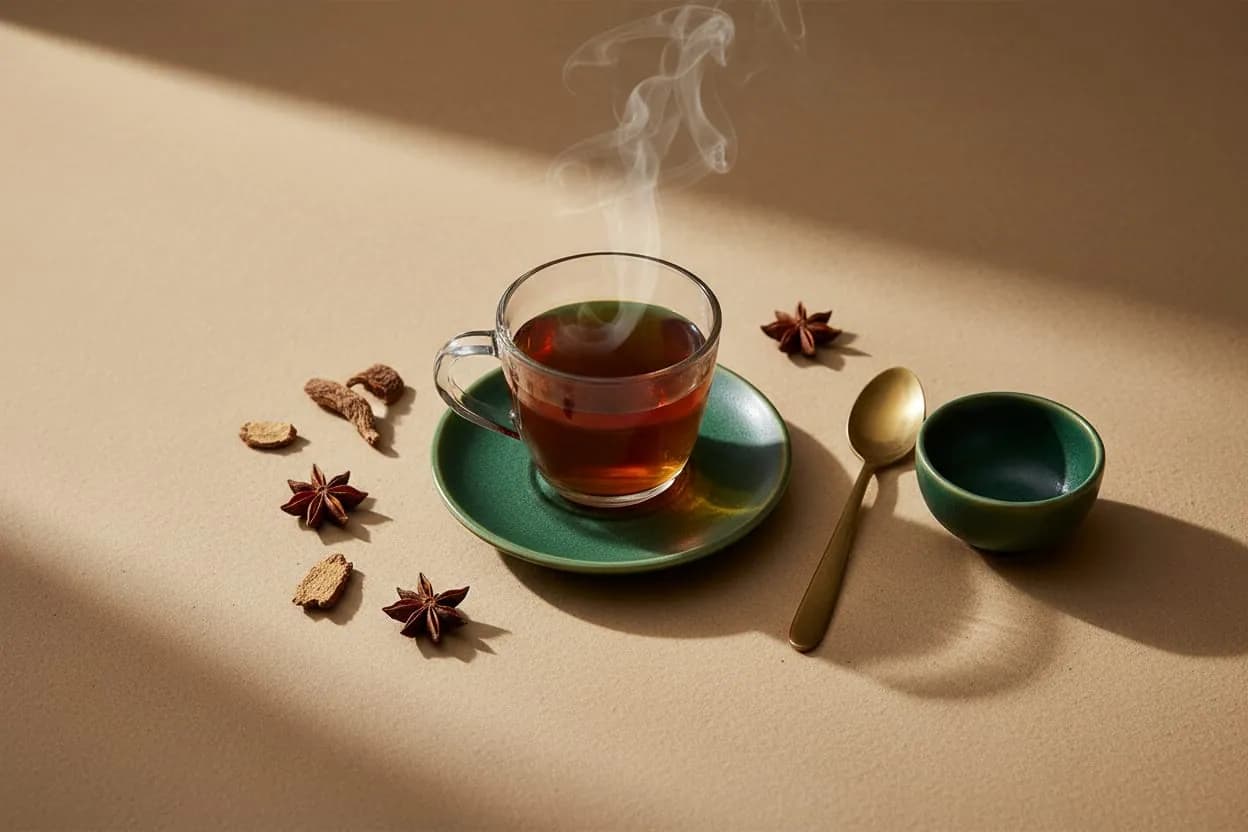
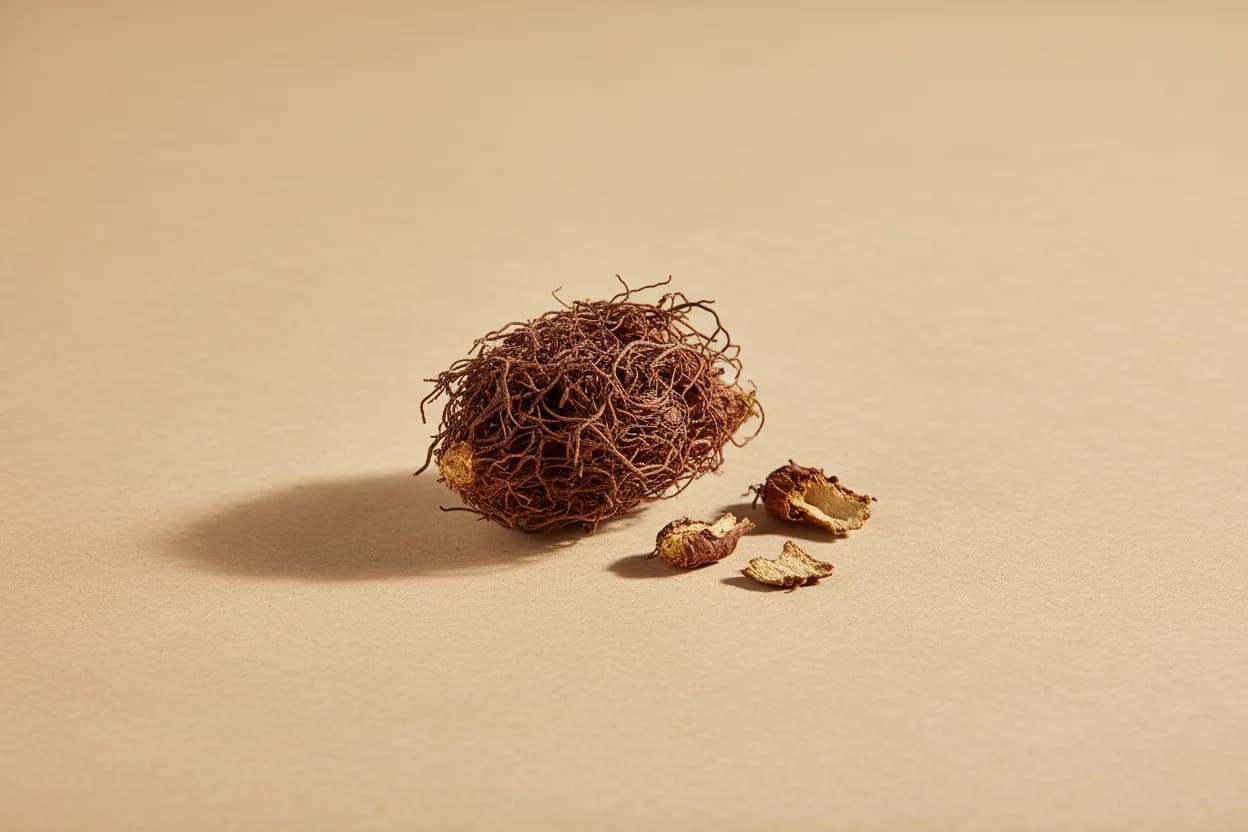
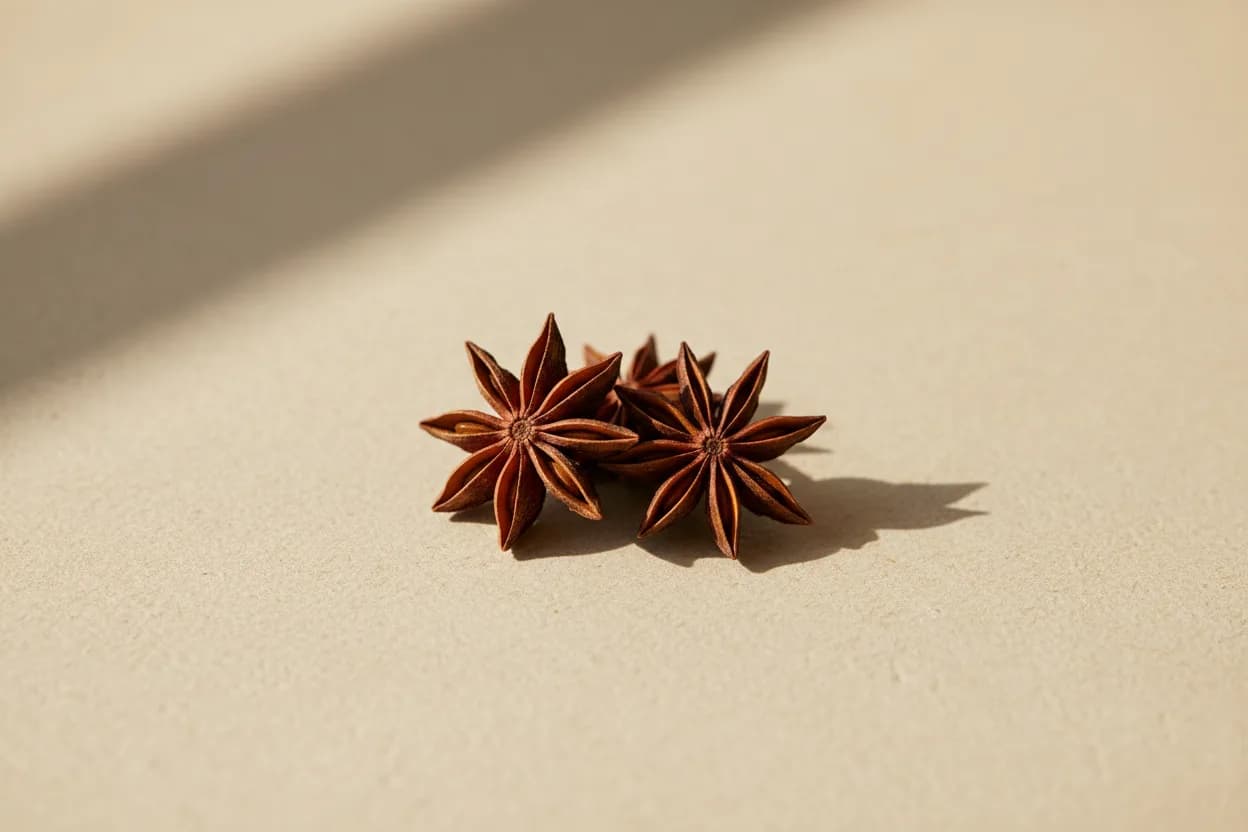
Two ingredients, steeped one way. A quarter teaspoon of dried spikenard root and an eighth teaspoon of star anise go into a small pot, water just off the boil poured over them, covered, eight to ten minutes. The Journal's note on brewing methods explains why: root and spice alone, nothing delicate to protect from the long soak. Spikenard gives up jatamansone, its sesquiterpene, in a slow, resinous register; star anise contributes anethole, seventy-two to ninety-two percent of its essential oil per the Journal's note on the spice, arriving as licorice sweetness. That sweetness is real; the multiple claimed for it, sweeter than sugar, is not, tracing to an uncited Wikipedia line the Journal's note on sweet taste could not verify.
The calm each half promises rests on different ground. Spikenard's reputation as a sedative is old, and the clinical evidence barely exists: a 2020 review in the Journal of Ethnopharmacology lists dated methods, missing toxicology and no clinical trials. The closest human trial gave forty people with stage-one hypertension three grams a day for four weeks and found lower blood pressure than placebo, about blood pressure, not sleep. The Journal's note on spikenard keeps the root for how it smells, with no medical claim. Star anise's half has a different problem: what settles a spasming stomach, at one to three and a half grams, is Pimpinella anisum, anise seed, a different plant and family from the star-shaped pod. They share only the anethole; the Journal's note on star anise calls them unrelated plants that converged on one molecule, grouped by taste, not botany.
Steep it covered so the resin and licorice stay in the cup, not the kitchen, and let the full eight to ten minutes run; spikenard needs the time. One thing before reaching for more than a quarter teaspoon: Nardostachys jatamansi was assessed Critically Endangered in 2014, its wild population in India's Himalayan region down more than eighty percent in a decade. Buy it in grams, from someone who can say which valley it came from, and let this stay a small, occasional cup, not a nightly one.