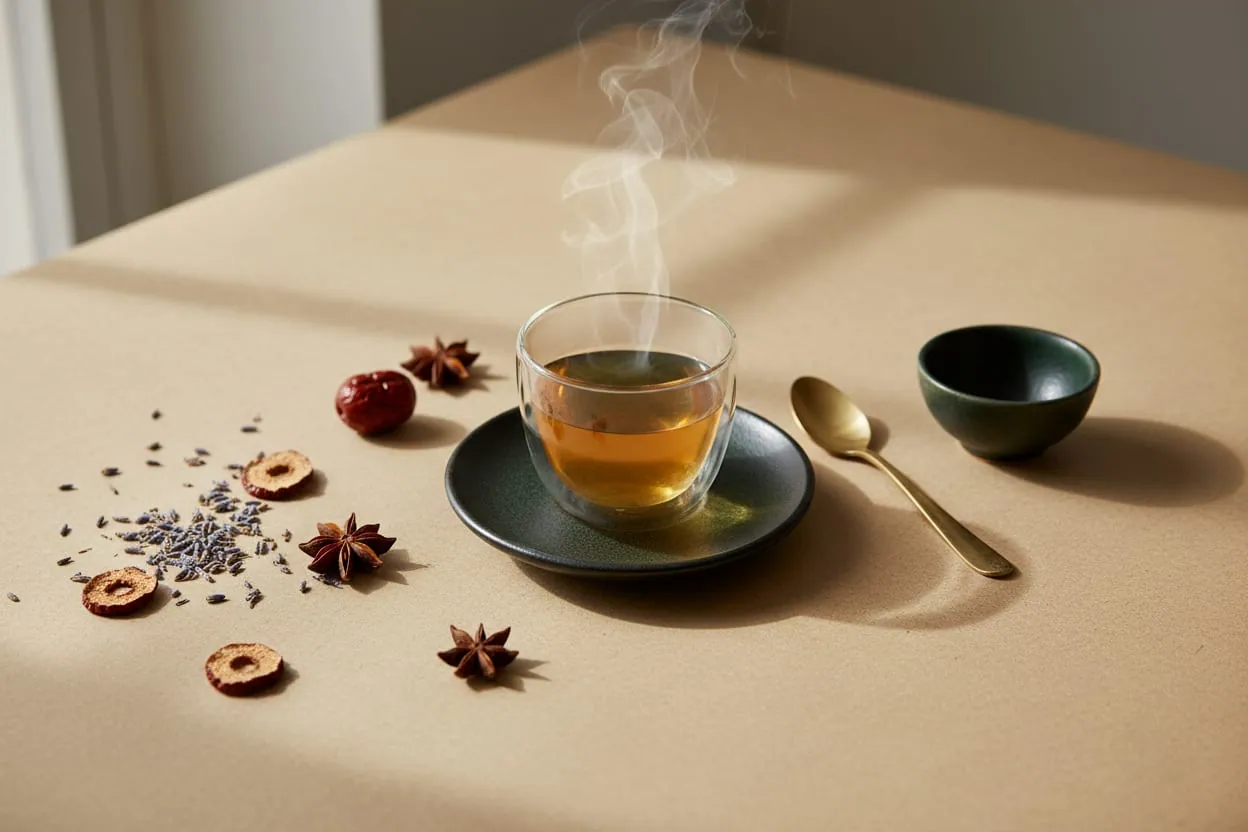
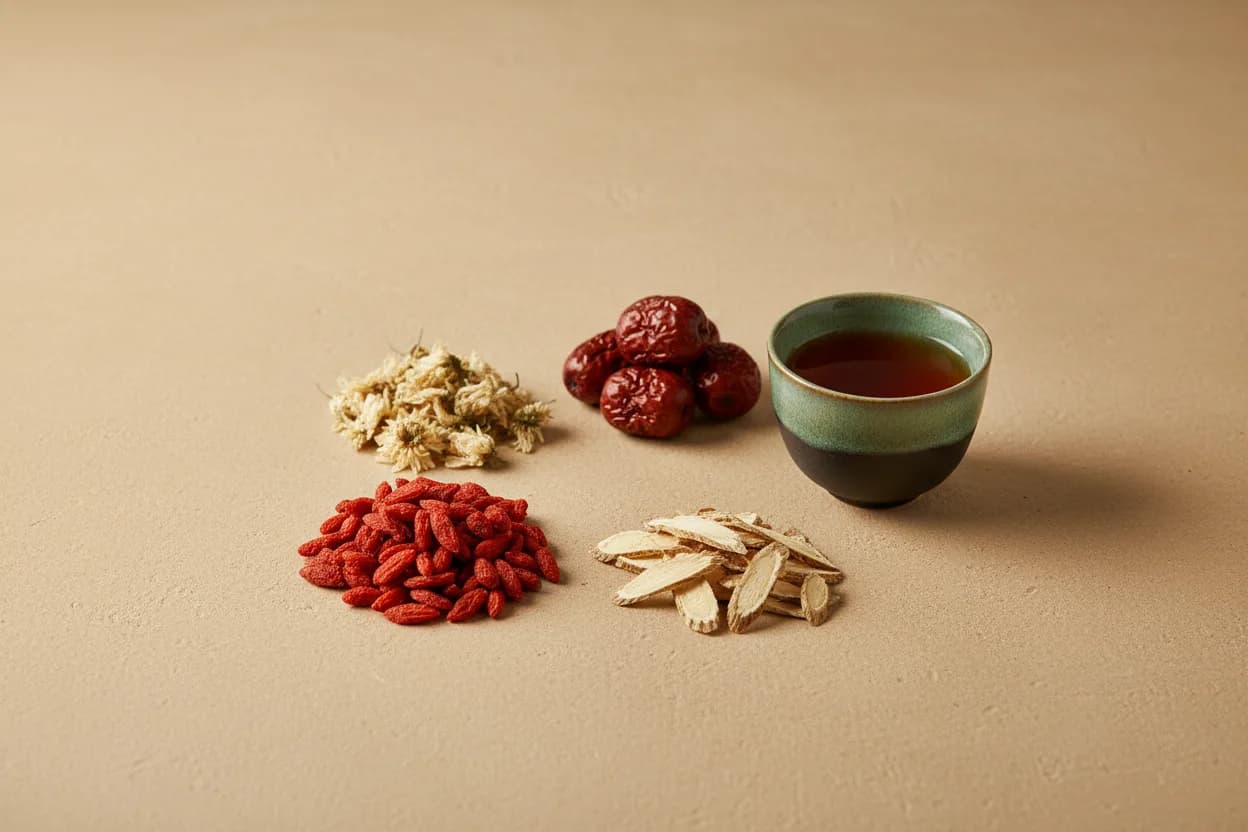
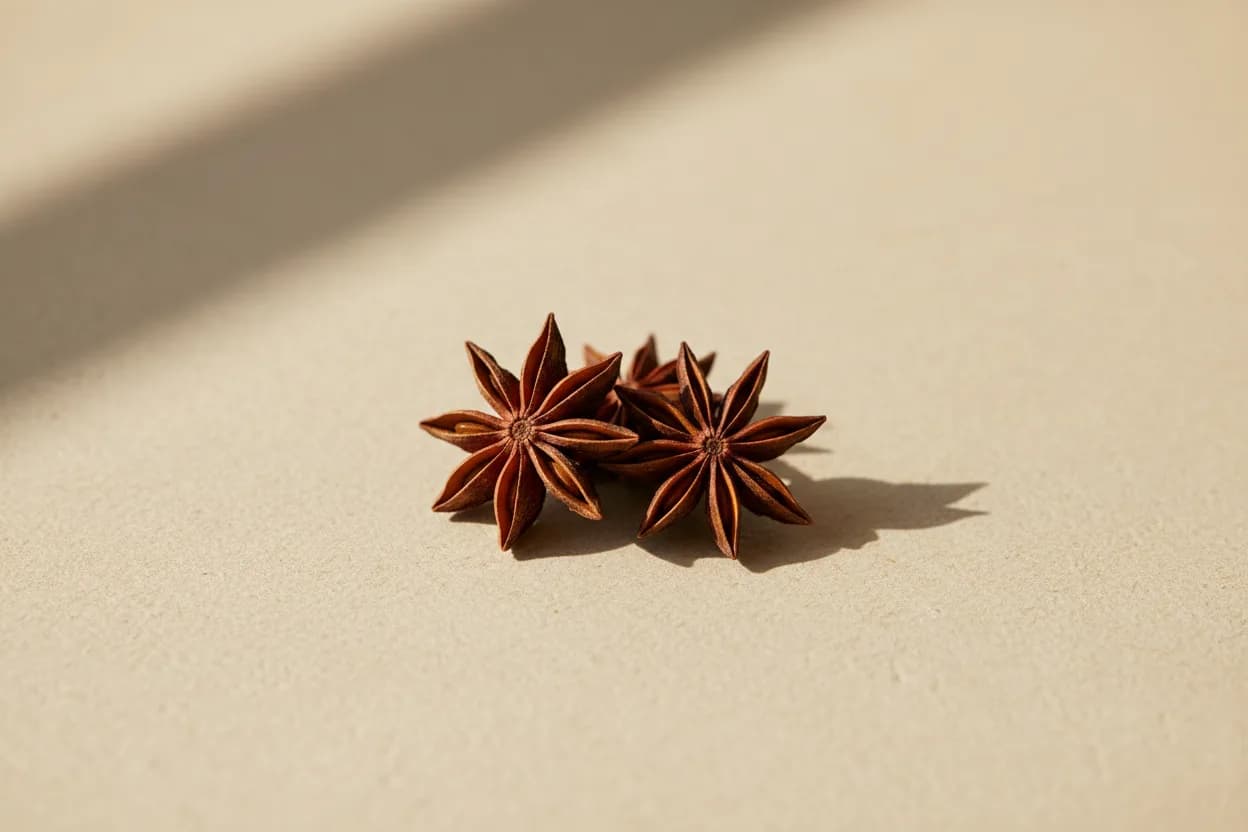
Jujube is sliced first to open its sweetness, then goes into the pot with an eighth of a teaspoon each of lavender buds and broken star anise; water just off the boil goes over all three, covered, for six minutes, strained into a warmed cup. Lavender's two recognized quality markers both show up: linalool, 33.6 to 46.1 percent of the flower's oil, and linalyl acetate, 24.7 to 32.7 percent, the ester keeping the floral note sweet rather than sharp. Star anise adds its anethole, seventy-two to ninety-two percent of its own oil, as a bridge between the flower and the jujube's mellow, date-like body. Jujube itself contributes jujubosides, a saponin-and-polysaccharide complex credited with the sweetness and the calm, though that is a much older claim than a chemical one.
The clearest evidence here still belongs to lavender, and even that comes with a condition. The Journal's note on herbs for chronic stress walks through it: the strongest trial data is Silexan, a licensed oral medicine, not dried buds in water, five trials and 1,213 patients in which it beat placebo by 2.9 points on the Hamilton Anxiety scale, every one of those trials funded by the company selling it. Jujube has no equivalent trial in the sources this library draws on; its calming reputation is traditional, older than any controlled study. The honest description: a documented, sponsor-funded effect of modest size from the lavender, and an undocumented, long-used one from the jujube. Star anise is here mostly for the anethole bridge, not a claim of its own.
Drink it in the day's last hour rather than reaching for it mid-afternoon; a gentle cup built for winding down. One reassurance: jujube is a Rhamnaceae, unrelated to the Aristolochia species behind the kidney and bladder cancer cases documented in poorly sourced Chinese herbal mixtures, so a tea made from a known ingredient carries none of that risk.