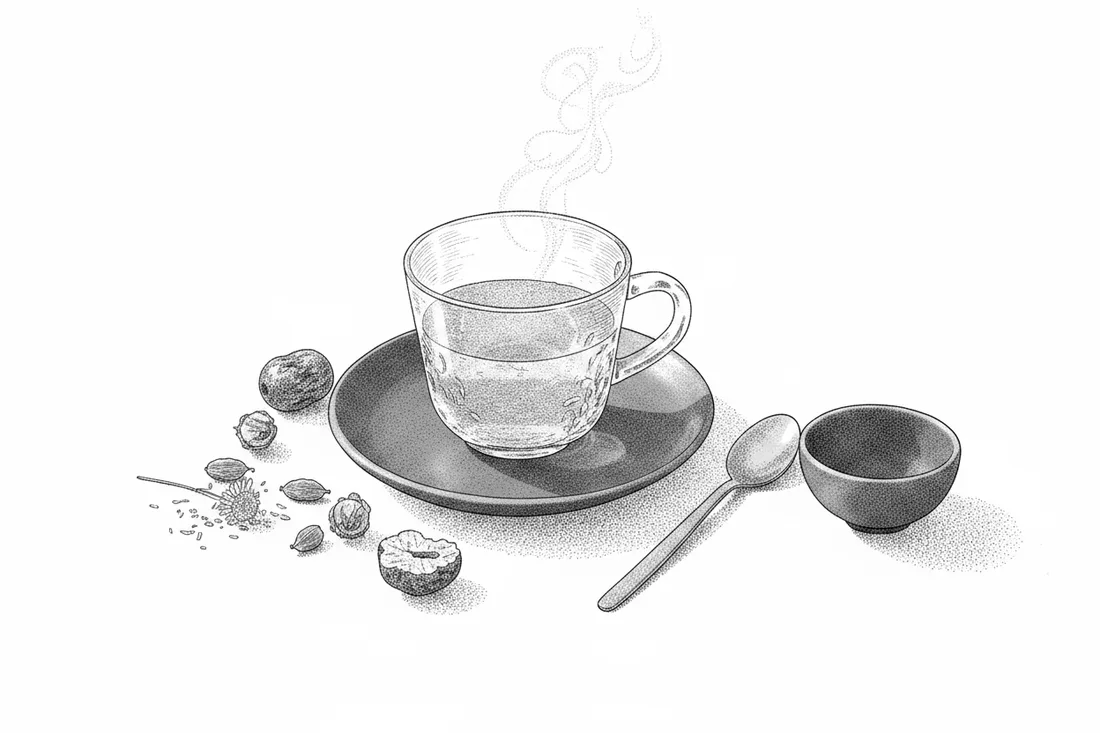
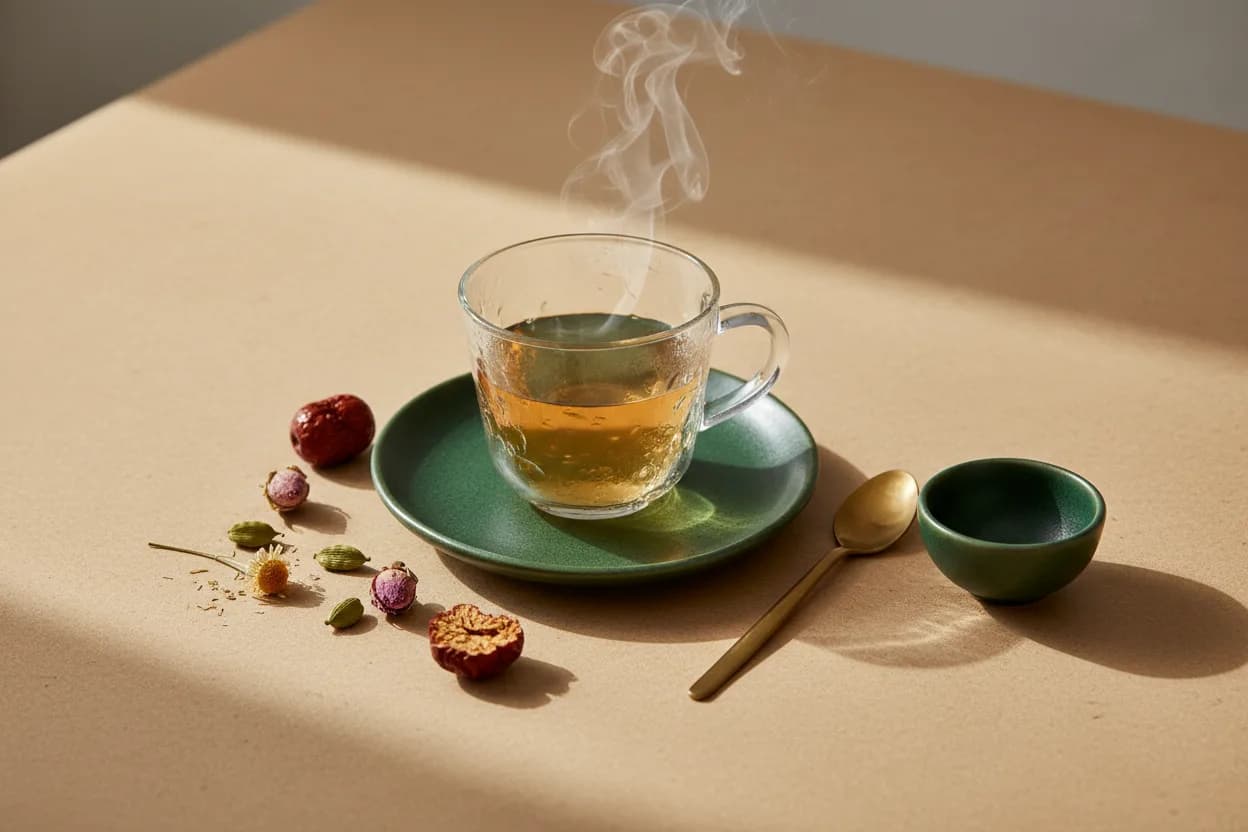
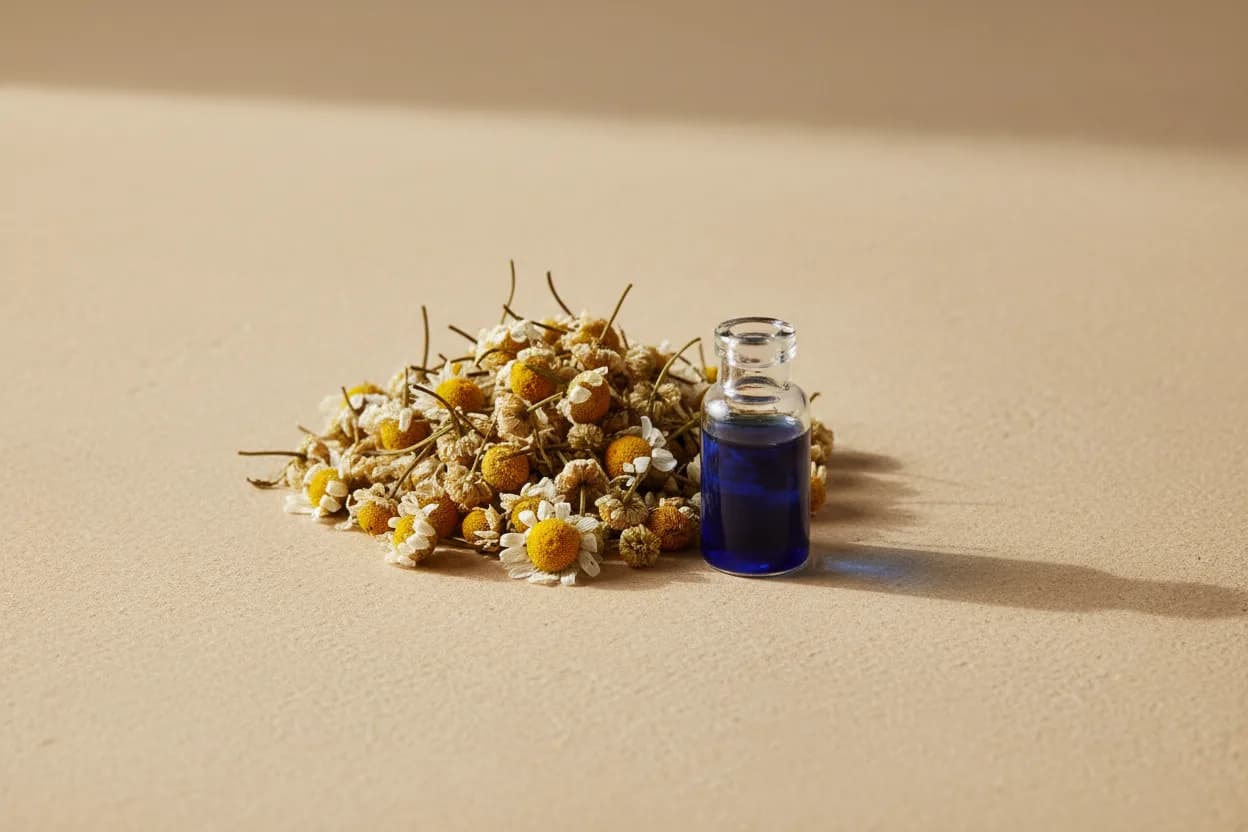
Low Tide is built for nausea and reflux arriving together. Water, 600 ml, comes to a boil; five thin coins of ginger, fennel, shredded licorice, a split jujube and two cracked cardamom pods go in, and the pot simmers bare under a lid for 10 minutes. Then it comes off the heat for about a minute, and the dried chamomile and four Mohammadi rose buds steep, covered, for 5 minutes: chamomile turns bitter and hay-like if it boils, and rose loses its perfume. Strain and let it cool to warm, since very hot liquid is itself a reflux trigger. There is no mint, deliberately.
On nausea, the Journal's note on ginger shots cites a pooled analysis of twelve trials and 1,278 pregnant women: a real effect on nausea, none significant on vomiting, nine of the twelve at high risk of bias. The same note's 109-trial review lists capsules, powders, tablets and extracts as the forms tested. In the bloating note, 1.2 grams of ginger cut a soup meal's half-emptying time from 26.7 to 13.1 minutes in healthy volunteers and made no significant difference to any symptom. On reflux the evidence is thinner: that note calls the case against peppermint a fair inference from the pharmacology, not a measured result. The Turkish coffee note gives cardamom oil as about 90 per cent oxygenated compounds, which travel in steam, so the lid stays on.
Sip slowly and stay upright for 30 to 45 minutes. If nausea dominates, push the ginger to seven coins; if the burn does, pull it back to three and add a third teaspoon of chamomile. The licorice is capped at half a teaspoon because glycyrrhizin can raise blood pressure and deplete potassium; the Journal's note on licorice gives a European ceiling of 100 milligrams of glycyrrhizinic acid a day. For a daily version, drop it and add a second jujube. This is comfort management, not treatment; reflux or nausea lasting more than a few days belongs with a doctor.