rose buds
Rosa damascena
IN ARABIC براعم الورد
Dried buds, all petal-perfume.
ABOUT
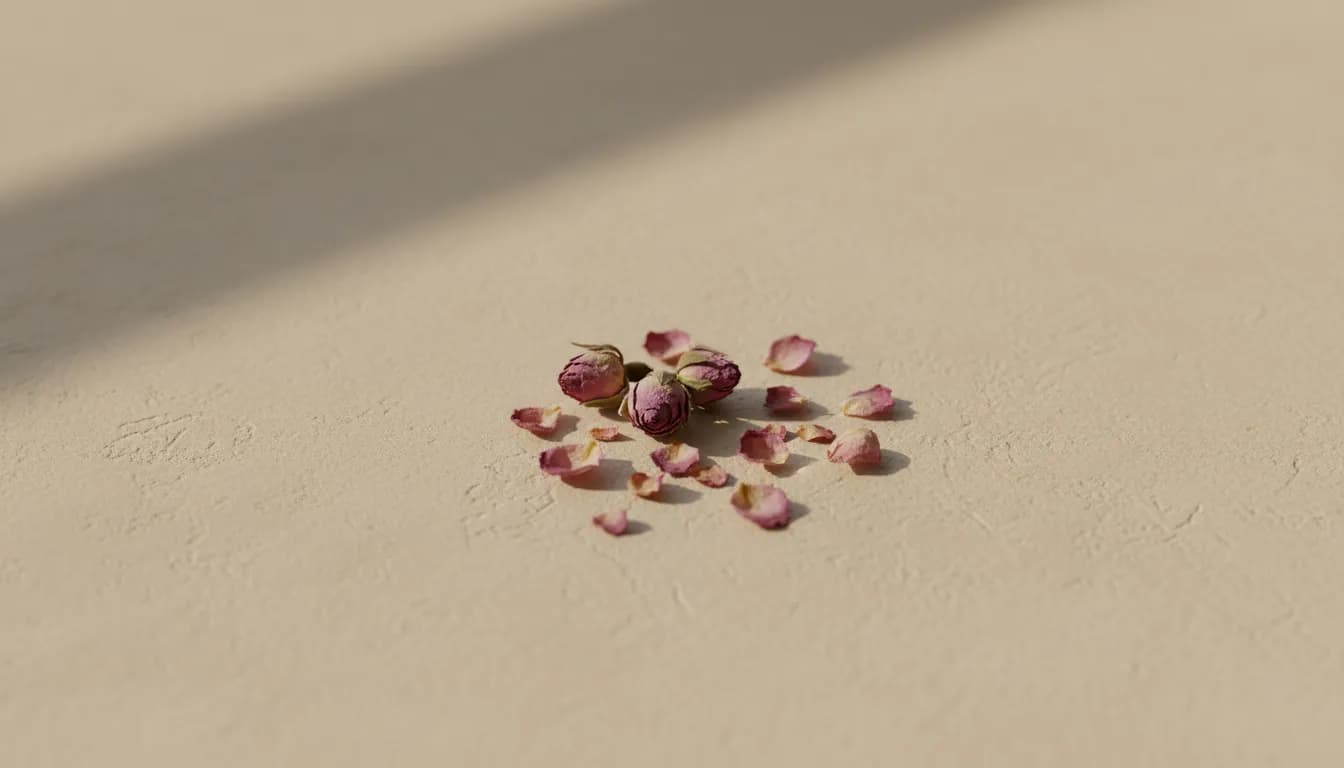
Rose here means dried Rosa damascena buds, used by count rather than weight: four in Low Tide, described as Mohammadi, five in velvet ember tea, and six, lightly crushed, in each of three milk teas, rose milk tea, upgraded rose milk tea and the period-support Woman Well-Being Brew. Every one of the five adds the buds only once the heat is off; Low Tide's own instructions say why, in so many words: rose loses its perfume outright if it boils.
The compound this library tracks is citronellol, 21.5 percent of rose oil and typically its largest single odorous component alongside geraniol; together they are the body of a rose's smell rather than its signature. A large fraction of the oil, by some measurements over a third, is odorless wax, the same wax that clouds a vial of rose otto in the fridge. The molecule that actually makes the smell unmistakably rose isn't one this library tracks: beta-damascenone, present at around a tenth of a percent, with a detection threshold in water famously near two parts per trillion, though the same molecule's threshold in red wine measures over a thousand times higher, so a threshold belongs to the medium as much as to the molecule. A widely repeated claim, that damascenone accounts for seventy percent of the oil's smell, traces back through the literature without a measurement behind it; what has actually been demonstrated is a reconstructed rose aroma, built from only the highest-impact compounds, that a panel could not tell from the real oil.
What you taste when you drink a rose milk tea is mostly not taste at all. The receptors that register a floral smell sit high in the nasal cavity, reached by volatile molecules travelling up from the back of the mouth rather than in through the nostrils; pinch your nose and the rose drops out of the cup while the sweetness of the milk stays. That aroma gets pulled into feeling like it's on the tongue because of the sugar it arrives with: experiments pairing tastes with odours found a matching taste, not touch, does the pulling, and sucrose specifically was shown to capture a vanilla note and locate it in the mouth. So the sweetened milk in these teas is doing part of the work of making the rose taste like something at all.
CHEMISTRY
1The characteristic compounds documented in this ingredient, plus any the library traces to it in a recipe. Not an exhaustive phytochemistry.
USED IN
5Woman Well-Being Brew
6 · lightly crushed
STEP 3 Turn off the heat and add the crushed rose buds.
Low Tide
4 · Mohammadi
STEP 2 Take the pot off the heat entirely and wait about a minute for it to drop below a boil, then add the chamomile and rose buds and cover. Chamomile turns bitter and hay-like if it boils; rose loses its perfume outright.