licorice root
Glycyrrhiza glabra
IN ARABIC عرق السوس
Intensely sweet root, soothing and rounding.
ABOUT
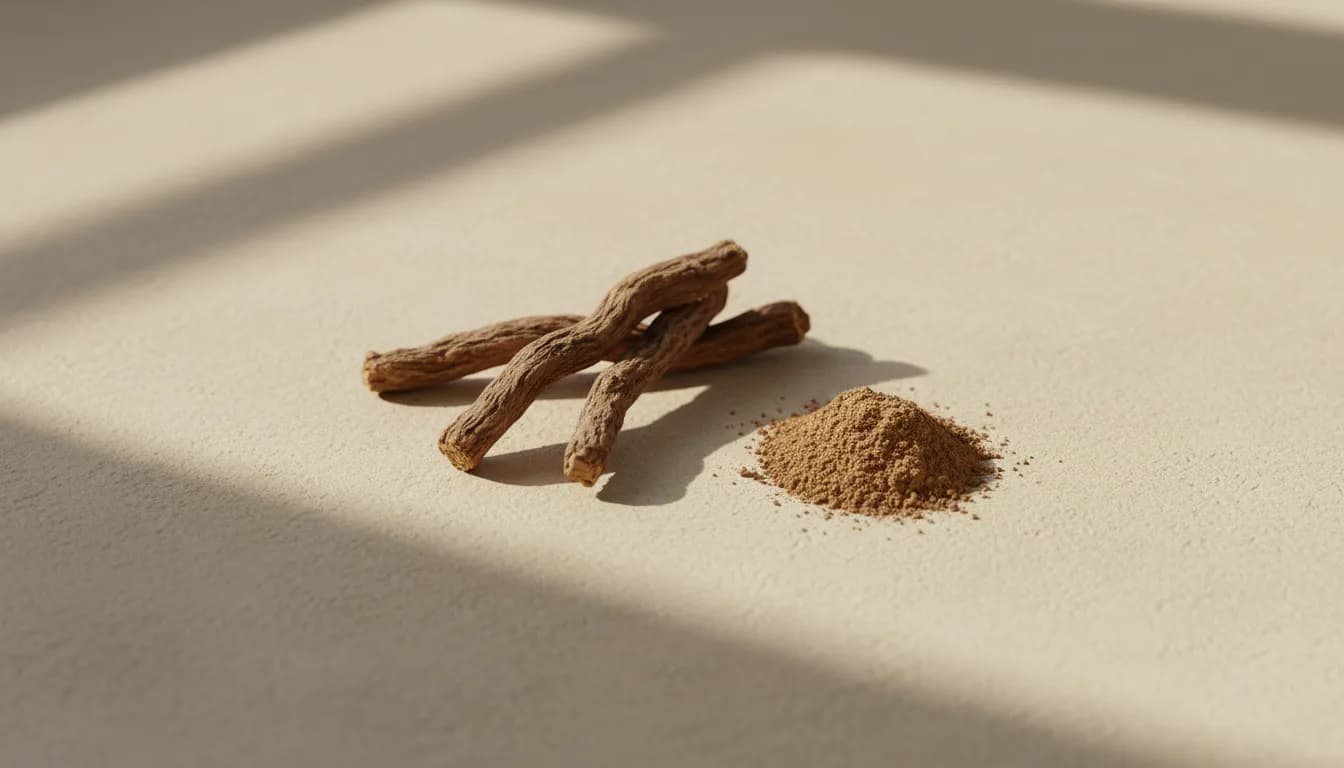
Glycyrrhiza glabra, a legume related to peas and beans, and its Greek name, glykyrrhiza, is simply a description: glykys for sweet, rhiza for root. Four teas in this library carry it, always in small, deliberate amounts and never as a base note. Woman Well-Being Brew adds 0.2 grams, marked optional; Gentle Gas Relief Tea uses a tenth of a gram; Sweet Digestive Tea uses 0.3 grams; Low Tide carries the most, one gram shredded or a single small piece, and even there the recipe caps it on purpose rather than leaning on it for sweetness.
The sweetness is glycyrrhizin, C₄₂H₆₂O₁₆, a triterpenoid saponin roughly two and a half times heavier than table sugar, and estimates of its potency against sucrose range from 33 to 200 times depending on how it is measured, a spread wide enough to say that licorice sweetness does not behave like sugar sweetness at all: it arrives late on the tongue and lingers. Once swallowed it barely gets absorbed intact. Gut bacteria strip off its two sugars first, and what actually circulates is the stripped-down glycyrrhetinic acid, recycled through the liver and gut for longer than the parent compound would last.
That glycyrrhetinic acid does something specific: it disables an enzyme, 11-beta-hydroxysteroid dehydrogenase type 2, whose job is to stop cortisol from triggering the kidney's aldosterone receptor. With the enzyme blocked, cortisol gets through, and the body retains sodium and dumps potassium, the mechanism behind licorice's documented capacity to raise blood pressure and drop potassium with regular use. The European Commission's Scientific Committee on Food set a ceiling of 100 milligrams of glycyrrhizin a day, counted across everything eaten that day, and a Dutch survey of herbal teas found some brands brewing past 450 milligrams per liter, meaning a single strong pot can clear the daily limit on its own. Every one of the four recipes here treats licorice as a small addition rather than a base, and Low Tide caps its dose explicitly. The Journal's note on licorice has the case reports and the full number.
CHEMISTRY
1The characteristic compounds documented in this ingredient, plus any the library traces to it in a recipe. Not an exhaustive phytochemistry.
USED IN
4Woman Well-Being Brew
0.2 g · optional
STEP 1 Simmer the jujube, goji, ginger, cardamom, and licorice in the water.
Sweet Digestive Tea
0.3 g
STEP 1 Simmer the fennel, anise, cumin, ginger, cardamom, and licorice in the water.
Gentle Gas Relief Tea
0.1 g
STEP 2 Turn off the heat and add the chamomile, dried mint, and licorice.
Low Tide
1 g · shredded, or one small piece
STEP 1 Bring the water to a boil, then add the ginger, fennel, licorice, jujube, and cardamom. Reduce to a bare simmer and cover; keeping the lid on matters, because the cardamom and fennel oils otherwise leave with the steam.