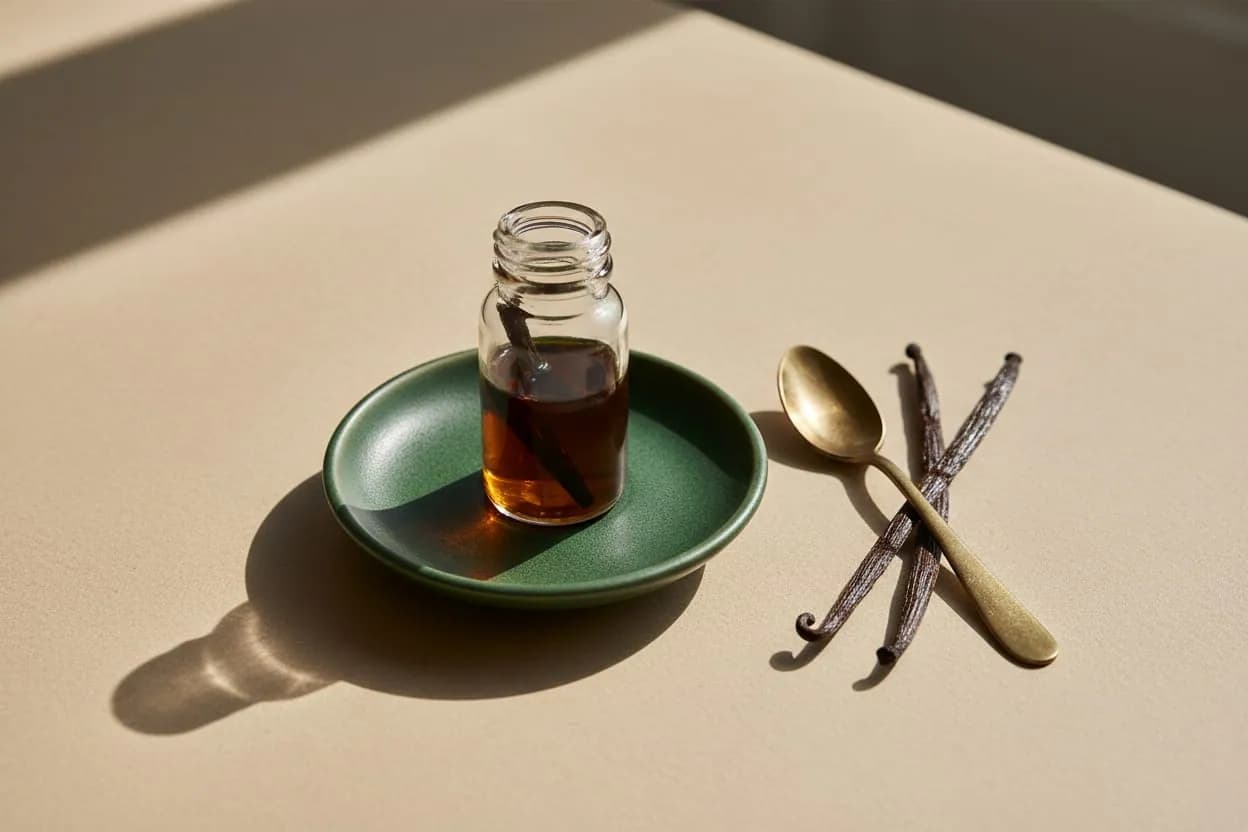
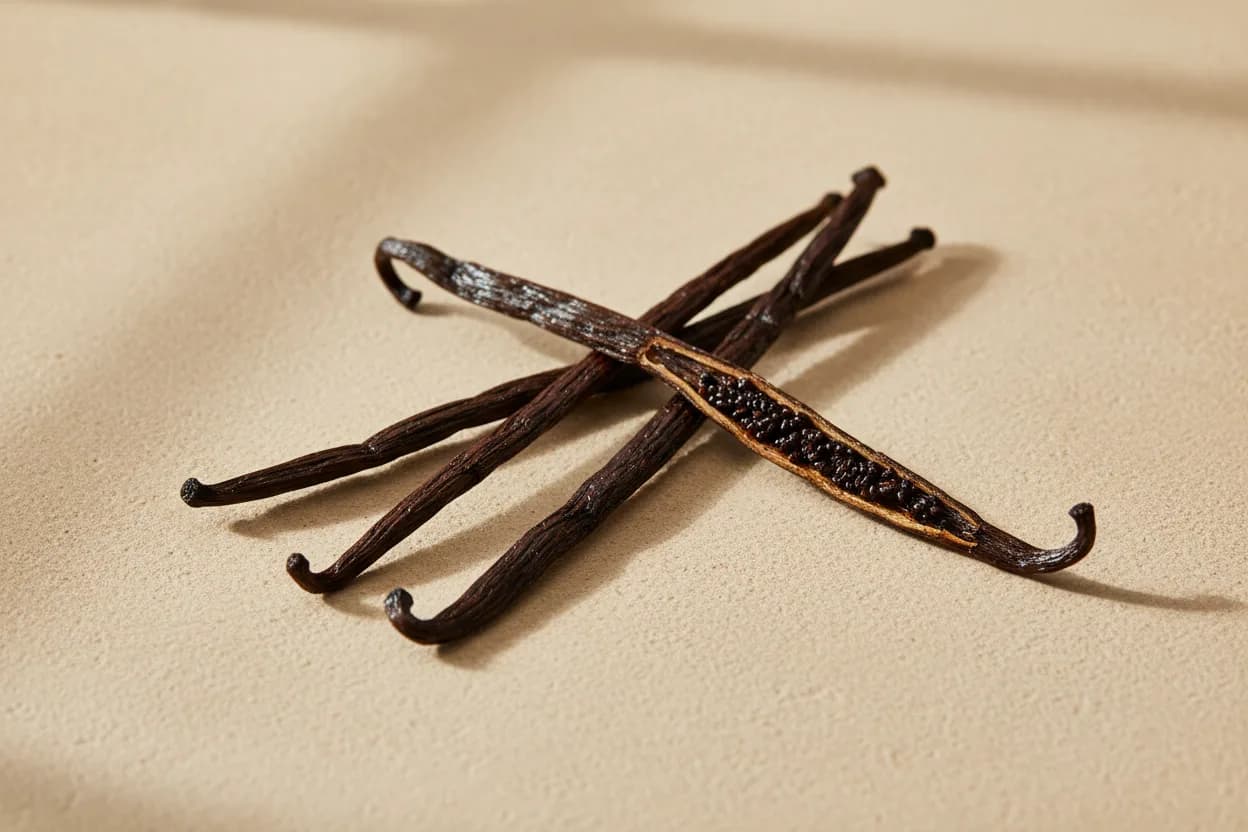
One pod, 5 ml of food-grade glycerin and 5 ml of distilled water, about a teaspoon of each: that is the whole list, with no alcohol anywhere. Split the pod lengthwise, slice it thinly across, and stir the glycerin and water together in a small vial. Lower the vial into a pot of water at about 60°C for a few minutes, add the sliced vanilla, stir, then seal it and keep it in a dark cupboard at room temperature for at least three months, shaking every few days. On how glycerin compares with alcohol, the recipe's claim is about character: glycerin is a gentler solvent, so it pulls out the vanillin and the pod's softer floral notes slowly, and the result is rounder and sweeter than a quick spirit tincture, without the boozy sharpness.
The Journal's note on Edmond Albius and vanillin explains where a pod's smell comes from. A green pod has essentially no smell. Its vanillin is stored as an inactive glucoside, kept apart from the enzyme that would release it, and curing takes three to six months to reach something you would recognise. A cured bean carries vanillin, C8H8O3 at 152 grams per mole, alongside a couple of hundred other aroma compounds, and guaiacol and acetovanillone register almost as intensely to the nose at a fraction of the concentration. That is the chemical reason a bean and a bottle of pure vanillin are not the same experience: one of them is a mixture. The note does not compare solvents, so the glycerin-versus-alcohol claim rests on the recipe alone.
The recipe says it folds straight into batters and creams. In this library the protein oat waffles take a teaspoon in the wet bowl, and their step calls the alcohol-free glycerin one ideal; the egg-free brownies take it in the wet mix if you use it. The one caution is patience: at least three months, with food-grade glycerin and distilled water.