anise seeds
Pimpinella anisum
IN ARABIC بذور اليانسون
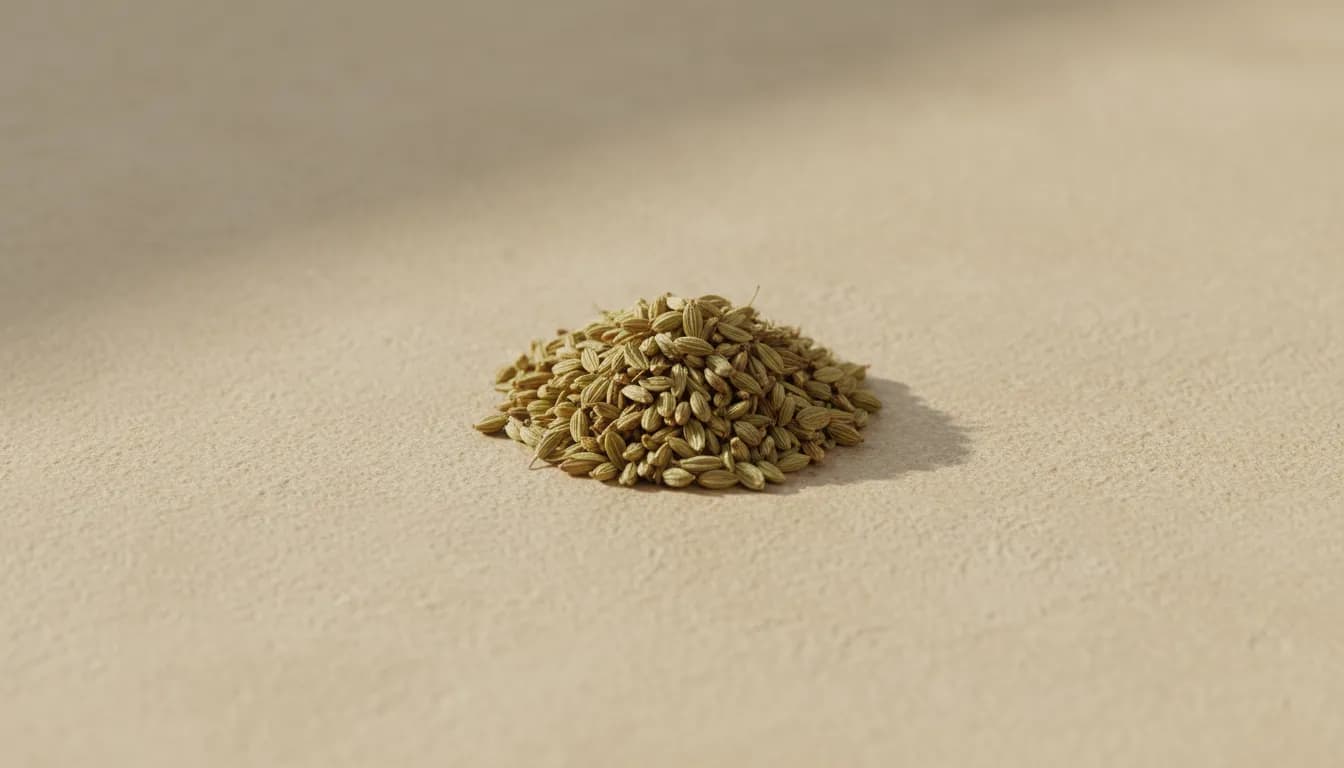
Sweet licorice seed, a classic after-dinner carminative.
ABOUT
Pimpinella anisum, an annual in the carrot family; what the kitchen calls a seed is technically a whole dry fruit, a schizocarp built to split into two ridged halves, the same construction as its Apiaceae cousins cumin, coriander and fennel. Five recipes in this library use it, spread across tea, spice, and diet-support. Blue Silk Throat Soother steeps 0.25 grams of it lightly crushed straight into just-boiled water alongside butterfly pea, no simmer at all; Gentle Gas Relief Tea (0.3 grams) and Sweet Digestive Tea (0.45 grams) simmer it a few minutes with fennel, ginger and other hard ingredients before the delicate herbs follow. Japanese Curry Powder toasts a full gram of whole seed for the last thirty seconds only of a four-minute toast, since the seed is small and oily enough to burn on the timeline the larger spices need. The Carminative Digestive Gummies steep two grams of aniseed, or, the recipe notes, a single star anise in its place, into the tea base before it is set with agar.
That flavor is trans-anethole, typically eighty to ninety-five percent of anise oil, close enough to a single compound that tasting anise is close to tasting one molecule. Anethole dissolves readily in alcohol and barely at all in water, the mechanism behind arak and ouzo clouding white the instant water hits them: diluted below what it needs to stay in solution, the molecule condenses into billions of tiny droplets throughout the glass, an effect a 2003 paper in the journal Langmuir formally named after the drink. Anethole also reaches the same sweet receptor, T1R2/T1R3, that every sugar and sweetener activates, so the seed tastes sweet with nothing sugary in it. How many times sweeter than sugar it actually is remains unmeasured: the number that circulates, thirteen times, traces back to an uncited line, and anethole's own water solubility makes the standard sweetness test physically impossible to run on it.
Anise has been an after-dinner seed long enough that the European Medicines Agency keeps a monograph on it, recognizing it for bloating, flatulence, and coughs tied to a cold, dosed at one to three and a half grams of crushed seed in 150 milliliters of boiling water, three times a day, for no more than two weeks. The same monograph carries the caution: anise fruit contains a trace of estragole, which the agency's own separate statement calls a genotoxic carcinogen in rodent studies at 1 to 10 milligrams per kilogram of body weight, a dose one to two orders of magnitude above what an infusion actually delivers. It also states plainly that anise is not recommended for children under twelve, or in pregnancy or breastfeeding. The Journal's note on the ouzo effect has both the physics and the dosing.
CHEMISTRY
1The characteristic compounds documented in this ingredient, plus any the library traces to it in a recipe. Not an exhaustive phytochemistry.
USED IN
5Blue Silk Throat Soother
0.25 g · lightly crushed
STEP 1 Steep the butterfly pea and crushed anise seeds in just-boiled water.
Sweet Digestive Tea
0.45 g
STEP 1 Simmer the fennel, anise, cumin, ginger, cardamom, and licorice in the water.
Gentle Gas Relief Tea
0.3 g
STEP 1 Simmer the anise, fennel, and ginger in the water to draw out their oils.
Carminative Digestive Gummies
2 g · aniseed, or 1 star anise
STEP 1 Steep the tea, covered: bring the water to a bare simmer, add the cumin, fennel, aniseed, chamomile, and mint, cover tightly, and steep 12–15 minutes. Covering matters: the actives are volatile oils that steam off in an open pot.
Japanese Curry Powder
1 g · whole seeds; ½ tsp
STEP 2 Add the anise seed for the last 30 seconds only. It is small and oily and will burn on the timeline the larger seeds need.