Skip to content
MORTAR & KETTLE
Apothecary of Flavor
, home
HERBAL TEA · №017

Blue Silk Throat Soother

a smooth blue balm for the throat

A silken, sapphire-blue infusion that coats a raw throat in chamomile softness and cooling mint, sweetened by anise and tinted by butterfly pea. It calms the nerves while it quiets an irritated throat, a gentle immune companion at the end of a long day.

Easy6 minModerate
FloralHerbaceousSweetImmuneCalming
Blue Silk Throat Soother · finished

Method

Check off each step as you go. Your progress is saved. Amounts below already match your batch size.

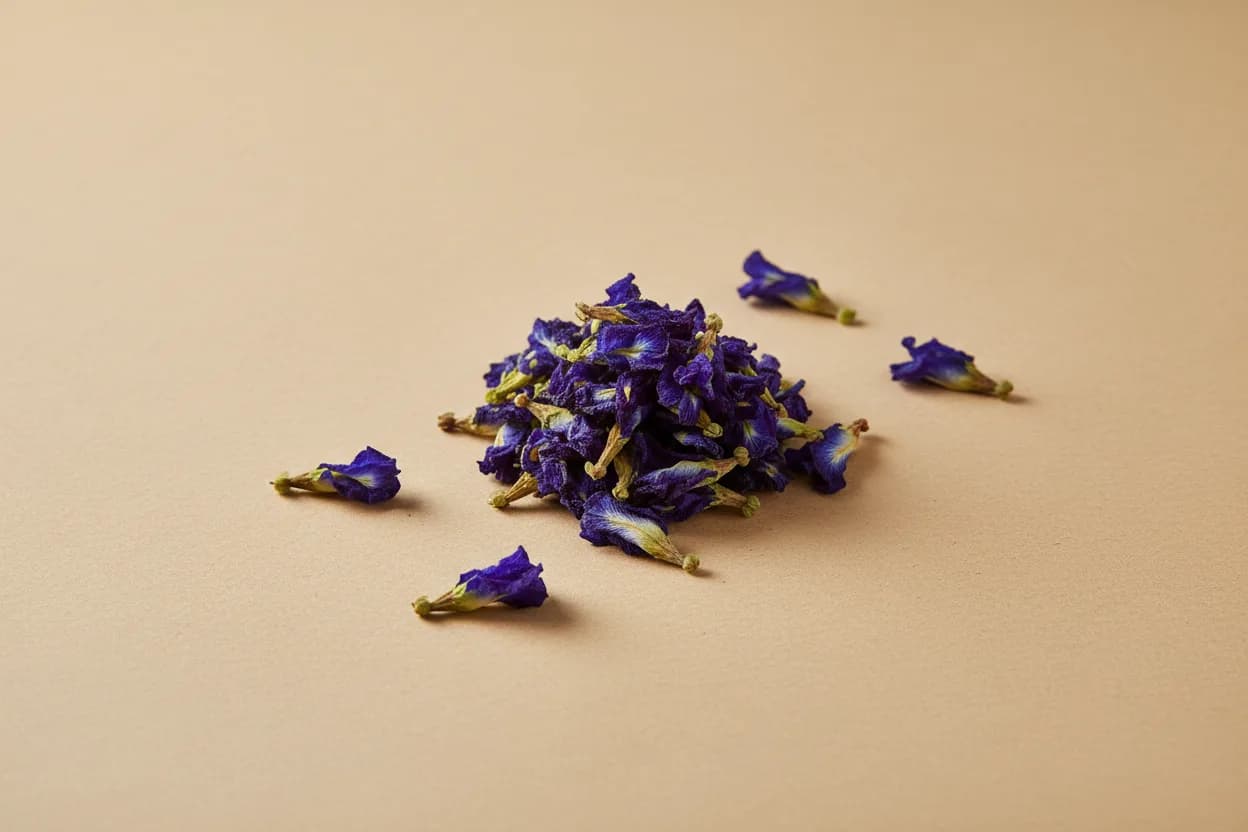
Steep the butterfly pea and crushed anise seeds in just-boiled water.
▸0.4 gbutterfly pea petals▸0.25 ganise seeds▸300 mlfiltered water
4 min
Add the chamomile, dried mint, and marjoram.
▸0.9 gchamomile flowers▸0.15 gdried mint▸0.05 gmarjoram
Steep, then strain into a silky, deep-blue cup.
2–3 min
“A good steep is chemistry with the kettle on. Mind the minutes.”
THE MORTAR & KETTLE METHOD

The chemistry

SKELETAL STRUCTURES

4 compounds carry this recipe. Here is what each one does and, where we have it, what it actually looks like.

C₁₅H₁₁O₆⁺
C₁₅H₁₁O₆⁺

The ternatin pigments of butterfly pea give this tea its silken sapphire color and lend antioxidant, immune-supportive tone to the cup.

ImmuneFloral
C₁₅H₁₀O₅
C₁₅H₁₀O₅

The quieting flavone of chamomile; it binds to calming receptors in the brain and softens the tea into a bedtime balm.

CalmingFloral
C₁₀H₁₂O
C₁₀H₁₂O

The licorice-sweet heart of anise; it rounds the blend with natural sweetness and eases the throat with its warm, soothing character.

SweetCalming
C₁₀H₂₀O
C₁₀H₂₀O

The cooling crystal of mint; it opens the airway and leaves a clean, herbaceous chill that soothes a scratchy throat.

HerbaceousImmune

About

IN DEPTH

Two stages, not one pour: butterfly pea petals and crushed anise seed steep in just-boiled water four minutes, the hottest point since the tea never simmers, before the chamomile, dried mint, and a little marjoram go in for two to three more minutes. By weight chamomile leads at 0.9, butterfly pea at 0.4, anise at 0.25, dried mint at 0.15, and marjoram at 0.05, the smallest thing in the cup. What comes out is floral from the chamomile and petals, sweet and licorice-toned from the anise with no sugar anywhere: anethole was confirmed in 2025 to activate the human sweet receptor. Menthol from the mint doesn't lower temperature; it opens the nerve channel that reports cold, and the brain believes it.

The evidence trails the name. Butterfly pea's blue is real antioxidant chemistry, but its calming reputation is Ayurvedic tradition, and the fullest review says nobody has established which compound would be responsible. Chamomile's calming case rests almost entirely on capsule trials, 220 to 1,500 milligrams a day of a standardized extract, not a cup of hot water, and the one trial using actual tea, 80 women with poor sleep after childbirth, found improvement at two weeks that had faded by four. Europe's herbal committee recognizes chamomile only for minor digestive complaints and steam inhalation for colds, not sleep or anxiety. Anise earns its place more directly: the committee names it a traditional expectorant for coughs with a cold, at one to three and a half grams of crushed seed per cup, three times a day for no more than two weeks.

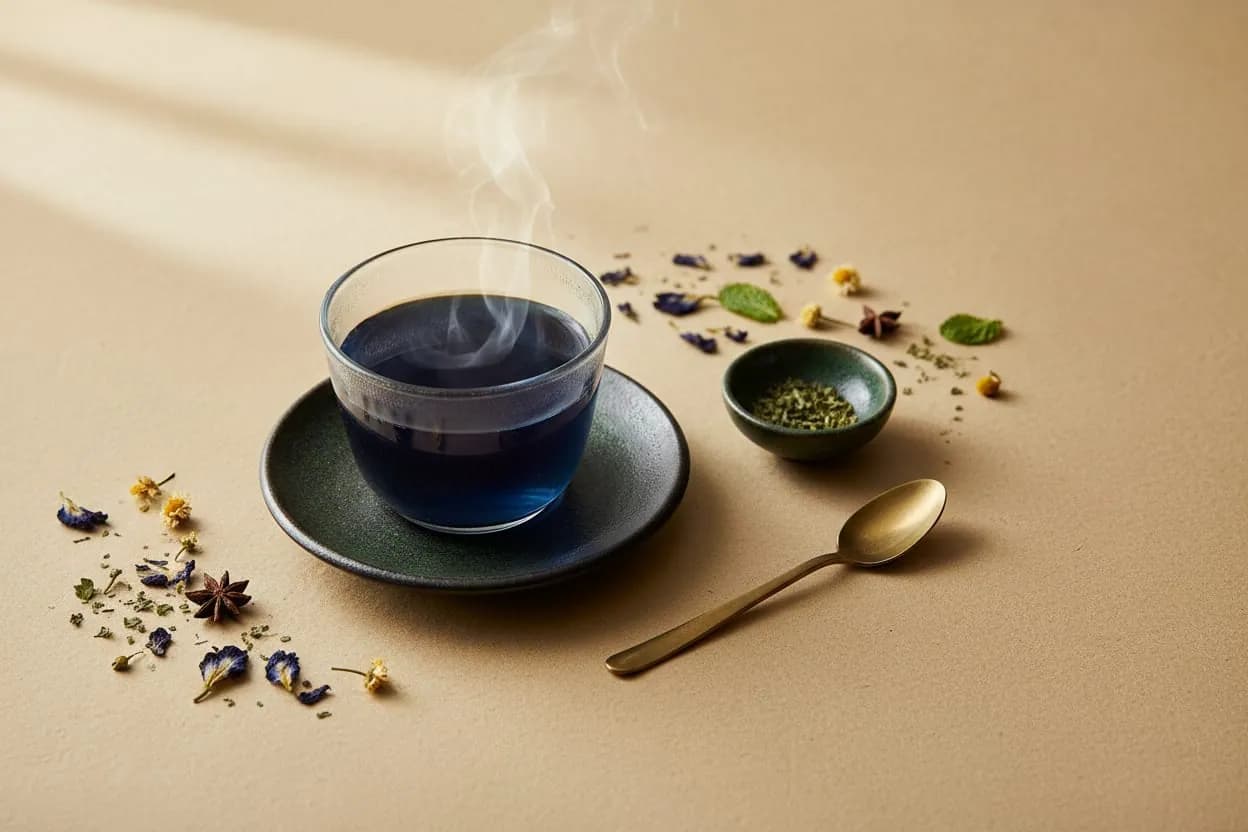
Drink it hot, in a clear glass so the color earns its name. For a cold rather than an end-of-day throat, the anise here, a quarter measure against the chamomile's near-full one, sits well under the monograph's adult ceiling, but leave it out for a child under twelve or in pregnancy. Butterfly pea's blue survives heat better than light; a sunny windowsill fades it fast. Taste before adding more marjoram: at 0.05 against chamomile's 0.9 it's there to round the edges, not to be noticed.

On the table together

THE INDEX, LINKED

This recipe is part of a set: follow the thread through the blends it uses and what it's served with.

FROM THE JOURNAL

The reading behind this recipe

Anise is not thirteen times sweeter than sugar, and nobody has ever checked
№22Chemistry

Anise is not thirteen times sweeter than sugar, and nobody has ever checked

Sweet taste runs through a single receptor that will accept a sugar, a protein or a synthetic molecule with equal enthusiasm. Which is how anise tastes sweet with no sugar in it. The famous number attached to that fact, though, traces back to an uncited sentence, and the measurement behind it could not have been made.

6 August 2026·14 min read·26 SOURCES
Why arak turns white
№14Chemistry

Why arak turns white

Add water to arak and it clouds instantly, with nothing stirred in and nothing added to make it happen. The physics has a name, a 2003 paper behind it, and a second career manufacturing drug-delivery capsules.

3 August 2026·7 min read·7 SOURCES
The blue that survives the kettle
№07Chemistry

The blue that survives the kettle

Most blue in nature is unstable, and most anthocyanins go colourless in warm water. Butterfly pea holds its blue by folding its own molecule over itself like a sandwich.

31 July 2026·6 min read·8 SOURCES