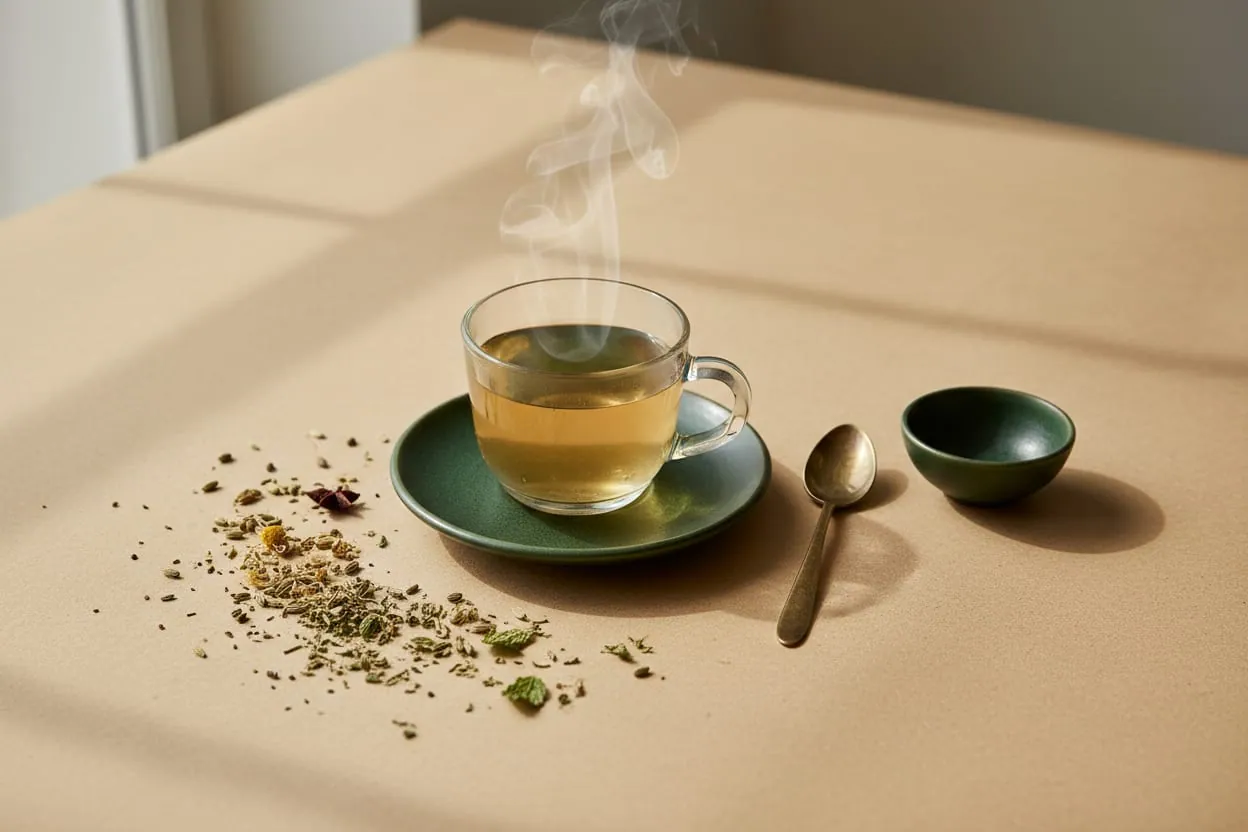
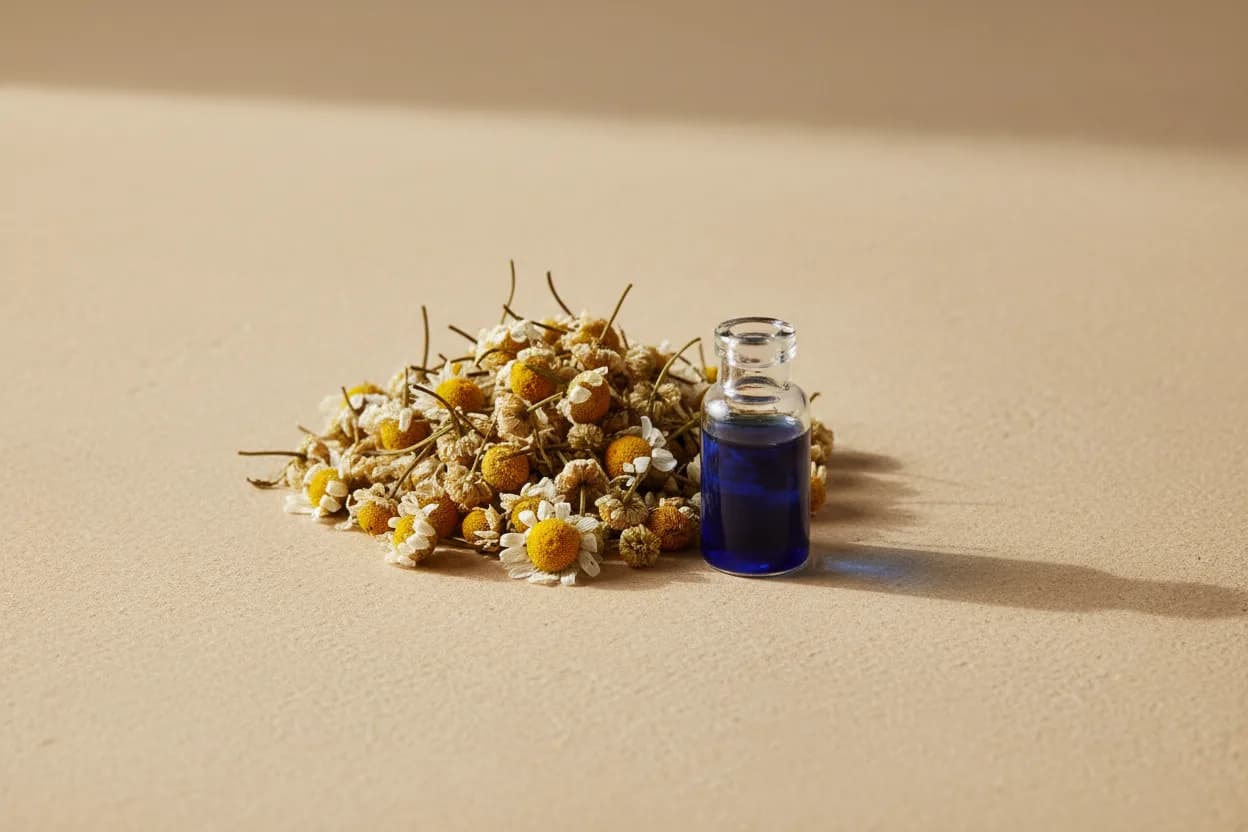
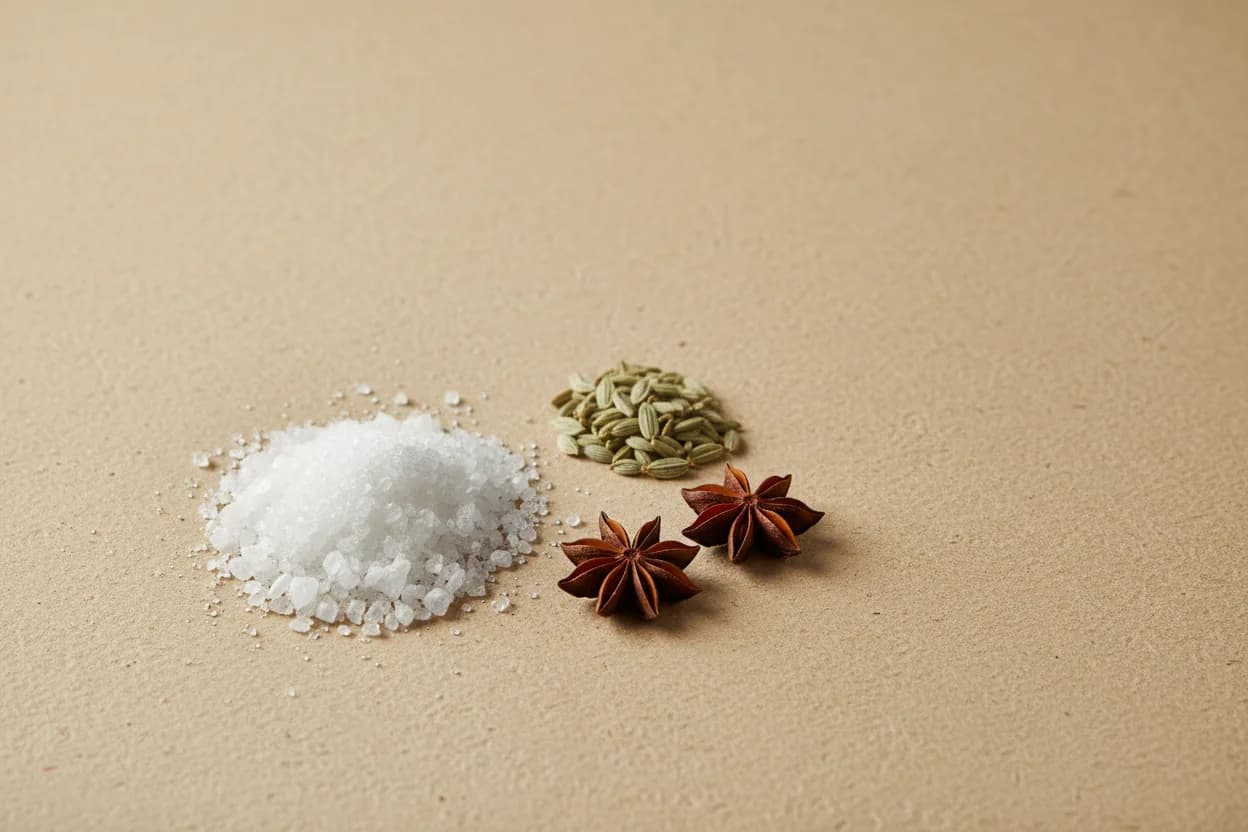
Anise, fennel and sliced ginger simmer in 500 ml of water for 3 minutes to draw out their oils. Then the heat goes off, the chamomile, dried mint and licorice go in, and the pot steeps for about 4 minutes before straining. Three ingredients are cooked, three only steeped. The Journal's note on why arak turns white describes anise oil as dominated by one compound, trans-anethole, at eighty to ninety-five per cent, and fennel shares the flavour, so the cup's sweet, licorice-like note is largely one molecule. The licorice adds sweetness without sugar.
The name promises gas relief, and the evidence is of the traditional kind. The Journal's note on anise records the European Medicines Agency's monograph, which recognises anise for mild spasmodic digestive complaints such as bloating and flatulence, at 1 to 3.5 grams of seed in 150 ml of boiling water three times a day, for no more than two weeks. The Journal's note on chamomile adds that the 2015 EU monograph lists the flower as traditional use too, a category resting on long habit rather than trials. In two trials described in the Journal's note on bloating, 1.2 grams of ginger sped gastric emptying and changed no symptom. The same note quotes a Barcelona group's summary of bloating: the problem does not seem to be too much gas, but abnormal responses to gas.
Strain after the steep and treat it as an occasional pot; the library pairs it with the Sweet Digestive Tea. The recipe's own caution is the licorice. The EU's Scientific Committee on Food set 100 milligrams of glycyrrhizinic acid a day for regular consumption, counted across every source, and glycyrrhizin pushes potassium down and blood pressure up, so skip it with hypertension or diuretics. The Journal's note on licorice reports a Dutch survey in which four of 33 herbal tea brands exceeded 100 milligrams per litre of prepared drink, the highest at 450. The anise monograph does not recommend anise under twelve, in pregnancy or while breastfeeding.