coriander seeds
Coriandrum sativum
IN ARABIC بذور الكزبرة
The citrus-floral seed of the cilantro plant.
ABOUT
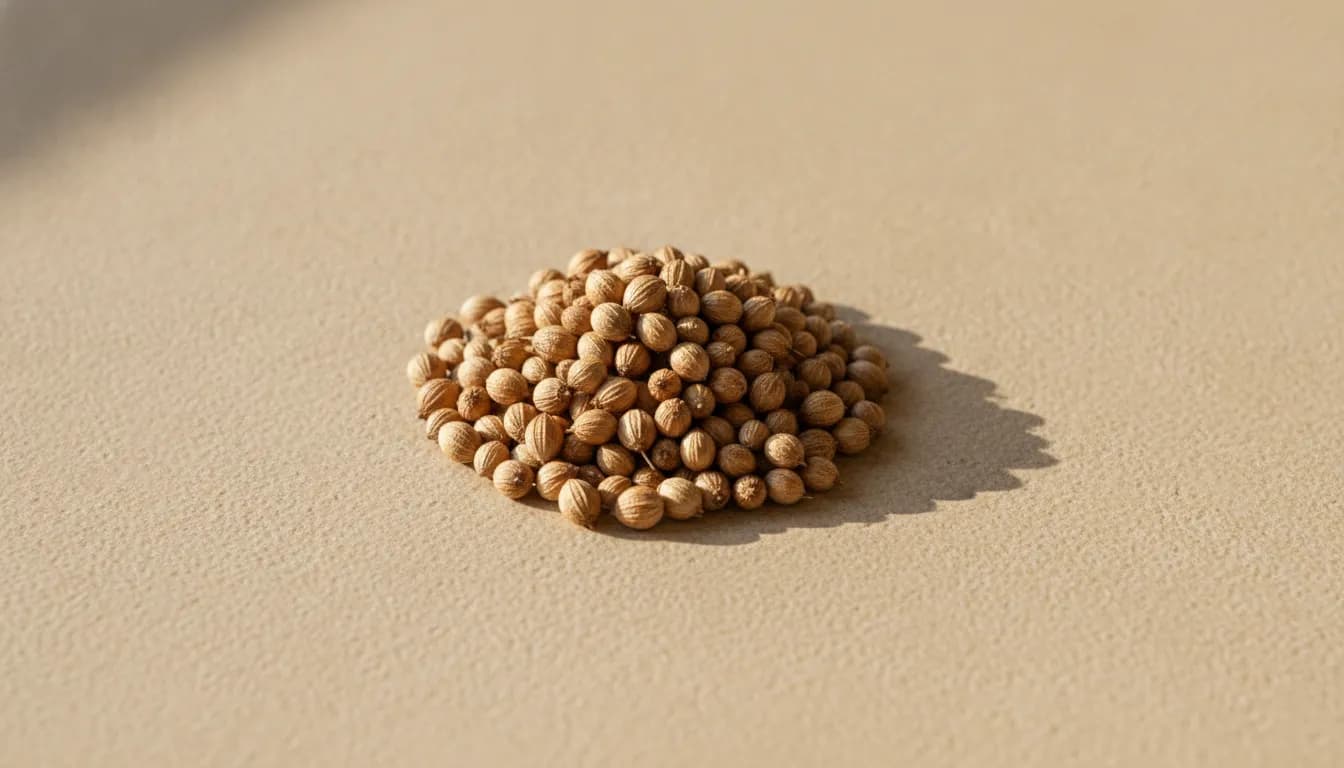
Crush a coriander seed and it comes apart into two neat hollow hemispheres, and that is not the seed breaking. What the jar calls coriander seed is a whole dry fruit, a schizocarp of the parsley family built to split along a seam that was always there, the same construction cumin and fennel share. Coriandrum sativum's fresh leaf is a separate entity in this library, fresh cilantro, and the two parts of one plant share almost no chemistry: the leaf runs on the aldehydes behind its soap-or-not reputation, the seed on entirely different terpenes. Here the seed goes into five recipes, four spice mixes and one dish. It is toasted whole in a dry pan for the fish rub, the curry powder, the seven-spice mix, and the rice blend before grinding, in amounts from a bare teaspoon to two tablespoons, the largest single ingredient by volume in the curry powder. The exception is the Palestinian molokhiya with chicken, where two tablespoons go in ground, sizzled with garlic in the finishing fry Levantine cooks call the ta'liya.
Linalool is the seed's dominant note, and how dominant depends entirely on where it grew: measured shares run from 38 percent in Bangladeshi seed to 88 in Tunisian, with regulators specifying coriander fruit oil at 65 to 78 percent and one measured average near 71.7. Two of the recipes here put a number on the same molecule directly, each noting the seed runs to roughly 70 percent linalool, a gentle floral-citrus lift that keeps a heavy spice mix from tasting like dust. Limonene, the bright citrus note the seed shares with cardamom, fills out the rest. In the molokhiya, that same linalool is what threads through the greens and echoes the fresh cilantro stirred in beside it, chemically unrelated leaf and seed reading, for once, like the same plant.
CHEMISTRY
2The characteristic compounds documented in this ingredient, plus any the library traces to it in a recipe. Not an exhaustive phytochemistry.
bright citrus
USED IN
5Fish Spice Mix
2 g · whole seeds; ≈ 1 tsp
STEP 1 Toast the coriander, cumin, fennel, and peppercorns in a dry pan until fragrant.
STEP 2 Cool, then grind to a coarse powder.
Rice Spice Mix
2 g · whole seeds; ≈ 1 tsp
STEP 1 Toast the cumin, coriander, peppercorns, cinnamon, and cardamom in a dry pan until fragrant.
STEP 2 Cool, then grind to a fine powder.
Levantine 7-Spice Mix
8 g · whole seeds; 2 parts
STEP 1 Warm a dry, heavy pan over medium heat. Toast the coriander, cumin, peppercorns, and cracked cardamom until fragrant and a shade darker, shaking constantly so nothing scorches.
Palestinian Molokhiya with Chicken
12 g · ground; ≈ 2 tbsp
STEP 8 Taqliya: Stir in the ground coriander, salt, and pepper for ten seconds, then pour the taqliya straight into the molokhiya.
Japanese Curry Powder
10 g · whole seeds; 2 tbsp
STEP 1 Toast the whole spices: set a dry skillet over medium-low heat and toast the coriander, cumin, fenugreek, fennel, peppercorns, cardamom, cloves, cinnamon, bay, and chilies until they are fragrant and a shade darker, shaking the pan so nothing scorches.