Skip to content
MORTAR & KETTLE
Apothecary of Flavor
, home
SPICE MIX · №022

Fish Spice Mix

the fry-day rub

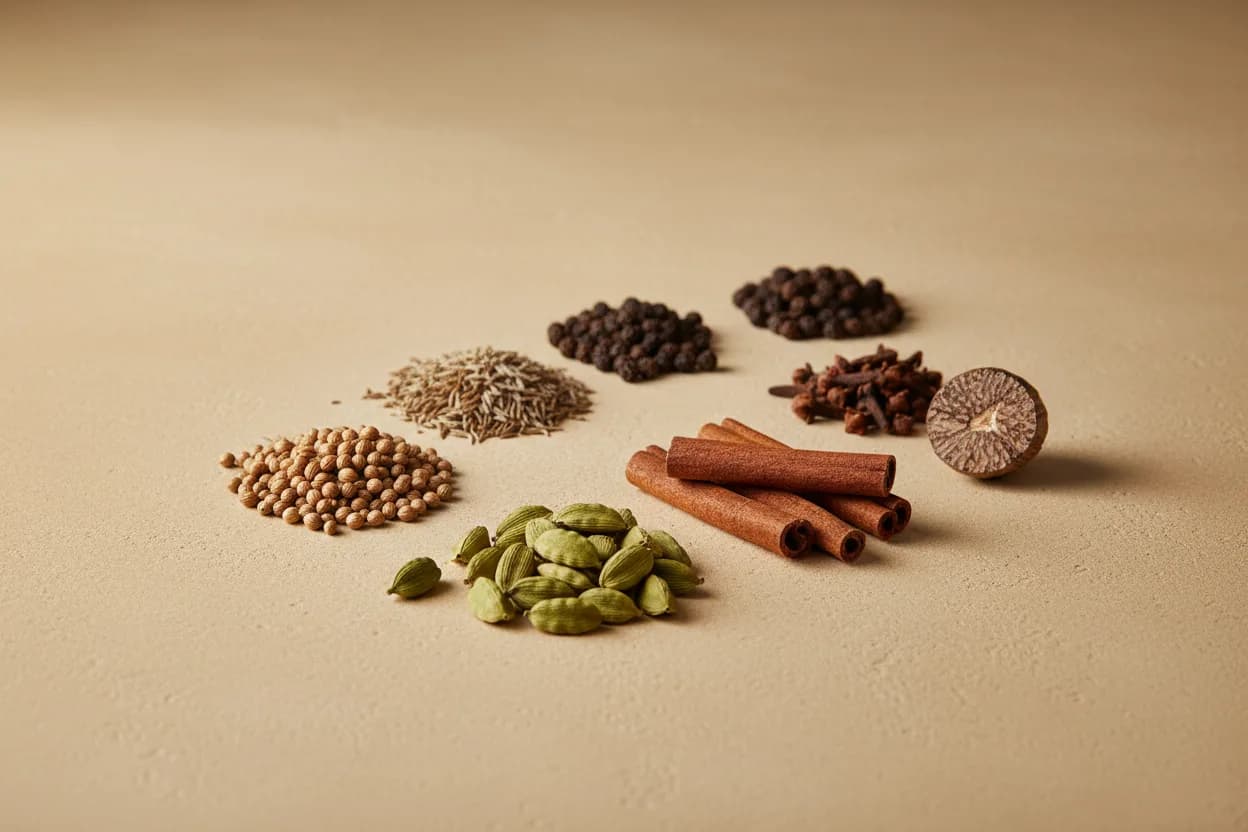
A toasted, golden rub built for the edge of a hot pan: earthy cumin and coriander laced with peppery heat and turmeric's warm pigment. It reads as savory and a little floral, the kind of blend that traces its bite straight back to the seeds it started as.

Easy10 minForgiving
EarthyCitrusFloralDigestiveWarming
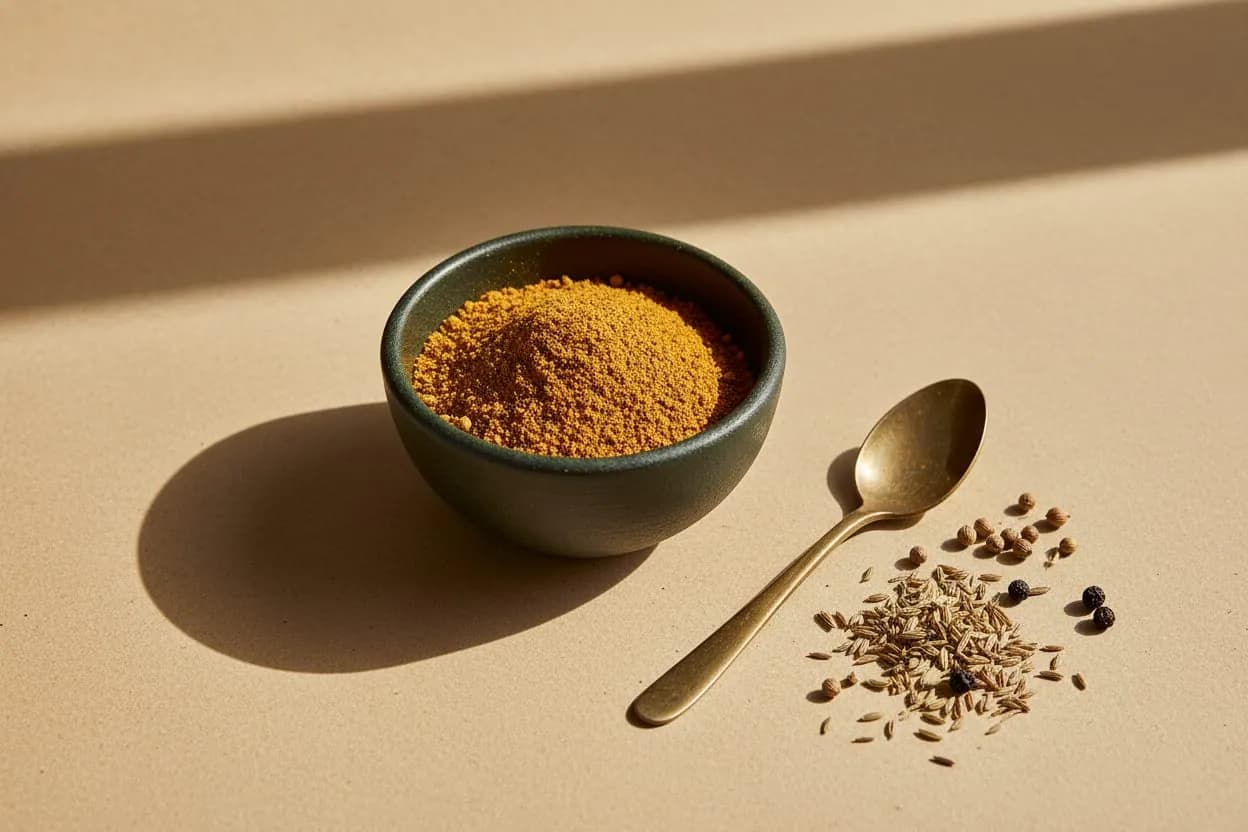
Fish Spice Mix · finished

Method

Check off each step as you go. Your progress is saved. Amounts below already match your batch size.

Toast the coriander, cumin, fennel, and peppercorns in a dry pan until fragrant.
▸2 gcoriander seeds▸1 gcumin seeds▸1 gfennel seeds▸3 black peppercorns
2–3 min
Cool, then grind to a coarse powder.
▸2 gcoriander seeds▸1 gcumin seeds▸1 gfennel seeds▸3 black peppercorns
Stir in the allspice, paprika, turmeric, and salt.
▸0.2 gallspice▸1 gpaprika▸0.7 gturmeric▸1 gsea salt
Jar airtight; use generously as a rub for fish.
“Toast, grind, and know exactly why it works.”
THE MORTAR & KETTLE METHOD

The chemistry

SKELETAL STRUCTURES

4 compounds carry this recipe. Here is what each one does and, where we have it, what it actually looks like.

C₁₀H₁₂O
C₁₀H₁₂O

Released as the cumin seeds hit the dry pan, cuminaldehyde is the earthy anchor of the blend and lends the toasted warmth that carries across the whole rub.

EarthyWarming
C₁₇H₁₉NO₃
C₁₇H₁₉NO₃

The pungent alkaloid in the toasted peppercorns, piperine supplies the sharp heat that lifts the fish off the plate and gently stokes the appetite.

WarmingDigestive
C₂₁H₂₀O₆
C₂₁H₂₀O₆

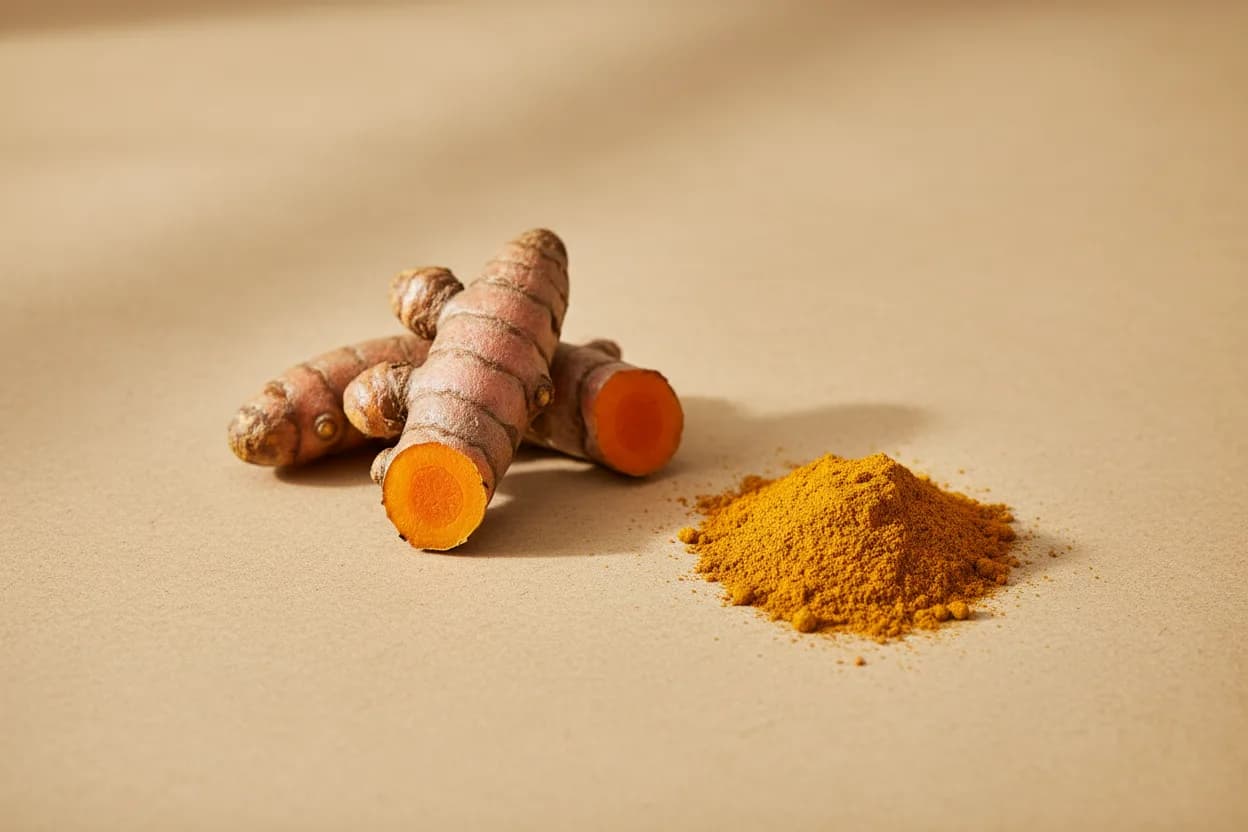
Turmeric's golden pigment tints the ground mix and adds a bitter, earthy depth that rounds out the toasted seeds and rides along with digestion-friendly warmth.

EarthyDigestive
C₁₀H₁₈O
C₁₀H₁₈O

Carried in the coriander seed, linalool threads a soft floral-citrus lift through the earthy base, brightening the rub without cutting its savory weight.

FloralCitrus

About

IN DEPTH

Coriander leads at 2 g, with 1 g each of cumin and fennel seed and three peppercorns. Those four are toasted whole in a dry pan for two to three minutes, cooled, and ground to a coarse powder, coarser than the rice mix. Then comes what never meets the pan: 0.2 g of powdered allspice, 1 g of paprika (about half a teaspoon), 0.7 g of turmeric (about a quarter teaspoon) and 1 g of salt, stirred in. The recipe says to use it generously as a rub for fish.

The Journal's note on turmeric has a number most people skip: curcumin is at most about five per cent of dried turmeric by weight, and retail powder averaged 3.1 per cent when researchers ran the assay. Most of the powder is not curcumin. Pepper's piperine is the sharp heat, but the seven-spice note points out that it is not volatile and adds nothing to the smell, so heat and aroma come separately from the same seed. Coriander fruit oil is specified at 65 to 78 per cent linalool, the floral-citrus note the recipe credits to the seed. The same note adds that any blend carrying paprika, which is Capsicum annuum, domesticated in central-east Mexico, or allspice, native only to the Americas, cannot predate 1492.

In Gazan Sayadiya the mullet is patted completely dry, seasoned generously with the Fish Spice Mix, and rested ten to fifteen minutes. The Levantine 7-Spice Mix is its listed pairing. Keep it airtight in a jar. One caution comes from the turmeric note: lead chromate has been used to polish turmeric roots for colour, and a 2024 survey of 356 market samples from India, Pakistan, Sri Lanka and Nepal found about fourteen per cent above the lead screening threshold. The note's advice is to buy turmeric from a supplier who tests for heavy metals, and to be suspicious of powder that looks too vivid.

On the table together

THE INDEX, LINKED

This recipe is part of a set: follow the thread through the blends it uses and what it's served with.

FROM THE JOURNAL

The reading behind this recipe

Nobody is actually counting the seven spices
№18Origins

Nobody is actually counting the seven spices

The practice is genuinely old and the blend is genuinely documented, in a thirteenth-century Aleppan cookbook that lists twelve ingredients including spikenard and rosebuds. The name is Ottoman, the number is a convention, and one spice in the modern jar could not have reached the Levant before 1492.

4 August 2026·12 min read·26 SOURCES
The molecule that keeps fooling the instruments
№11Chemistry

The molecule that keeps fooling the instruments

Curcumin has more than a hundred clinical trials behind it and no approved drug in front of it. Chemists now teach it as the textbook case of a compound that lies to laboratory equipment.

1 August 2026·8 min read·12 SOURCES