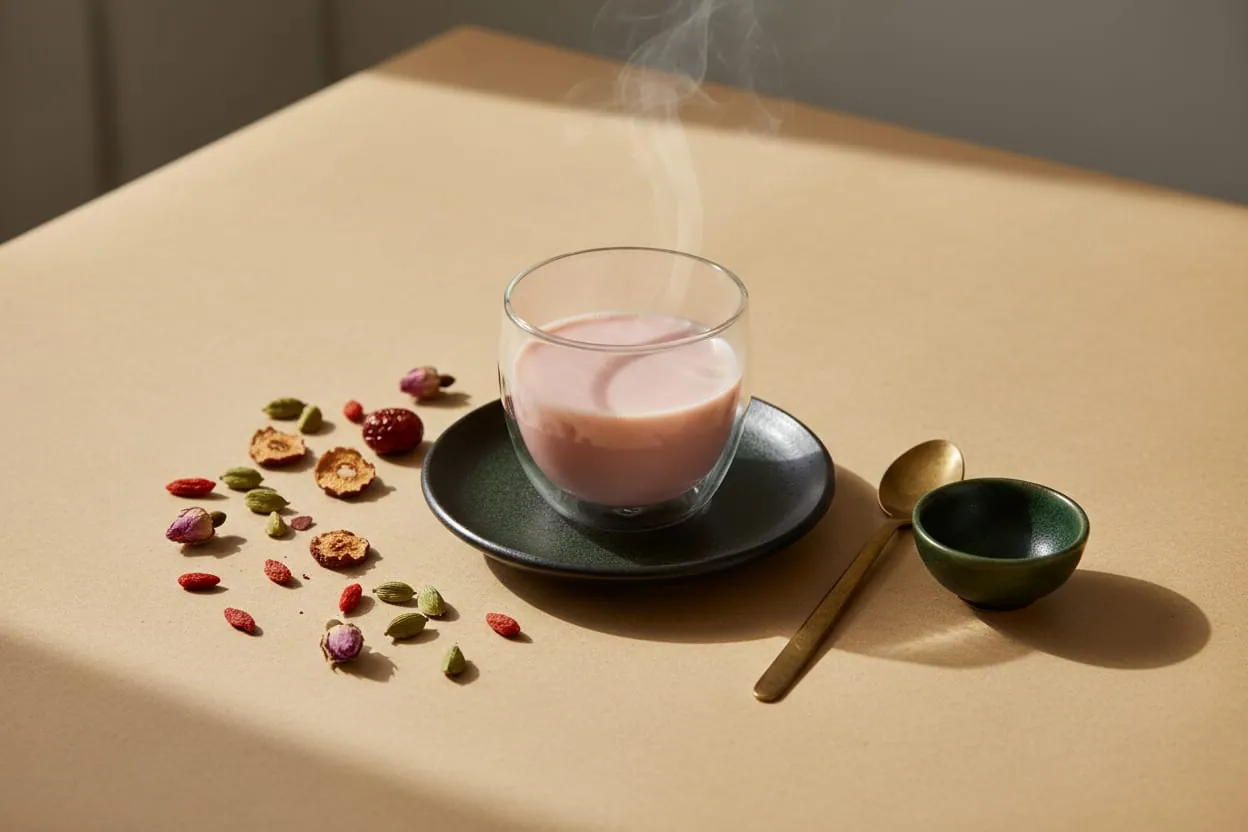
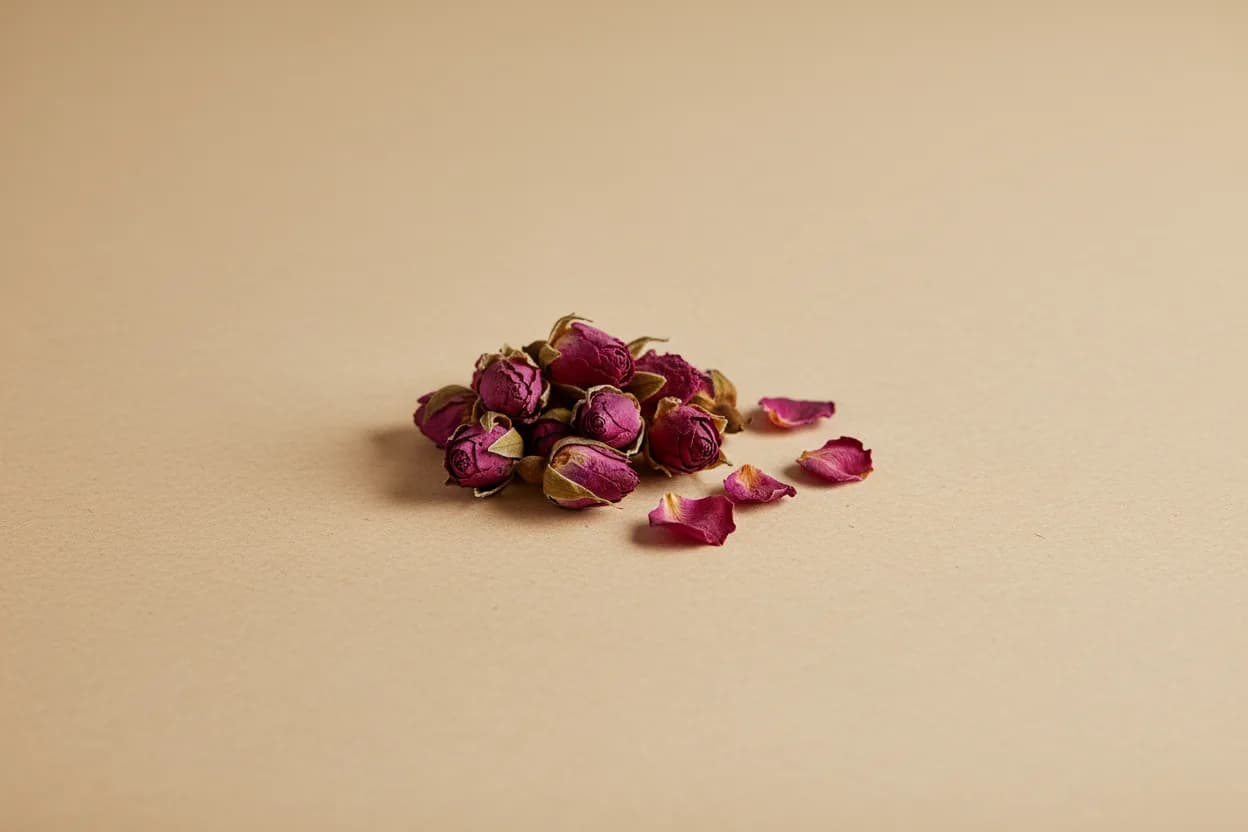
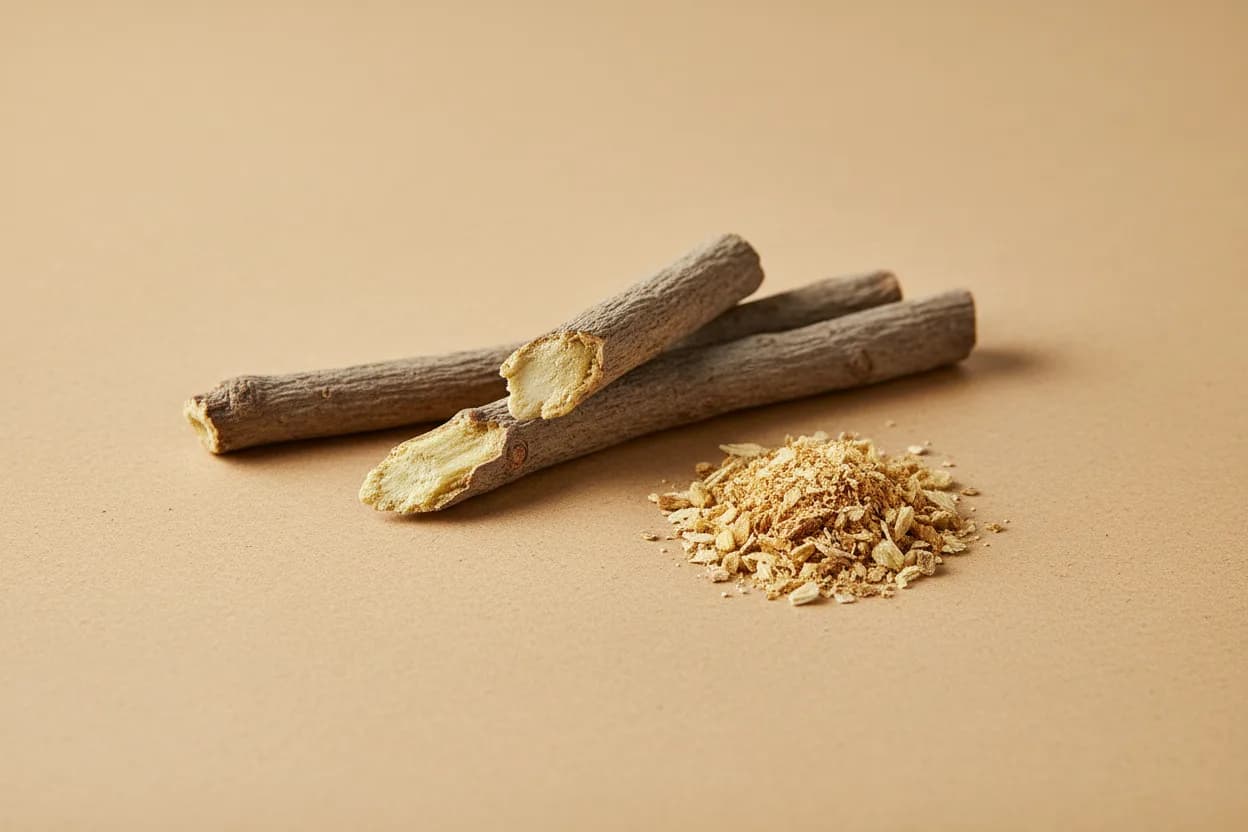
The rose milk tea with the most in the pot. Three jujubes, 5 grams of goji, 2 grams of sliced ginger, one cracked cardamom pod and, optionally, 0.2 grams of licorice simmer in 160 millilitres of water for six or seven minutes. The black tea is the lightest of the three at 1.1 grams. Six crushed rose buds sit off the heat for two or three minutes; the milks go in after straining. The pod and the licorice separate it from its siblings: cardamom brings cineole, 10.7 to 28.4 per cent of the pod oil, a cool eucalyptus note, and licorice is, in the Journal's phrase, sweet without sugar. It takes twelve minutes against their ten.
The page promises warmth and less inflammation for a hard day, and the Journal's notes are blunt: none examines period pain. The ginger note finds a real but modest effect on nausea, shown with capsules, and no support for systemic anti-inflammatory claims: in 27 volunteers no free 6-gingerol appeared in plasma at any dose up to 2 grams, and the headline meta-analysis on C-reactive protein carries 98.1 per cent heterogeneity. If ginger relieves nausea through the gut, the note adds, it never needed the blood. For cardamom, the note on spiced coffee found no analytical or sensory study of cardamom-spiced coffee and calls the usual reasons for it, settling the stomach among them, folk reasoning.
Licorice is the line to read, hence optional. The note on glycyrrhizin gives the EU ceiling as 100 milligrams of glycyrrhizinic acid a day for regular consumption, counted across every source; a Dutch survey of herbal teas measured up to 450 milligrams per litre. Glycyrrhizin pushes potassium down and blood pressure up. A 0.2 gram pinch is an occasional cup, not a daily one, and one to leave out with hypertension, on diuretics or corticosteroids, and in pregnancy, where the note cites a Finnish cohort association and asks you to hold it lightly. Sweeten with the condensed milk, one to two teaspoons, to taste.