Skip to content
MORTAR & KETTLE
Apothecary of Flavor
HERBAL TEA · №014

Upgraded Rose Milk Tea

rose milk, with a ruby lift

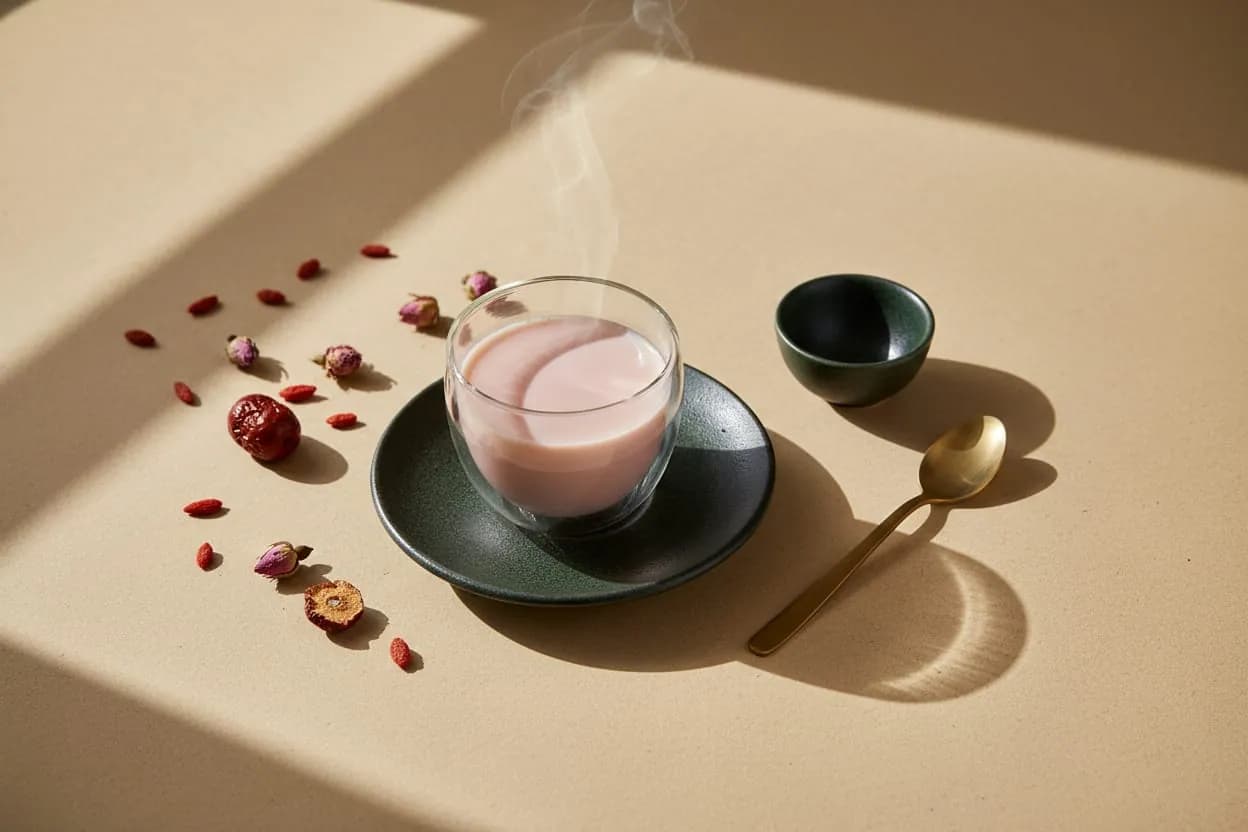
A silken milk tea stained rose and ruby, where crushed buds and simmered goji-jujube fruit lean into a spiced black-tea base. It warms from the inside (ginger and tea for lift, dried fruit for a quiet immune nudge) and drinks like a floral dessert with a pulse.

Medium10 minModerate
FloralSweetFruityWarmingImmune
Upgraded Rose Milk Tea · finished

Method

Check off each step as you go. Your progress is saved. Amounts below already match your batch size.

Simmer the jujube, goji, and ginger in the water until the liquid runs amber.
3 piecesjujube5.5 ggoji berries1.2 gfresh ginger160 mlfiltered water
6–7 min
Add the black tea and steep.
1.2 gblack tea
1 min
Off the heat, add the rose buds.
6 rose buds
2–3 min
Strain and stir in the milks last.
80 mlfresh milk40 mlevaporated milk8 mlcondensed milk
A good steep is chemistry with the kettle on. Mind the minutes.
THE MORTAR & KETTLE METHOD

The chemistry

SKELETAL STRUCTURES

4 compounds carry this recipe. Here is what each one does and, where we have it, what it actually looks like.

C₁₀H₂₀O
citronellol
C₁₀H₂₀O

The rose-petal top note that perfumes the cup; released when the buds are crushed, it carries the tea's soft, sweet-floral signature.

FloralSweet
C₁₇H₂₆O₄
gingerol
C₁₇H₂₆O₄

The pungent heat of fresh ginger; it opens the blood vessels and gives the tea its inside-out warmth and gentle immune push.

WarmingImmune
C₈H₁₀N₄O₂
caffeine
C₈H₁₀N₄O₂

Steeped from the black tea, it supplies the ruby lift under the milk: a clean stimulant edge that keeps the sweetness from turning sleepy.

WarmingSweet
C₄₀H₅₆O₂
zeaxanthin
C₄₀H₅₆O₂

The ruby-orange pigment simmered out of goji berries; it colors the base and carries the dried-fruit sweetness that reads as immune-supportive nourishment.

FruityImmune

On the table together

THE INDEX, LINKED

This recipe is part of a set: follow the thread through the blends it uses and what it's served with.

FROM THE JOURNAL

The reading behind this recipe

The smell you think is in your mouth
№25Chemistry

The smell you think is in your mouth

Pinch your nose, bite a strawberry, and the strawberry goes away. What is left is sweet and slightly sour, and that is all your tongue was ever contributing. The rest was smell, arriving at your nose from inside your mouth. The famous number attached to this, that 80 per cent of taste is really smell, turns out to descend from six people tasting one ester in sugar water in 1977.

7 August 2026·16 min read·30 SOURCES
Nobody was poisoned by the herb on the label
№21Safety

Nobody was poisoned by the herb on the label

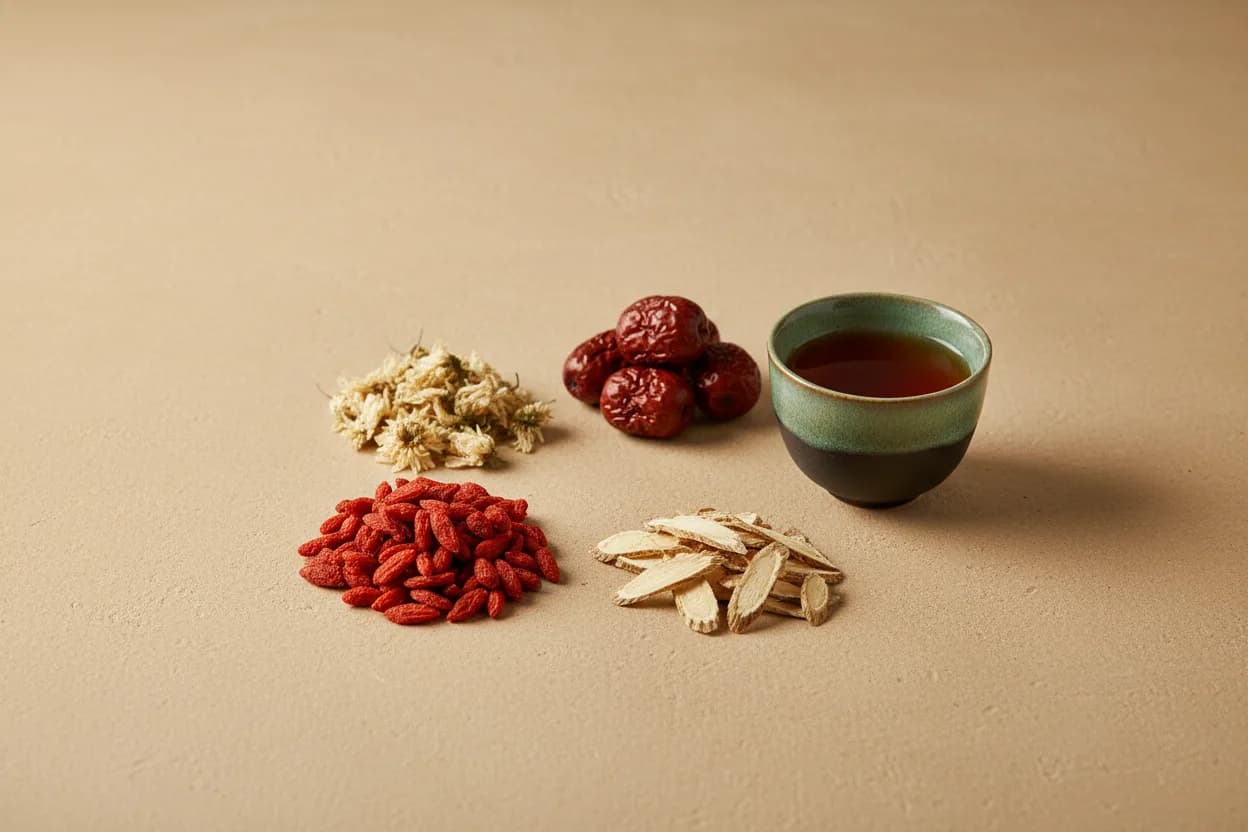
Chinese hospitals are selling herbal lattes, one Chengdu shop sold sixteen thousand cups of stay-up-late water in six months, and every market figure you will read traces to a single firm. The trend is new, the government plan behind it is ten years old, and the documented harms almost all came from something the packet never mentioned.

5 August 2026·15 min read·30 SOURCES
Caffeine was named in 1819 and explained in 1981
№17History

Caffeine was named in 1819 and explained in 1981

Unrelated plants invented the same molecule at least six times, by different routes, for reasons that have nothing to do with us. We drank them for centuries, gave the compound four names before realising it was one, learned to build it from scratch, and only then worked out what it actually does.

4 August 2026·13 min read·29 SOURCES