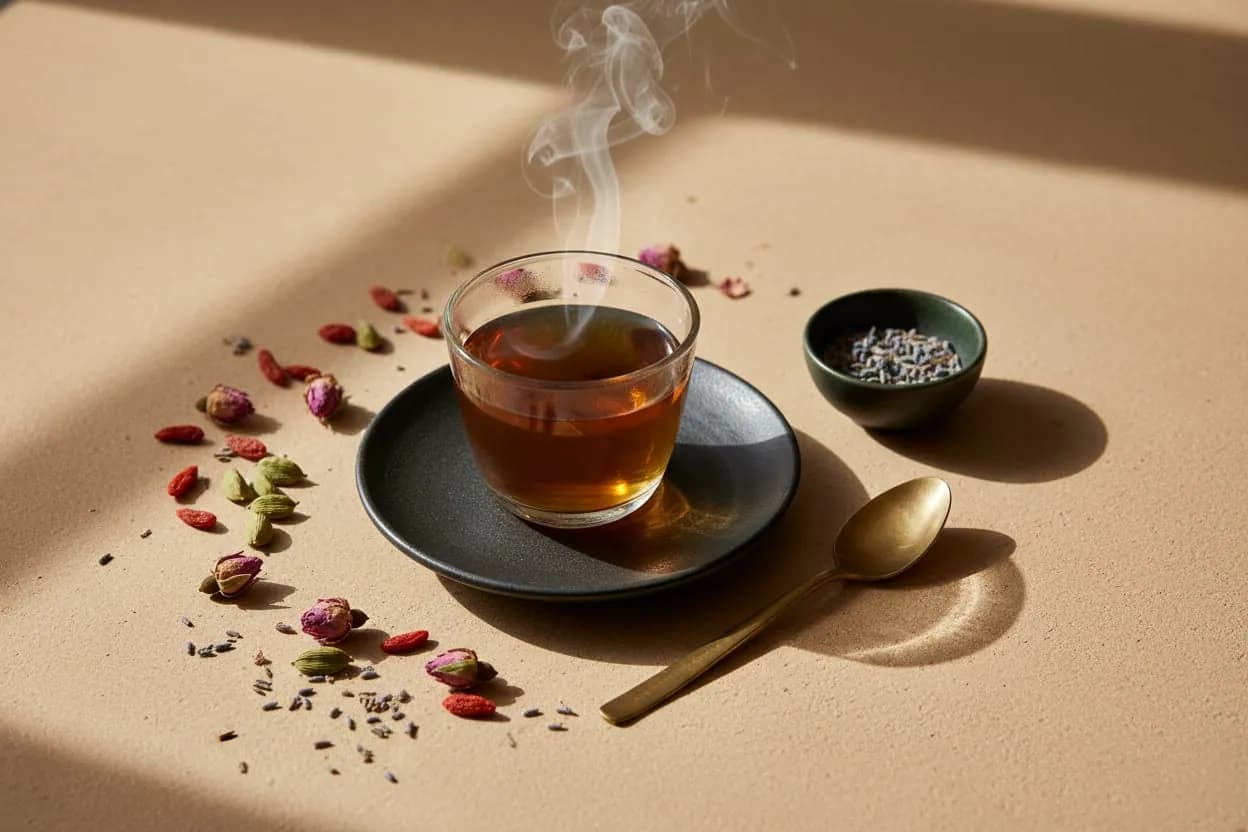
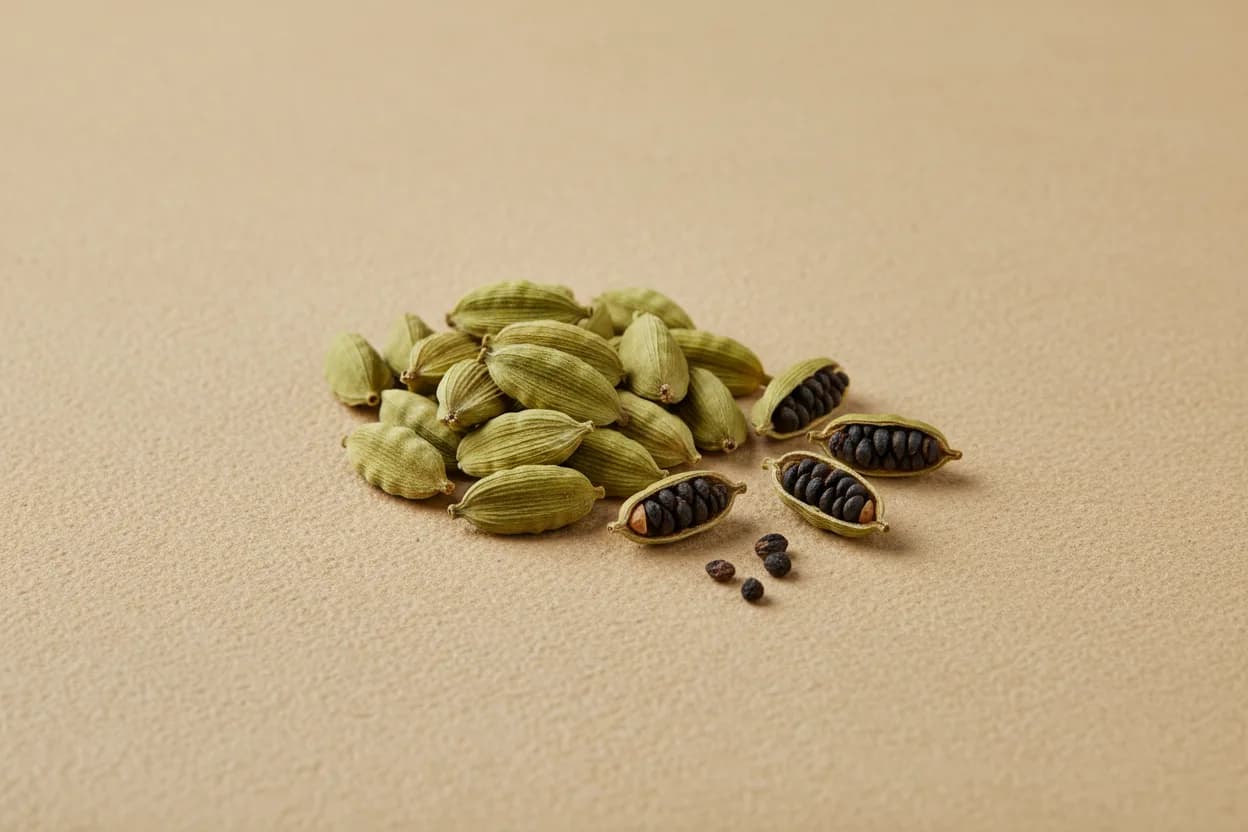
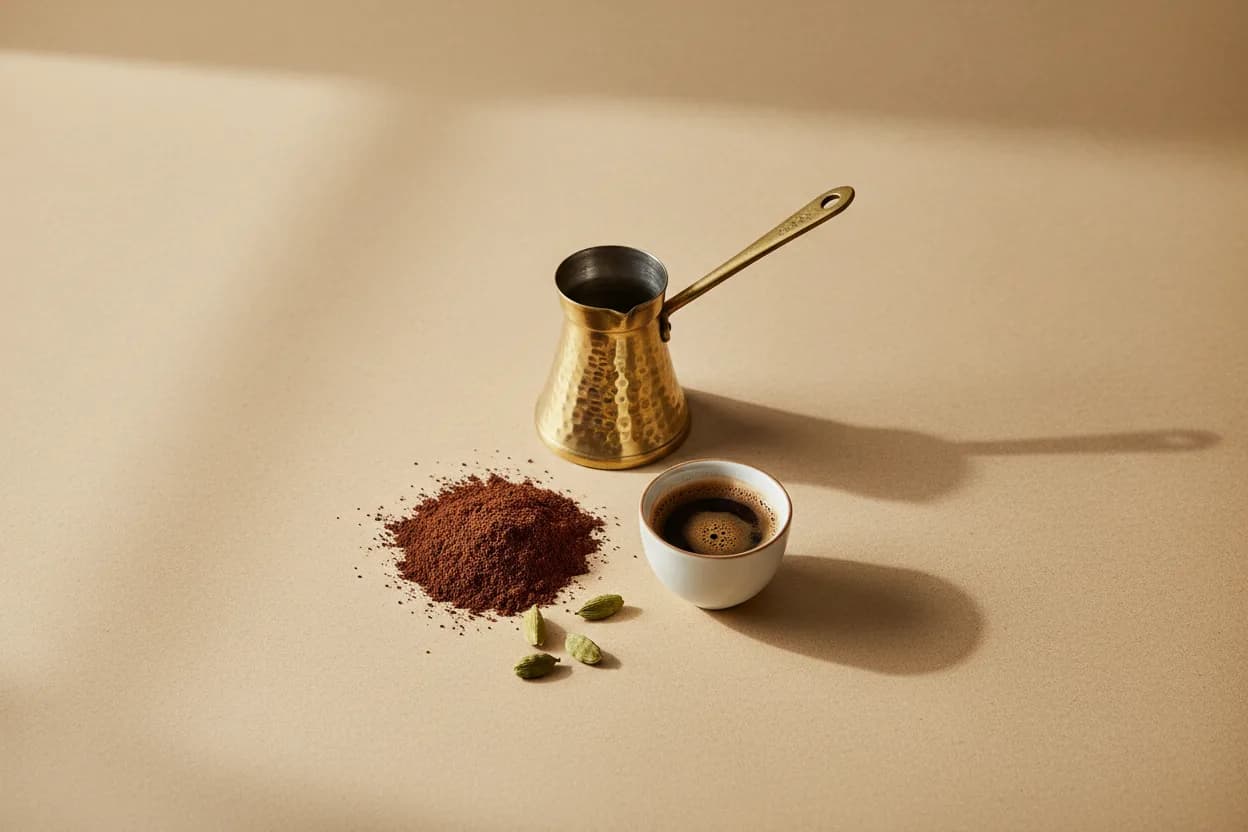
In 500 millilitres of water, 2 grams of sliced ginger, two cracked cardamom pods and 5 grams of goji simmer for five minutes, until fragrant and amber. The black tea, 1.2 grams, steeps for one minute. With the heat off, five rose buds and 0.04 grams of lavender go in, steeped covered for two or three minutes, and it is strained into a warmed pot. No milk, no added sugar. Cardamom suits an open simmer: the Journal's note on spiced coffee gives its oil as about 90 per cent oxygenated compounds, alpha-terpinyl acetate near 44 per cent and 1,8-cineole near 30, the kind that more readily dissolve in water and travel in steam.
Warming, immune, calming: three promises, three weights of evidence. Warming holds up: the ginger note traces the burn to TRPV1, the capsaicin receptor, at roughly 250 times gentler than a chilli. Calming leans on lavender, whose strongest evidence belongs to Silexan, a standardised oral preparation sold as a licensed medicine in Germany: five trials, 1,213 patients, 2.9 points better than placebo on the Hamilton Anxiety scale, with no trial found independent of the manufacturer. That is not petals in hot water. The recipe credits the goji with the immune character, and no note tests goji. The ginger note calls immunity claims unsupported: in the one well-designed trial, 41.6 per cent cleared COVID-19 virus on ginger against 42.8 on placebo.
The thermal taste note puts the preferred drinking temperature of coffee at about 60 degrees and IARC's very hot line above 65. The caution is goji with warfarin: the Chinese herbal brews note describes an INR of 4.1 after four days of three to four glasses of concentrated goji tea daily, and says anyone on an anticoagulant should treat a daily goji habit as a change in medication. This pot holds 5 grams. The black tea is only 1.2 grams, yet the caffeine note's sleep study found that even 400 milligrams six hours before bed cost about an hour, so pour with bedtime in mind.