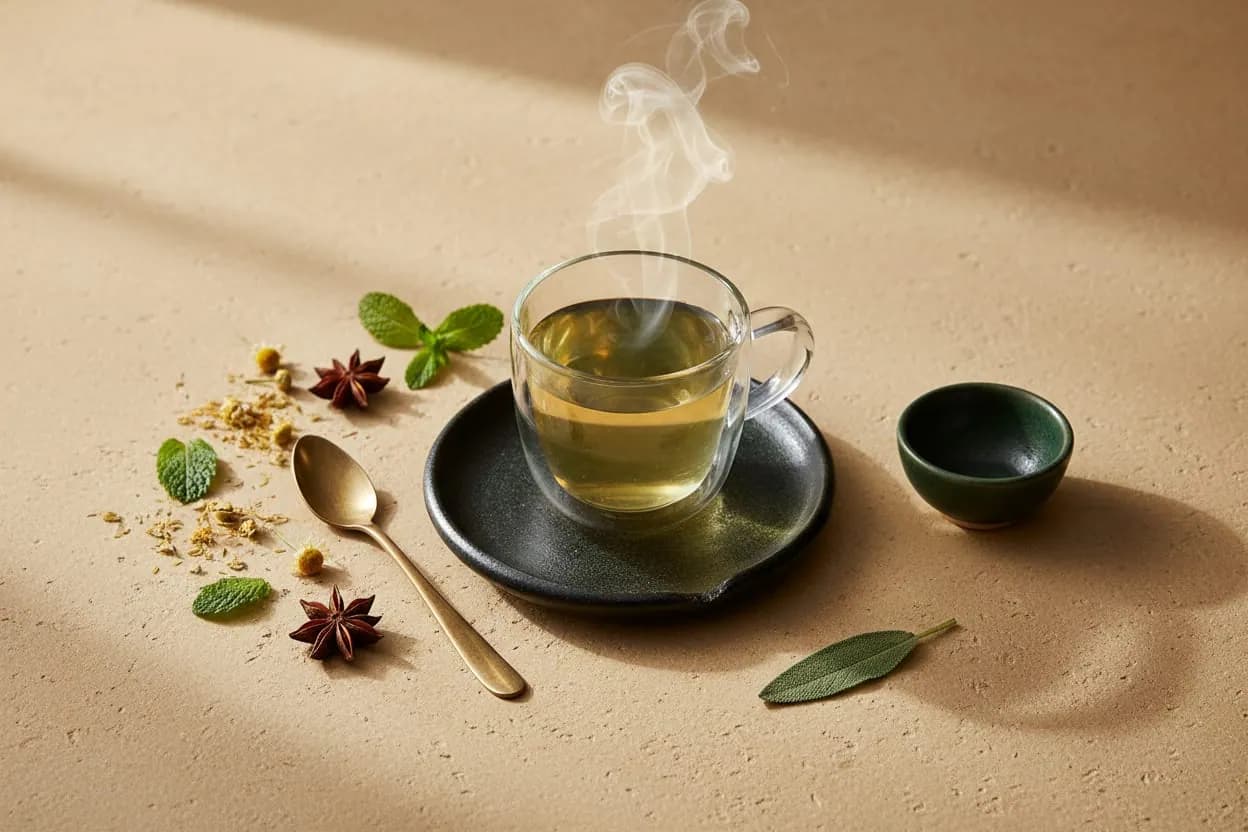
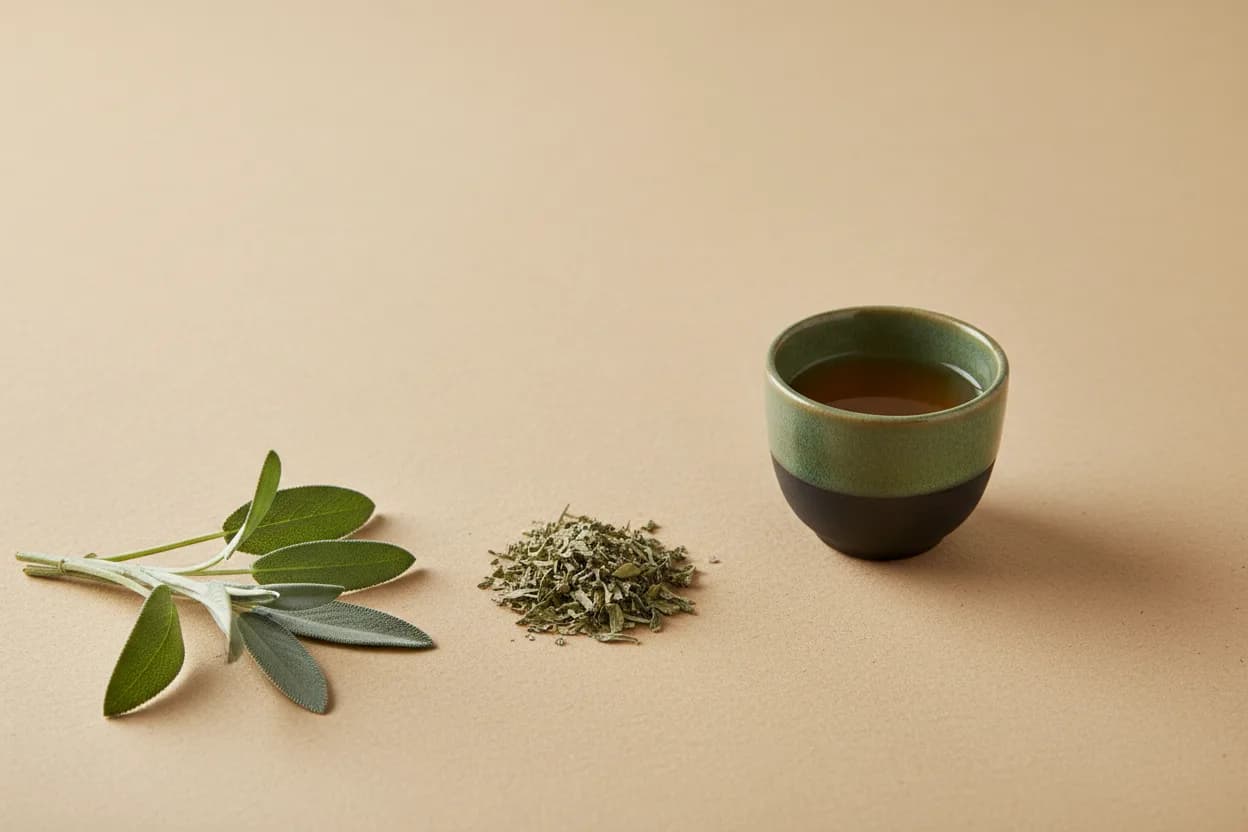
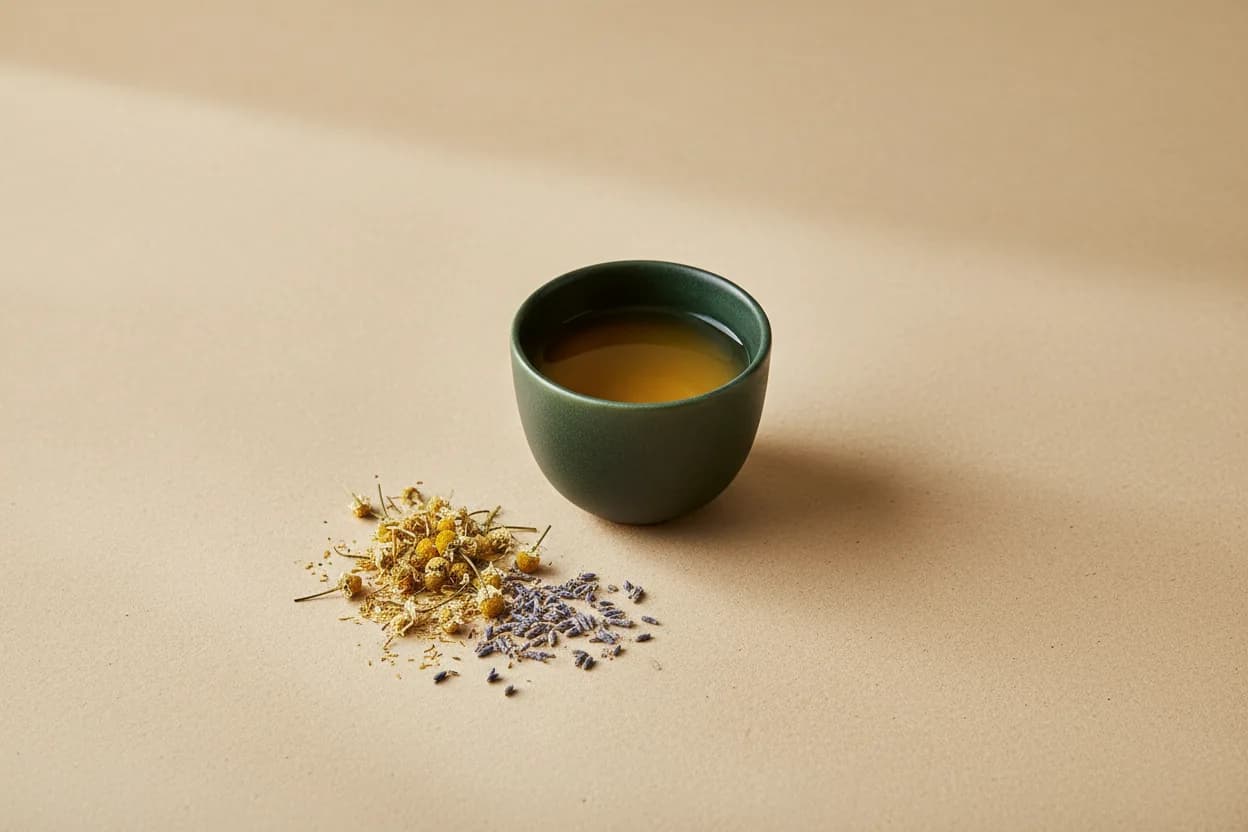
Five botanicals scaled up to a pot. Ginger and star anise simmer four minutes until fragrant, then the heat goes off before chamomile, fourteen mint leaves and a fifth of a gram of dried sage steep together, covered, six minutes, strained into a warmed pot. Sage is new among the four teas in this batch, added at the end rather than the simmer: the Journal's note on brewing methods traces that split to European regulatory guidance, which infuses leaves and flowers but decocts roots, rhizomes and bark. The result carries more chamomile and a resinous, savoury undertone from the sage.
The sage here is Salvia fruticosa, not the Salvia officinalis most European thujone warnings address: the two carry almost opposite chemistry, one at forty to sixty-seven per cent cineole and under five per cent thujone, the other the reverse. A cup made from the thujone-heavy species still carries a fraction of a milligram to a few milligrams per serving, since water pulls out only about a third of what's in the leaf, plateauing near five minutes. Chamomile does more chemical work than its official standing admits: Europe's herbal monograph credits chamomile tea only for minor digestive complaints, not sleep, yet pooled trial evidence gives chamomile a real, if modest, effect on sleep quality and generalized anxiety, not state anxiety. Ginger has one dependable job, nausea: 1.2 grams cut gastric-emptying time in half in trials, though it changed no reported symptom either way.
Drink it close to bedtime, from the pot, while warm enough for sage and ginger to carry. At a fifth of a gram, this recipe's sage sits far under the six milligram daily thujone ceiling Europe sets even for the higher-thujone species, so there is little cause for caution. The sleep this cup is named for rests more on the pooled trial evidence for chamomile than on anything sage or star anise has been shown to do. The recipe still asks for star anise from a source who can name it, since the toxic look-alike species looks the same once dried.