The chemistry
SKELETAL STRUCTURES4 compounds carry this recipe. Here is what each one does and, where we have it, what it actually looks like.
C₈H₁₀N₄O₂
The engine of the black tea; it clears the fog and sharpens attention, the reason this cup reads as focus rather than comfort.
C₁₀H₂₀O
The cooling lift from fresh mint; it triggers cold-sensing receptors on the tongue, giving the tea its clean, wakeful snap.
C₁₇H₂₆O₄
The bite of fresh ginger; it warms the base of the cup and keeps the brightness grounded so the mint doesn't float off alone.
rosmarinic acid
C₁₈H₁₆O₈
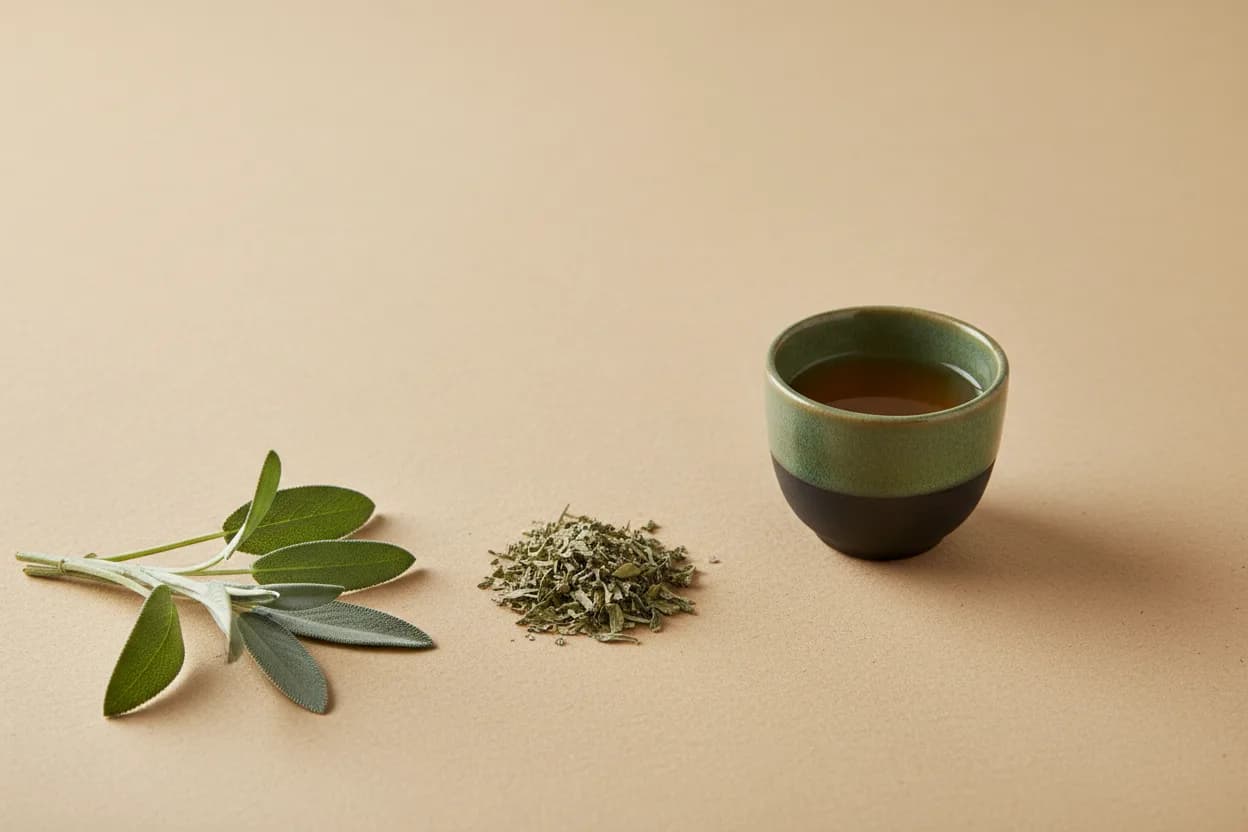
A herbaceous antioxidant from the sage; it lends the tea its dry, resinous edge and rounds out the clean, savory finish.
About
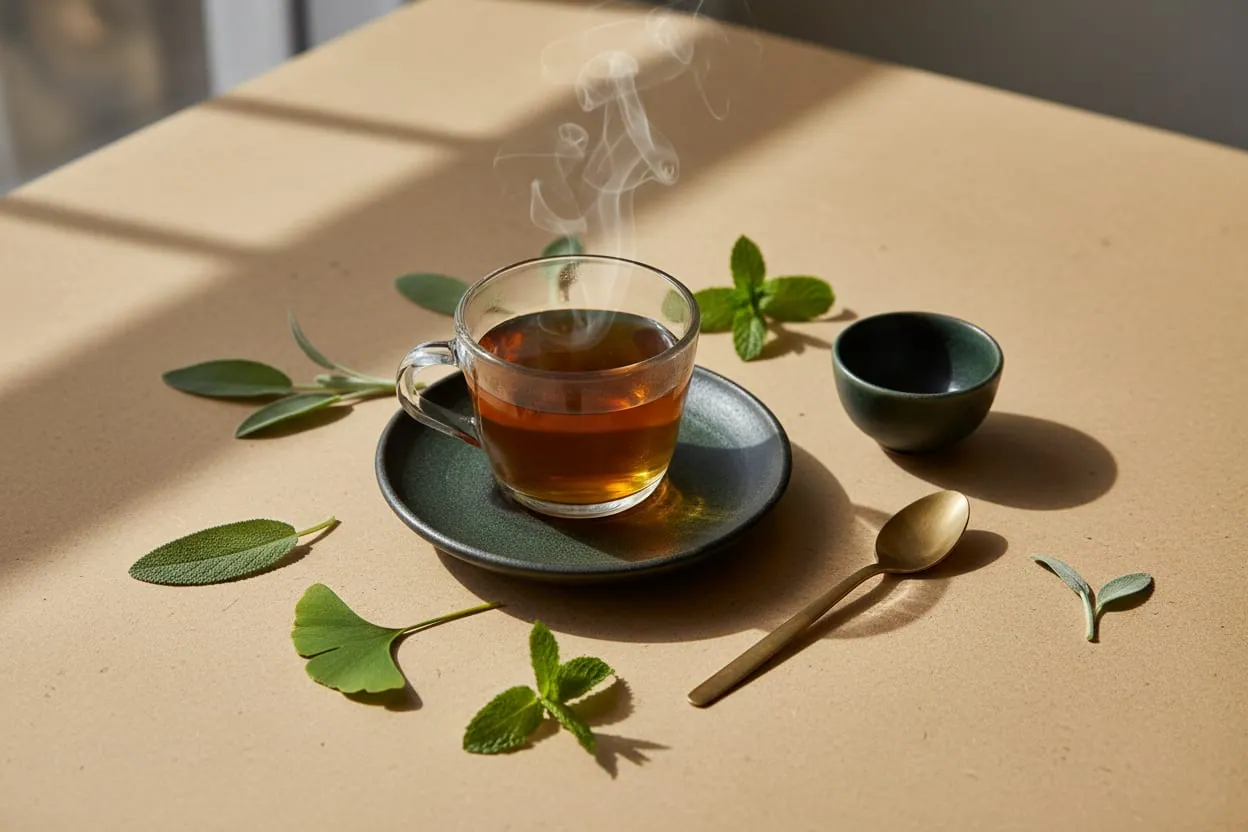
IN DEPTHFour botanicals in a fixed order: ginger and sage steep in just-boiled water for two minutes before the black tea and fifteen mint leaves go in for ninety seconds and no longer. The short second steep matters: the Journal's note on astringency explains that black tea's bitterness and its mouth-drying pucker come from the leaf together but register on two different nerves, and the pucker lingers after the bitterness fades, so a longer steep would leave more of it behind. The pot comes out bright: ginger's warmth low in the cup, sage's dry edge, mint cutting across the top. The ginkgo capsule goes alongside the cup, never into the pot.
The lift is almost entirely the black tea's caffeine; the mechanism was pinned down in 1981, when ranking ten methylxanthines by receptor binding matched ranking them by how much each stimulated a mouse, showing caffeine blocks the adenosine signal rather than supplying energy. An eight-ounce cup runs about 47 milligrams by USDA's figures against coffee's 95; this pot steeps ninety seconds. Whether that becomes a real lift is genuinely contested: a 2010 trial of 379 people found habitual drinkers no more alert than their baseline, while a 2005 trial of 24 people with no caffeine habit found real gains at 75 and 150 milligrams. Menthol does not cool anything; it binds TRPM8, the cold receptor identified in 2002, reporting cold to a brain with no way to check. Ginger's one well-supported use is nausea, not attention, so here it only warms the cup's base.
Drink it inside that ninety-second window; leave it longer and the astringency catches up with the caffeine. The sage is dried Salvia fruticosa, the Levantine maramiyya; the study measuring thujone in an actual cup used the more thujone-rich Salvia officinalis as worst case, and even then found 0.03 to 4.56 milligrams, well under Europe's ceiling of six. For an afternoon cup, a 2013 sleep-lab trial found 400 milligrams of caffeine disturbed sleep even six hours before bed. This pot carries a fraction of that dose, but the same clock keeps running.
On the table together
THE INDEX, LINKEDThis recipe is part of a set: follow the thread through the blends it uses and what it's served with.