Skip to content
MORTAR & KETTLE
Apothecary of Flavor
, home
HERBAL TEA · №010

Smoke Recovery Tea

a clearing herbal reset

A clearing herbal reset for lungs and palate: sage and thyme lay down an antiseptic, resinous base, ginger warms the throat, and chamomile, mint, and lavender lift the finish into something cool and quiet. It soothes irritated tissue, settles the stomach, and leaves the breath feeling scrubbed and calm.

Medium11 minModerate
HerbaceousMintyImmuneAnti-inflammatoryDigestive
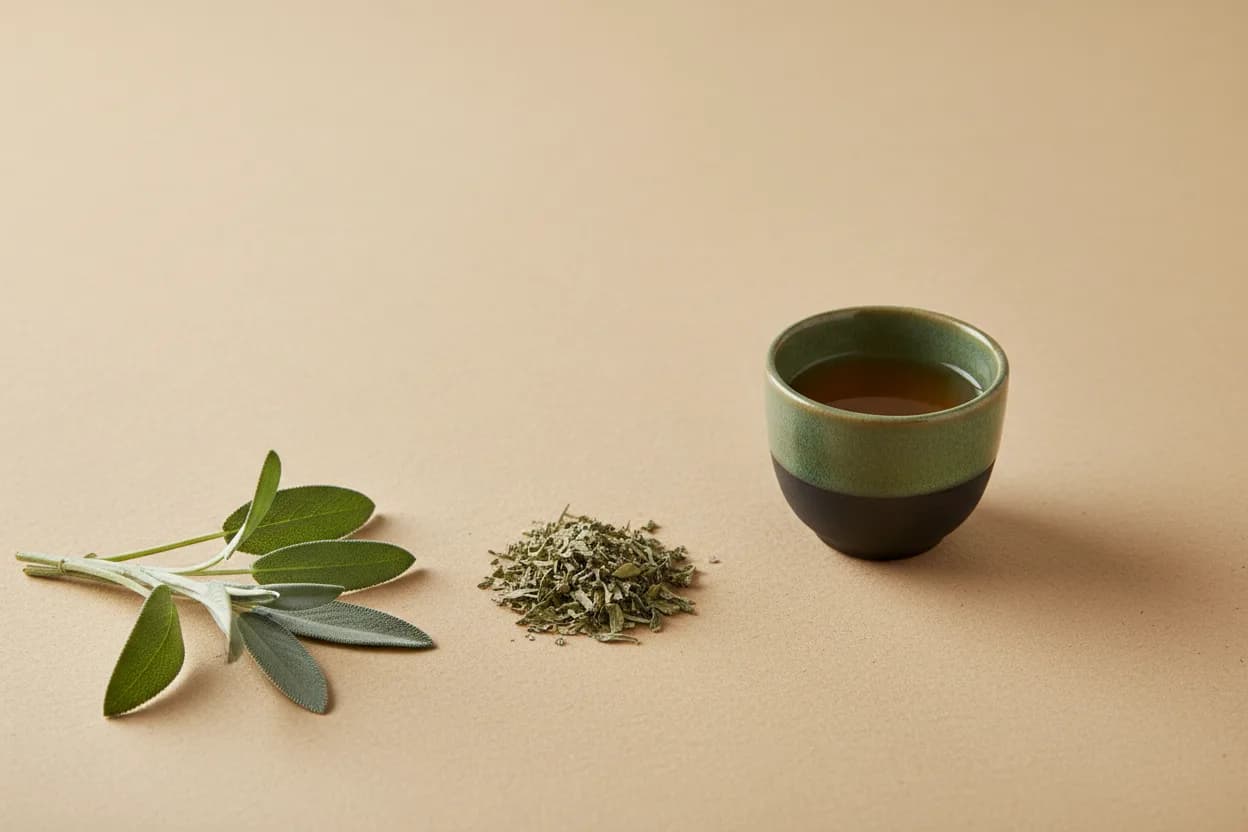
Smoke Recovery Tea · finished

Method

Check off each step as you go. Your progress is saved. Amounts below already match your batch size.

Simmer the sage, thyme, and ginger in the water to build a clearing base.
▸0.4 gsage▸0.3 gthyme▸1 gfresh ginger▸400 mlfiltered water
5 min
Off the heat, add the chamomile, mint, and lavender.
▸1 gchamomile flowers▸10 leavesfresh mint▸0.03 gdried lavender
Steep, covered, then strain.
6 min
“A good steep is chemistry with the kettle on. Mind the minutes.”
THE MORTAR & KETTLE METHOD

The chemistry

SKELETAL STRUCTURES

4 compounds carry this recipe. Here is what each one does and, where we have it, what it actually looks like.

C₁₀H₁₄O
thymol
C₁₀H₁₄O

The bracing phenol of thyme; it lends the tea its clean medicinal edge and supports the throat and airways against irritation.

HerbaceousImmune
C₁₇H₂₆O₄
C₁₇H₂₆O₄

The heat behind fresh ginger; it quiets inflammation and coaxes the stomach into motion as the base simmers.

DigestiveAnti-inflammatory
C₁₀H₂₀O
C₁₀H₂₀O

The cooling breath of fresh mint added off the heat; it opens the nasal passages and gives the tea its clearing, minty finish.

MintyDigestive
C₁₅H₂₆O
C₁₅H₂₆O

A gentle terpene alcohol from chamomile that calms inflamed tissue and rounds off the herbal sharpness with a mellow, floral warmth.

Anti-inflammatoryHerbaceous

About

IN DEPTH

Six botanicals in two stages, the largest sage measure of any tea in this batch. Sage, thyme and ginger simmer together for five minutes to build a clearing base, twice the sage of Desert Recovery Night Tea and the only tea here to add thyme at all. The heat then goes off and chamomile, ten mint leaves and a bare 0.03 grams of lavender, marked optional, steep covered for six minutes: resinous and antiseptic underneath from the sage and thyme, warmed by the ginger, then cooler and floral as the chamomile, mint and lavender take over.

Thyme is the one compound here with no Journal note behind it: the recipe's own tasting notes credit thymol with a clean medicinal edge for the throat and airways, a judgment rather than a cited trial. Sage repeats its role from Desert Recovery Night Tea: this is Salvia fruticosa, not the higher-thujone Salvia officinalis most warnings target, and its 0.4 grams sits well inside a cup's usual thujone range. Chamomile's anti-inflammatory reputation, the tag this tea leans on hardest, rests mostly on animal models and cells in a dish; a 2022 review says clinical efficacy and safety in people remain scarce and undetermined. As for the lavender: the trial evidence for its calm used a licensed oral capsule at a fixed daily dose, not a few dried buds steeped with mint, so treat the calm here as flavour rather than tested effect.

Drink it hot, for a scratchy throat or a smoky day, and don't skip the mint: menthol's cooling is a trick played on the TRPM8 receptor, not an actual temperature drop, but it's the trick this cup ends on. One real caution: chamomile is a daisy, and daisy-family pollen cross-reacts closely enough that a first cup of chamomile tea has put a child with pollen allergies into anaphylactic shock. Anyone with a ragweed, mugwort or daisy allergy should treat this pot, and every other chamomile tea on this site, with the same care. The thyme hint allows za'atar as a stand-in, for whichever jar is actually in the kitchen.

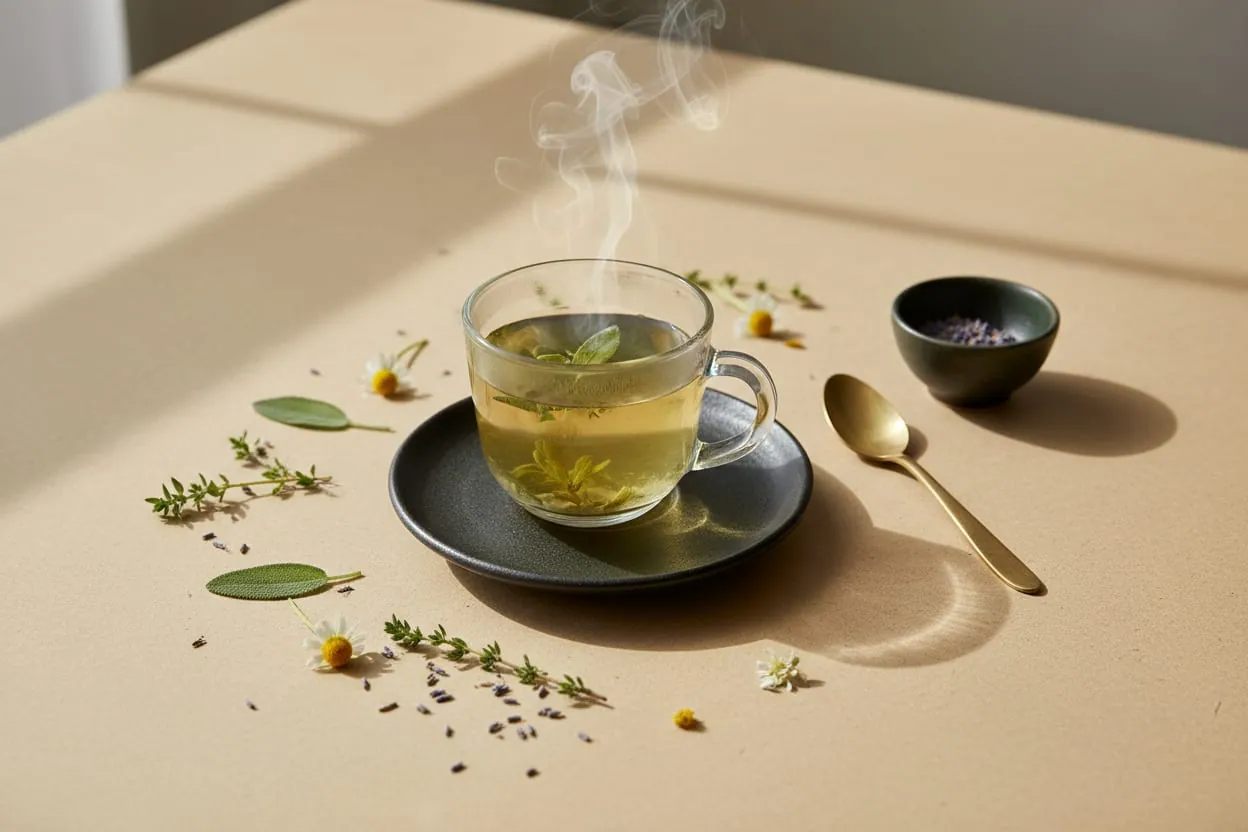
On the table together

THE INDEX, LINKED

This recipe is part of a set: follow the thread through the blends it uses and what it's served with.

FROM THE JOURNAL

The reading behind this recipe

Two plants called sage
№20Origins

Two plants called sage

The sage that Europe's thujone warnings are written about is not native to the Levant, and the one in your maramiyya is a different species with different chemistry. Also: what a cup actually carries, why the essential oil is the dangerous form, and why burning any leaf is a combustion problem rather than a botany one.

5 August 2026·15 min read·26 SOURCES