The fish got its EPA and DHA from algae, and so, mostly, do we
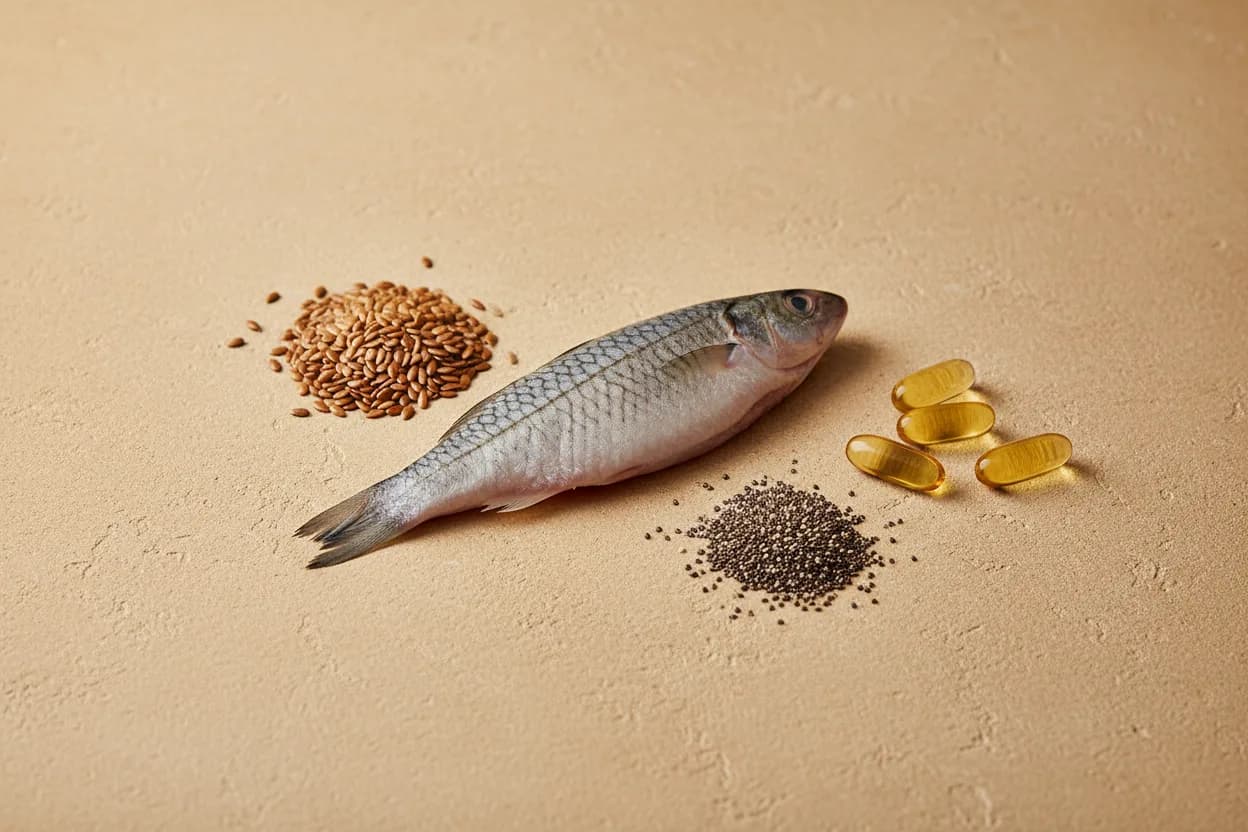
Most of the EPA and DHA in a fish was built by microalgae and climbed the food chain to it, and people turn only a little of the plant omega-3 in flax and chia into either. The Danish doctors who made fish oil famous measured Greenlanders' blood rather than their hearts, and the largest trials of ordinary capsules missed their main targets.
Contents
Open the stomach of a grey mullet and most of what comes out is mud. Over a year in the Tamiahua lagoon in Veracruz, a biologist went through 192 stomachs from two mullet species, Mugil cephalus and Mugil curema, and concluded that "sediments are their basic food", thick with benthic diatoms: 130 taxa, led by Nitzschia, Navicula, Amphora and Cocconeis. 1 The fish that the Gazan sayadiya flours, fries and lays over spiced rice makes its living sifting microscopic algae out of silt.
That diet is this note in small. The two fatty acids people buy fish oil for, EPA and DHA, are made in bulk by single-celled life: "the vast majority is produced at the base of the marine food web in marine microbes, including predominantly microalgae". 2 A fish is mostly a carrier, and the person who eats it is the next link, with only a limited ability to make either molecule from the omega-3 in seeds.
Counting from the wrong end
The name is a counting rule. Count along the carbon chain from its methyl end rather than its acid end, and in an omega-3 the first double bond starts at the third carbon. Alpha-linolenic acid, the omega-3 of flax and chia, has 18 carbons and three double bonds. 3 EPA has 20 and five, DHA 22 and six. 2 In 1976 the chemists' nomenclature commission recommended writing the position as n minus x, n-3 for short, and said the Greek letter "should not" be used. 3 The supplement aisle went with the Greek letter anyway.
The double bonds are also where these fats go wrong. Oxidation starts at the carbons wedged between two double bonds, and the fatty acids of fish oil carry on average about twice as many of those as linseed oil's and over three times as many as soybean oil's; in one comparison the fish oil oxidised fastest. 4 The breakdown products make old fish oil taste of fish, and "it is possible to have fish oils with very low hydroperoxide levels that also have an undesirable taste". 4
Made in the plankton
A 2019 analysis of more than 160 fatty-acid profiles from seven phyla of marine phytoplankton calls microalgae "the generators and main suppliers" of omega-3s in the sea; haptophytes and ochrophytes led for EPA, and dinoflagellates and the haptophyte Emiliania huxleyi for DHA. 5 From there the fats are eaten and accumulated up the food chain, which is how oily marine fish come to be rich in them. 6
The tidy slogan, that algae make it and fish do not, has not survived the last decade. In 2018 a team found genes for omega-3-making enzymes in 80 animal species, among them corals, rotifers, molluscs, worms and crustaceans; five of the enzymes, tested in yeast, did the job, and the authors wrote that their results "contradict the currently accepted paradigm". 7 I found no estimate of how much these animals add. Fish differ too. Freshwater and migratory species can manage on the shorter plant fats, and "salmonids can be successfully cultured on vegetable oils devoid of long-chain n-3 PUFA", while marine fish have "a strict requirement" for EPA and DHA ready-made. 8
The mullet sits awkwardly in this. I could not find a study of its own enzymes, but a close relative, the thicklip grey mullet, turned labelled ALA into EPA and DHA in isolated liver and gut cells, evidence of "a complete pathway". 9 How much of the sayadiya's omega-3 came from the diatoms and how much the fish made for itself is an open question.
The salmon that halved
Farmed fish show the chain working in real time. Across more than 3,000 samples of Scottish farmed salmon analysed at the University of Stirling, EPA plus DHA fell from about 2.7 g per 100 g of flesh in 2006 to 1.36 g in 2015, as feed makers replaced fish oil with vegetable oil, mostly rapeseed. A 130 g portion that met the international fatty-acid society's weekly 3.5 g in 2006 had to be doubled by 2015. The salmon stayed about as fat throughout, so the loss was in what their fat was made of. 6
The industry's answer has been to go back to the source: algal oil grown in fermenters, mostly from the single-celled Schizochytrium and occasionally from the dinoflagellate Crypthecodinium cohnii. 2 The newest answer skips the sea altogether. Rothamsted's engineered camelina makes EPA at up to 31 per cent of a seed's fatty acids, 10 and an Australian canola carries seven genes from yeasts and marine microalgae to make DHA in its seed; regulators in Australia and New Zealand approved it in December 2017. 11
The long way round
People cannot make omega-3 from scratch, but we can lengthen ALA, and tagging it with carbon-13 shows how far we get. In six young men there was "no apparent 13C enrichment" of DHA at any point over 21 days. 12 In young women the estimated conversion was 21 per cent to EPA and 9 per cent to DHA. 13 Women carry about 15 per cent more DHA than men on controlled diets; oral oestrogen raised DHA by 42 per cent in trans women and testosterone cut it by 22 per cent in trans men, which the authors read as oestrogen probably speeding the conversion. 14
A review issued with ISSFAL, the international fatty-acid society, sums up the evidence: extra ALA raises EPA in blood and breast milk but has "little effect" on DHA, "whereas consumption of preformed DHA is effective in raising blood DHA levels". 15 The tracer method has critics: most swallowed ALA is burned for energy or stored in fat, so these studies may underestimate what the body makes, and the adult brain is estimated to need only 2.4 to 3.8 mg of DHA a day. 16
The route itself is roundabout. In 1991 Sprecher's group looked in rat liver for an enzyme that would add DHA's last double bond in one step and reported that "it was never possible to detect the product of the putative 4-desaturase". 17 Instead the body lengthens the chain to 24 carbons, adds the sixth double bond there, and sends it to the peroxisome to have two carbons clipped off; patients who lack peroxisomes are short of DHA. 17 18 The herbivorous rabbitfish has the shortcut: in 2010 its Δ4 desaturase became the first reported in any vertebrate. 19
In the library's bowls
| Per 100 g, raw | EPA | DHA | 18:3, mostly ALA |
|---|---|---|---|
| Grey mullet | 0.217 g | 0.108 g | 0.025 g |
| Atlantic salmon, farmed | 0.862 g | 1.1 g | 0.167 g |
| Atlantic mackerel | 0.898 g | 1.4 g | 0.159 g |
| Egg, whole | 0 | 0.058 g | 0.048 g |
| Chia seeds | 0 | 0 | 17.8 g |
| Flaxseed | 0 | 0 | 22.8 g |
Run the library's recipes through the table. The sayadiya's 600 g of mullet, for two, puts roughly 1 g of EPA and DHA on each plate before the pan, by my arithmetic, 20 about four days of the 250 mg a day that the European Food Safety Authority sets as an adequate intake. 26 The green smoothie's 10 g each of chia and flax carry about 4 g of ALA, more than three times EFSA's adequate intake of half a per cent of energy, a little over a gram on a 2,000-calorie day. 24 25 26 The egg-free brownies trade eggs, which carry a trace of DHA, for 14 g of ground flax: about 3 g of ALA and no DHA. 23 25
How the seeds arrive matters too. Over three months, whole flaxseed baked into muffins produced no significant rise in blood ALA while milled seed and flax oil did, and no flax group gained EPA or DHA. 27 Ten weeks of milled chia raised blood ALA by 58 per cent and EPA by 39 per cent in overweight women past menopause, while whole chia changed neither significantly. 28 The green smoothie already says to grind the seeds dry before anything else goes in. The strawberry smoothie adds its chia whole, and I could not find a study of what a blender does to a chia seed.
Then there is the pan. In a Turkish study, frying grey mullet fillets in sunflower oil nearly tripled their fat, from 2.7 to 7.6 per cent, and EPA's share of the fatty acids slipped from 13.2 to 10.9 per cent; grilled at 300 °C, the fillets showed no EPA at all. 29 Those are shares rather than milligrams, but a fried fillet's fat is partly the pan's, and the sayadiya keeps that oil for its onions. Among older Americans, tuna and other broiled or baked fish tracked with the omega-3s in people's blood and, three or more times a week, with a 49 per cent lower risk of dying of ischaemic heart disease; fried fish tracked with neither. 30
Blood samples in ice-water
Fish oil's reputation begins in west Greenland in the late summer of 1970, when the Danish doctors Hans Olaf Bang and Jørn Dyerberg and their laboratory technician, Aase Brøndum Nielsen, took fasting blood from 130 Greenlanders in the Umanak district and carried it in ice-water, up to ten hours, to the hospital. 31 EPA made up 15.8 per cent of the fatty acids in the Greenlanders' plasma cholesterol esters, against 0.9 per cent in Danes. 31 By 1978 Dyerberg, Bang and colleagues including John Vane had a hypothesis: "Eskimos have high levels of E.P.A. and low levels of A.A. and they also have a low incidence of myocardial infarction and a tendency to bleed. It is possible that dietary enrichment with E.P.A. will protect against thrombosis." 32
The expeditions measured blood, food and platelets, not anyone's heart. Their 1981 account says where the premise came from: heart disease was "very rare in Greenlanders", citing a 1974 report; a 1940 survey of Greenland's diseases "does not even mention" it; and official reports listed "not a single death from ischaemic heart disease nor case of myocardial infarction" in the district between 1968 and 1978. The aim is stated plainly: "In 1969 we decided to start examinations in Greenland with the purpose of attempting to find the cause of the nearly non-existence of thrombotic diseases in Greenlanders." 31 The rarity was a premise taken from paperwork.
Later readers were blunter. A 2003 review judged the evidence for low heart-disease mortality among the Inuit "fragile", resting "on unreliable mortality statistics", and found deaths from stroke higher than in other Western populations. 33 A 2014 paper reported that most studies found Inuit in Greenland, Canada and Alaska had coronary artery disease as often as non-Inuit populations, and that Bang and Dyerberg's studies "did not investigate the prevalence of CAD in this population". 34 The record points both ways: a 1988 analysis co-written by Dyerberg found heart-disease deaths lower in Greenland than in Denmark, and cerebrovascular deaths higher. 35 Heart disease may well have been rarer; it was never counted well.
The diet was also less fishy than the story. The meat was mostly seal and whale, while "The sledge dogs are mainly fed on fish", and in the settlements "All meat is eaten boiled if not raw. Frying is not used." The shops sold flour, biscuits, sugar and margarine, and the authors wrote that the people they studied "are not eating the traditional high fat and protein diet", though their fat was still rich in omega-3. 31
The capsules on trial
Half a century on, the capsules have been tested at a scale the expeditions never approached, and mostly they have missed. In VITAL, 25,871 older Americans took 840 mg of EPA and DHA a day or a placebo for a median of 5.3 years; for major cardiovascular events the hazard ratio was 0.92, with a confidence interval of 0.80 to 1.06 that includes no effect, and fewer heart attacks turned up only as a secondary result. 36 Cochrane's review of 86 trials and 162,796 people rated the evidence of little or no effect on deaths from any cause and on cardiovascular events as high certainty, with only low-certainty hints of a small benefit for coronary heart disease. 37 STRENGTH, 4 g a day of EPA and DHA against corn oil in 13,078 high-risk patients, was stopped early at a hazard ratio of 0.99. 38
The exception is REDUCE-IT, where 4 g a day of purified EPA cut the main composite of cardiovascular events from 22.0 to 17.2 per cent over a median of 4.9 years in 8,179 statin-treated patients with raised triglycerides, a hazard ratio of 0.75. 39 Its placebo was mineral oil. Over the first year, LDL cholesterol rose 10.9 per cent and C-reactive protein, a marker of inflammation, 21.9 per cent in that arm, with minimal change on EPA, and the investigators' own biomarker study calls the effect on the results "uncertain". 40 FDA reviewers wrote that the pattern "raises questions about the internal validity of the study", then modelled the LDL gap and found it could raise the placebo arm's risk by only about 3 per cent, too little to explain the benefit. 41 The argument has not been settled since.
The capsules also do something nobody asked for. Across seven large trials they raised the risk of atrial fibrillation by 25 per cent, and by 49 per cent at doses above 1 g a day. 42 A 2026 update of 35 trials found the excess confined to high-risk patients taking more than 1.5 g a day. 43 In 2023 Europe's medicines regulator added atrial fibrillation as a common side effect of the prescription omega-3 ethyl esters. 44
The firmest good news is in pregnancy. Cochrane's 2018 review of 70 trials and 19,927 women found that omega-3 supplements lowered births before 37 weeks from 13.4 to 11.9 per cent, and before 34 weeks from 4.6 to 2.7 per cent, both on high-quality evidence, at the cost of slightly more pregnancies running past 42 weeks. 45
Half a per cent
The plainest evidence for the plant omega-3 comes from one patient. In 1982 Holman and colleagues described a six-year-old girl who had lost 300 cm of intestine and was fed intravenously. After five months on a fat emulsion rich in linoleic acid but low in linolenic acid, she had episodes of numbness, weakness, pain in her legs, blurred vision and inability to walk. When the emulsion was changed to one containing linolenic acid, the neurological symptoms disappeared. The authors put her requirement at about 0.54 per cent of calories. 46
Europe's food-safety authority, working from what healthy populations already eat, now sets the adequate intake for ALA at 0.5 per cent of energy. 26 On a 2,000-calorie day that is about 5 g of ground flax, two-thirds of a tablespoon by the brownie recipe's own measure, and close to the share Holman's group worked out for a six-year-old whose symptoms cleared once her feed carried it.
Questions this note answers
- Do fish make their own omega-3?
- Mostly not. The vast majority of the EPA and DHA in the sea is made by microbes at the base of the food web, chiefly microalgae, and reaches fish by being eaten. Some fish, mainly freshwater and migratory species such as salmon, can also convert plant ALA, and some invertebrates carry genes to make omega-3 from scratch. 2 8 7
- Can your body make DHA from flax or chia seeds?
- Only a little. Extra ALA raises blood EPA but has little effect on DHA, while preformed DHA raises it directly, and women convert more than men, probably because of oestrogen. Grind the seeds: whole flaxseed did not raise blood ALA in a three-month trial, while milled flaxseed did. 15 14 27
- Do fish oil supplements prevent heart attacks?
- Not reliably at ordinary doses. In VITAL, 840 mg a day did not significantly reduce major cardiovascular events, and Cochrane rates the evidence of little or no effect on deaths from any cause as high certainty. Four grams a day of purified EPA cut events by a quarter in REDUCE-IT, against a disputed mineral-oil placebo, and doses above 1 g a day raise the risk of atrial fibrillation. 36 37 39 42
Sources
Every numbered claim above points here. Links go to the paper, record, or authority itself.
- 1.
Sánchez Rueda P. Stomach content analysis of Mugil cephalus and Mugil curema (Mugiliformes: Mugilidae) with emphasis on diatoms in the Tamiahua lagoon, Mexico. Revista de Biología Tropical. 2002;50(1):245-252.
https://archivo.revistas.ucr.ac.cr/index.php/rbt/article/view/16257 - 2.
Tocher DR, Betancor MB, Sprague M, Olsen RE, Napier JA. Omega-3 long-chain polyunsaturated fatty acids, EPA and DHA: bridging the gap between supply and demand. Nutrients. 2019;11(1):89.
https://doi.org/10.3390/nu11010089 - 3.
IUPAC-IUB Commission on Biochemical Nomenclature. The nomenclature of lipids (Recommendations 1976). Lipids. 1977;12(6):455-468.
https://doi.org/10.1007/bf02535443 - 4.
Shibata A, Uemura M, Hosokawa M, Miyashita K. Formation of acrolein in the autoxidation of triacylglycerols with different fatty acid compositions. Journal of the American Oil Chemists' Society. 2015;92(11-12):1661-1670.
https://doi.org/10.1007/s11746-015-2732-2 - 5.
Jónasdóttir SH. Fatty acid profiles and production in marine phytoplankton. Marine Drugs. 2019;17(3):151.
https://doi.org/10.3390/md17030151 - 6.
Sprague M, Dick JR, Tocher DR. Impact of sustainable feeds on omega-3 long-chain fatty acid levels in farmed Atlantic salmon, 2006-2015. Scientific Reports. 2016;6:21892.
https://doi.org/10.1038/srep21892 - 7.
Kabeya N, Fonseca MM, Ferrier DEK, et al. Genes for de novo biosynthesis of omega-3 polyunsaturated fatty acids are widespread in animals. Science Advances. 2018;4(5):eaar6849.
https://doi.org/10.1126/sciadv.aar6849 - 8.
Tocher DR. Fatty acid requirements in ontogeny of marine and freshwater fish. Aquaculture Research. 2010;41(5):717-732.
https://doi.org/10.1111/j.1365-2109.2008.02150.x - 9.
Marrero M, Monroig Ó, Pérez JA, et al. Dietary LC-PUFA and environmental salinity modulate the fatty acid biosynthesis capacity of the euryhaline teleost thicklip grey mullet (Chelon labrosus). Comparative Biochemistry and Physiology Part B: Biochemistry and Molecular Biology. 2024;269:110865.
https://doi.org/10.1016/j.cbpb.2023.110865 - 10.
Ruiz-Lopez N, Haslam RP, Napier JA, Sayanova O. Successful high-level accumulation of fish oil omega-3 long-chain polyunsaturated fatty acids in a transgenic oilseed crop. The Plant Journal. 2014;77(2):198-208.
https://doi.org/10.1111/tpj.12378 - 11.
Food Standards Australia New Zealand. Approval report, Application A1143: Food derived from DHA canola line NS-B50027-4. 20 December 2017.
https://www.foodstandards.gov.au/sites/default/files/food-standards-code/applications/Documents/A1143%20Approval%20Report.pdf - 12.
Burdge GC, Jones AE, Wootton SA. Eicosapentaenoic and docosapentaenoic acids are the principal products of α-linolenic acid metabolism in young men. British Journal of Nutrition. 2002;88(4):355-363.
https://doi.org/10.1079/bjn2002662 - 13.
Burdge GC, Wootton SA. Conversion of α-linolenic acid to eicosapentaenoic, docosapentaenoic and docosahexaenoic acids in young women. British Journal of Nutrition. 2002;88(4):411-420.
https://doi.org/10.1079/bjn2002689 - 14.
Giltay EJ, Gooren LJ, Toorians AW, Katan MB, Zock PL. Docosahexaenoic acid concentrations are higher in women than in men because of estrogenic effects. American Journal of Clinical Nutrition. 2004;80(5):1167-1174.
https://doi.org/10.1093/ajcn/80.5.1167 - 15.
Brenna JT, Salem N, Sinclair AJ, Cunnane SC. α-Linolenic acid supplementation and conversion to n-3 long-chain polyunsaturated fatty acids in humans. Prostaglandins, Leukotrienes and Essential Fatty Acids. 2009;80(2-3):85-91.
https://doi.org/10.1016/j.plefa.2009.01.004 - 16.
Domenichiello AF, Kitson AP, Bazinet RP. Is docosahexaenoic acid synthesis from α-linolenic acid sufficient to supply the adult brain? Progress in Lipid Research. 2015;59:54-66.
https://doi.org/10.1016/j.plipres.2015.04.002 - 17.
Voss A, Reinhart M, Sankarappa S, Sprecher H. The metabolism of 7,10,13,16,19-docosapentaenoic acid to 4,7,10,13,16,19-docosahexaenoic acid in rat liver is independent of a 4-desaturase. Journal of Biological Chemistry. 1991;266(30):19995-20000.
https://doi.org/10.1016/s0021-9258(18)54882-1 - 18.
Ferdinandusse S, Denis S, Mooijer PA, et al. Identification of the peroxisomal β-oxidation enzymes involved in the biosynthesis of docosahexaenoic acid. Journal of Lipid Research. 2001;42(12):1987-1995.
https://doi.org/10.1016/s0022-2275(20)31527-3 - 19.
Li Y, Monroig O, Zhang L, et al. Vertebrate fatty acyl desaturase with Δ4 activity. Proceedings of the National Academy of Sciences of the United States of America. 2010;107(39):16840-16845.
https://doi.org/10.1073/pnas.1008429107 - 20.
USDA FoodData Central. Fish, mullet, striped, raw (Mugil cephalus). SR Legacy, FDC ID 175123.
https://fdc.nal.usda.gov/portal-data/external/175123 - 21.
USDA FoodData Central. Fish, salmon, Atlantic, farmed, raw. SR Legacy, FDC ID 175167.
https://fdc.nal.usda.gov/portal-data/external/175167 - 22.
USDA FoodData Central. Fish, mackerel, Atlantic, raw. SR Legacy, FDC ID 175119.
https://fdc.nal.usda.gov/portal-data/external/175119 - 23.
USDA FoodData Central. Egg, whole, raw, fresh. SR Legacy, FDC ID 171287.
https://fdc.nal.usda.gov/portal-data/external/171287 - 24.
USDA FoodData Central. Seeds, chia seeds, dried. SR Legacy, FDC ID 170554.
https://fdc.nal.usda.gov/portal-data/external/170554 - 25.
USDA FoodData Central. Seeds, flaxseed. SR Legacy, FDC ID 169414.
https://fdc.nal.usda.gov/portal-data/external/169414 - 26.
European Food Safety Authority. Dietary Reference Values for nutrients: Summary report. EFSA Supporting Publications. 2017;14(12):e15121.
https://doi.org/10.2903/sp.efsa.2017.e15121 - 27.
Austria JA, Richard MN, Chahine MN, et al. Bioavailability of alpha-linolenic acid in subjects after ingestion of three different forms of flaxseed. Journal of the American College of Nutrition. 2008;27(2):214-221.
https://doi.org/10.1080/07315724.2008.10719693 - 28.
Nieman DC, Gillitt N, Jin F, et al. Chia seed supplementation and disease risk factors in overweight women: a metabolomics investigation. Journal of Alternative and Complementary Medicine. 2012;18(7):700-708.
https://doi.org/10.1089/acm.2011.0443 - 29.
Erdem ÖA, Dincer MT. Evaluation of nutritional, physical and sensory properties of flathead grey mullet's (Mugil cephalus) flesh after cooking. Journal of Food Safety and Food Quality. 2019;70(5):149-155.
https://doi.org/10.31083/0003-925X-70-149 - 30.
Mozaffarian D, Lemaitre RN, Kuller LH, Burke GL, Tracy RP, Siscovick DS. Cardiac benefits of fish consumption may depend on the type of fish meal consumed: the Cardiovascular Health Study. Circulation. 2003;107(10):1372-1377.
https://doi.org/10.1161/01.cir.0000055315.79177.16 - 31.
Bang HO, Dyerberg J. The lipid metabolism in Greenlanders. Meddelelser om Grønland, Man & Society. 1981;2.
https://doi.org/10.7146/mog-ms.v2.145404 - 32.
Dyerberg J, Bang HO, Stoffersen E, Moncada S, Vane JR. Eicosapentaenoic acid and prevention of thrombosis and atherosclerosis? Lancet. 1978;312(8081):117-119.
https://doi.org/10.1016/S0140-6736(78)91505-2 - 33.
Bjerregaard P, Young TK, Hegele RA. Low incidence of cardiovascular disease among the Inuit: what is the evidence? Atherosclerosis. 2003;166(2):351-357.
https://doi.org/10.1016/s0021-9150(02)00364-7 - 34.
Fodor JG, Helis E, Yazdekhasti N, Vohnout B. "Fishing" for the origins of the "Eskimos and heart disease" story: facts or wishful thinking? Canadian Journal of Cardiology. 2014;30(8):864-868.
https://doi.org/10.1016/j.cjca.2014.04.007 - 35.
Bjerregaard P, Dyerberg J. Mortality from ischaemic heart disease and cerebrovascular disease in Greenland. International Journal of Epidemiology. 1988;17(3):514-519.
https://doi.org/10.1093/ije/17.3.514 - 36.
Manson JE, Cook NR, Lee IM, et al. Marine n-3 fatty acids and prevention of cardiovascular disease and cancer. New England Journal of Medicine. 2019;380(1):23-32.
https://doi.org/10.1056/NEJMoa1811403 - 37.
Abdelhamid AS, Brown TJ, Brainard JS, et al. Omega-3 fatty acids for the primary and secondary prevention of cardiovascular disease. Cochrane Database of Systematic Reviews. 2020;3(3):CD003177.
https://doi.org/10.1002/14651858.CD003177.pub5 - 38.
Nicholls SJ, Lincoff AM, Garcia M, et al. Effect of high-dose omega-3 fatty acids vs corn oil on major adverse cardiovascular events in patients at high cardiovascular risk: the STRENGTH randomized clinical trial. JAMA. 2020;324(22):2268-2280.
https://doi.org/10.1001/jama.2020.22258 - 39.
Bhatt DL, Steg PG, Miller M, et al. Cardiovascular risk reduction with icosapent ethyl for hypertriglyceridemia. New England Journal of Medicine. 2019;380(1):11-22.
https://doi.org/10.1056/NEJMoa1812792 - 40.
Ridker PM, Rifai N, MacFadyen J, et al. Effects of randomized treatment with icosapent ethyl and a mineral oil comparator on interleukin-1β, interleukin-6, C-reactive protein, oxidized low-density lipoprotein cholesterol, homocysteine, lipoprotein(a), and lipoprotein-associated phospholipase A2: a REDUCE-IT biomarker substudy. Circulation. 2022;146(5):372-379.
https://doi.org/10.1161/CIRCULATIONAHA.122.059410 - 41.
US Food and Drug Administration, Center for Drug Evaluation and Research. FDA Briefing Document, Endocrinologic and Metabolic Drugs Advisory Committee Meeting, 14 November 2019: Vascepa (icosapent ethyl). Archived copy.
https://web.archive.org/web/20201227020822/https://www.fda.gov/media/132477/download - 42.
Gencer B, Djousse L, Al-Ramady OT, Cook NR, Manson JE, Albert CM. Effect of long-term marine ω-3 fatty acids supplementation on the risk of atrial fibrillation in randomized controlled trials of cardiovascular outcomes: a systematic review and meta-analysis. Circulation. 2021;144(25):1981-1990.
https://doi.org/10.1161/CIRCULATIONAHA.121.055654 - 43.
Abuknesha NR, O'Keefe JH, Qian F, et al. Effects of omega-3 fatty acid treatment on risk for atrial fibrillation: an updated meta-analysis of 35 trials including 114 592 individuals. Circulation: Arrhythmia and Electrophysiology. 2026;19(8):e014785.
https://doi.org/10.1161/CIRCEP.125.014785 - 44.
European Medicines Agency. Meeting highlights from the Pharmacovigilance Risk Assessment Committee (PRAC) 25-28 September 2023. 29 September 2023.
https://www.ema.europa.eu/en/news/meeting-highlights-pharmacovigilance-risk-assessment-committee-prac-25-28-september-2023 - 45.
Middleton P, Gomersall JC, Gould JF, Shepherd E, Olsen SF, Makrides M. Omega-3 fatty acid addition during pregnancy. Cochrane Database of Systematic Reviews. 2018;11(11):CD003402.
https://doi.org/10.1002/14651858.CD003402.pub3 - 46.
Holman RT, Johnson SB, Hatch TF. A case of human linolenic acid deficiency involving neurological abnormalities. American Journal of Clinical Nutrition. 1982;35(3):617-623.
https://doi.org/10.1093/ajcn/35.3.617